Key Takeaways
|
AI in Today’s Job Search Landscape
Job hunting today is very different from what it used to be. Job roles are evolving rapidly, digital platforms dominate the recruitment process, and employers expect tailored, well-structured applications supported by clear communication. Job seekers are now not only competing with other candidates but also navigating the expectations set by automated systems.
Artificial intelligence has become a key part of this new reality. Employers are already using AI to screen resumes, assess communication skills, and shortlist potential hires. In response, job seekers are turning to AI tools for job searches to refine their approach. These platforms offer suggestions for improving content, highlighting relevant experience, and structuring applications more effectively.
What once required hours of manual work or professional advice can now be handled by intelligent systems that adapt to your goals. Whether you are a student entering the workforce, a mid-career professional exploring new industries, or someone returning to work after a break, these tools can help you move forward with greater clarity and structure.
Why Use AI for Job Searches?
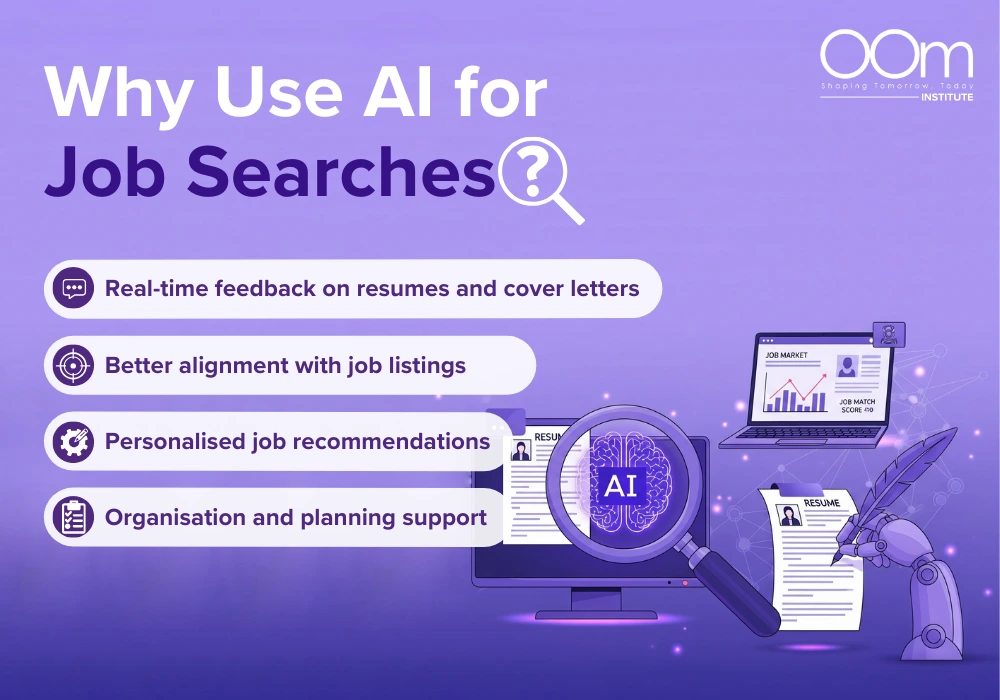
In Singapore’s fast-paced job market, applying for roles has become more than just sending a CV. Job seekers must align their applications with employer expectations, respond quickly, and stay organised across multiple platforms. AI tools for job searches help simplify this process while offering tailored, timely insights.
These tools provide value in several key areas:
• Real-time feedback on resumes and cover letters
AI tools can analyse the structure, formatting, keyword usage, and tone of your documents. What previously required input from a career advisor can now be done in seconds, helping you take immediate action.
• Better alignment with job listings
AI tools for job applications can scan job descriptions and suggest specific adjustments to your CV or cover letter. They improve your chances of being noticed by applicant tracking systems (ATS) and hiring managers.
• Personalised job recommendations
Some platforms offer role suggestions based on your experience and interests, reducing the time spent on manual searches.
• Organisation and planning support
With built-in reminders, progress tracking, and deadline alerts, these tools help job seekers manage multiple applications efficiently.
Used intentionally, these platforms do not replace your voice. Instead, they provide a framework for clearer, more focused decision-making throughout your job search.
AI Tools to Improve Your Resume and Cover Letter
First impressions still matter, and in most cases, your resume and cover letter are the first things an employer sees. AI tools for job searches have made it easier to fine-tune these documents with greater consistency and precision.
These tools can assist you in several ways:
• Resume optimisation
AI-powered resume builders such as Resumeworded, Jobscan, and Zety assess formatting, structure, tone, and keyword relevance. They help you tailor your content to specific job descriptions and optimise it for ATS, increasing the likelihood that your application gets noticed.
• Keyword integration
Platforms like Jobscan and Rezi scan job listings and suggest relevant terms to include in your resume. Some provide real-time scoring, allowing you to adjust and improve your document based on measurable feedback before you apply.
• Cover letter generation
Tools such as Kickresume and Teal can create cover letter drafts based on your resume and the job posting. While you should always personalise these drafts, they provide a solid starting point that helps you avoid generic phrasing and focus on achievements that matter.
AI Tools That Help You Understand Your Skills and Plan Your Career Path
Not every job seeker starts with a clear destination. Some are considering career changes, others are returning to work after a break, and many are unsure how their existing skills fit into new roles. In these moments of transition, AI tools for job searches can offer clarity and direction.
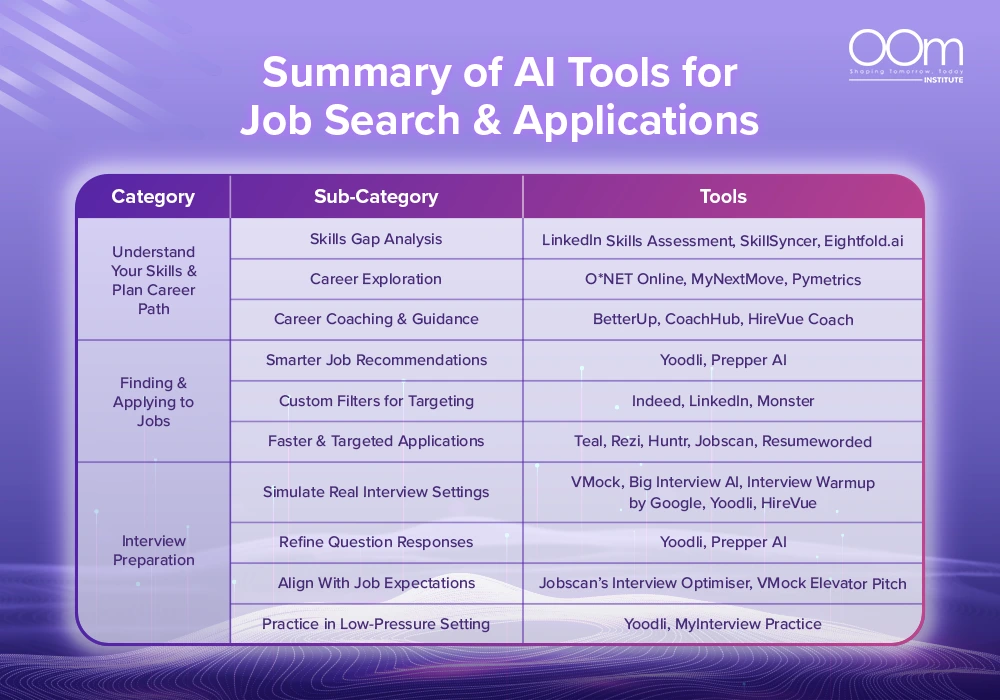
A. Skills Gap Analysis
AI-powered platforms such as LinkedIn Skills Assessment, SkillSyncer, and Eightfold.ai can analyse your resume or LinkedIn profile to highlight what you already bring to the table and what may be missing for specific roles. These tools often compare your profile to current labour market data, identifying high-demand skills that you may want to strengthen. For example, if you are considering a digital marketing role, the AI might flag a lack of experience in SEO or analytics and suggest relevant training. This is especially helpful for mid-career professionals shifting industries or aiming for more specialised positions.
B. Career Exploration
Some AI tools, including O*NET Online, MyNextMove, and Pymetrics, go beyond simple assessments to generate personalised career paths based on your skills, education, and interests. These platforms can suggest job roles you may not have considered, along with typical salary ranges, growth opportunities, and required qualifications. This offers structure to your exploration and helps you move forward with greater confidence. In a diverse and evolving job market like Singapore’s, such insights can make the difference between hesitation and action.
C. Career Coaching and Guidance
Virtual coaching tools powered by AI, such as BetterUp, CoachHub, and HireVue Coach, offer practical feedback, goal-setting support, and even interactive simulations to help you develop professionally. While these tools do not replace human mentorship, they make guidance more accessible. For those without access to a career advisor or formal coaching, they can provide valuable direction, whether you are updating your profile or preparing for a new role.
Combined, these tools offer more than just suggestions. They help you reflect, prioritise, and move forward with a clearer plan. For additional structure, our guide on how to create an effective career development plan can complement these tools by helping you take action with purpose.
AI Tools for Finding and Applying to Jobs
Searching for jobs across multiple platforms can be overwhelming. Listings are often duplicated, irrelevant, or scattered, making it difficult to focus your efforts. This is where AI tools for job searches help simplify and streamline the process, making it easier to connect with the right opportunities.
Here is how these tools make job searching more focused and manageable:
• Smarter job recommendations
Platforms such as LinkedIn Jobs, ZipRecruiter, and Talent.com analyse your resume and search history to suggest roles that match your skills and preferences. Instead of sifting through hundreds of listings, you receive curated options based on your profile. Some tools, like Jobscan’s Job Matcher and AI-powered Glassdoor suggestions, even rate how well your application matches a job and recommend edits to improve your fit before you apply.
Here is how these tools make job searching more focused and manageable:
• Custom filters for better targeting
AI job assistants like Indeed, LinkedIn, and Monster let you filter roles by salary, location, industry, and job type. They also help track deadlines, follow-ups, and submission statuses, keeping your efforts organised across multiple platforms.
• Faster, more targeted applications
Features on tools such as Teal, Rezi, and Huntr include auto-fill and CV uploads to reduce repetitive entry. Some platforms, including Jobscan and Resumeworded, scan job descriptions and recommend ways to tailor your resume or cover letter, improving your alignment with the role.
In Singapore’s competitive hiring environment, these tools help you move faster, apply smarter, and stay focused on high-potential roles without getting lost in the noise.
AI Tools for Interview Preparation
Securing an interview is a key milestone, but preparing for it can be just as challenging as getting there. Many job seekers struggle with knowing how to answer confidently, what questions to expect, or how to improve their delivery. AI interview tools can help fill these gaps.
• Simulate real interview settings
Platforms like VMock, Big Interview AI, and Interview Warmup by Google create mock interview scenarios using common or role-specific questions. Your responses are recorded and analysed for clarity, pacing, tone, and filler word usage. Some tools, such as Yoodli and HireVue, also provide visual feedback on facial expressions and eye contact.
• Refine how you answer questions
Using natural language processing, tools like Yoodli and Prepper AI evaluate your answers and suggest clearer phrasing or better structure. If you are preparing for a behavioural interview, they can help you apply the STAR method more effectively.
• Strengthen alignment with job expectations
Certain platforms, including Jobscan’s Interview Optimiser and VMock Elevator Pitch, scan the job description and recommend keywords or language to include in your responses. This ensures your answers are aligned with employer expectations while remaining authentic.
• Practise in a low-pressure environment
Tools such as Yoodli and MyInterview Practice allow you to rehearse multiple times in a private, AI-guided environment. This helps build confidence and fluency, especially for those new to interviews or returning to work after a break.
While not a replacement for live practice, AI for interview preparation offers structured support that can make a noticeable difference in how you present yourself when it matters most.
Common Mistakes to Avoid When Using AI
While AI tools for job searches can offer structure and support, they are most effective when used with care. Over-reliance or misuse can lead to weak applications or missed opportunities. Here are key mistakes to watch out for:
1. Using AI output without editing
AI-generated resumes, cover letters, or interview responses often sound generic. Employers can tell when content lacks personality. Always revise to reflect your own voice, values, and experience.
2. Following suggestions without context
AI recommendations are based on data patterns, not personal goals. Treat them as helpful prompts, not fixed rules. Your career direction should still be shaped by your own insight.
3. Overusing keywords
Optimising for ATS is important, but stuffing documents with keywords can make them hard to read. Use relevant terms naturally and only where they add clarity.
4. Ignoring privacy settings
Some platforms collect and store your data by default. Before uploading your CV or linking profiles, check how your information is used and stored.
Used thoughtfully, AI tools enhance your efforts without replacing your judgment. The best outcomes come when you combine machine support with your own decisions, intentions, and direction.
AI as a Job Search Partner, Not a Shortcut
Artificial intelligence is no longer optional in today’s job market. From resume refinement to interview preparation, AI tools for job searches now support nearly every step of the process. But their true value lies in how you use them.
These tools are not a replacement for your effort, experience, or decision-making. They are most effective when used to support what you already bring to the table. AI can help you stay organised, improve your documents, and approach opportunities with more confidence, but it cannot tell your story for you. The decisions about where to apply, how to position yourself, and what direction to pursue still belong to you.
As AI becomes more integrated into professional life, developing effective AI skills is becoming increasingly important. If you are ready to work more effectively with these tools, OOm Institute’s ChatGPT course offers practical training in prompt design, content development, and workplace automation. With the right knowledge, you can use AI not just to find your next job, but to shape a career that reflects your goals and strengths.