Walk into any office today, and you will likely feel the shift. It is no longer just about hitting targets or clocking long hours. Across Singapore, workplaces are starting to pay closer attention to something deeper: how people actually feel at work.
Employee wellbeing is gaining ground, not as a buzzword, but as a sign of a healthy, forward-looking organisation. When stress levels rise and expectations keep shifting, people want more than just a paycheque. They want purpose, balance, and a workplace that supports them as whole individuals.
So, what does employee wellbeing involve? Why is it now at the heart of modern work culture? How can businesses take meaningful steps to support it? This article explores those questions and offers practical strategies to help teams thrive.
What Is Employee Wellbeing?
Employee wellbeing is about more than just staying healthy or avoiding burnout. It reflects the overall quality of a person’s day-to-day experience at work, how they feel, function, and connect. This includes their physical health, emotional state, sense of purpose, relationships with colleagues, and whether they derive genuine satisfaction from their work.
At its core, it recognises that employees are not just defined by their job titles. They bring their whole selves to work, shaped by everything from team dynamics and company culture to career goals and personal commitments. Even small shifts in workload or office morale can have a significant impact on how someone feels in their role.
Wellbeing is not static. It changes over time, which means it cannot be solved with a one-off programme or benefit. Organisations that truly prioritise employee wellbeing treat it as an ongoing responsibility. They create space for honest conversations, offer meaningful support, and build policies that reflect care and trust.
When wellbeing is woven into the workplace culture, rather than being layered on top, it becomes a shared value that helps people do their best work and feel good about it.
Key Aspects of Employee Wellbeing
Employee wellbeing is not one-size-fits-all. It touches on many aspects of a person’s work experience, from how supported they feel to how connected they are to others. While approaches may differ across organisations, several core elements consistently shape a strong and balanced workplace wellbeing framework:

1. Physical Health Support
A healthy body supports a healthy mind. Companies that offer health screenings, ergonomic setups, wellness challenges, or fitness subsidies are helping staff stay energised and resilient. These efforts do more than reduce sick days. They foster a culture that prioritises prevention and promotes long-term health.
2. Work-Life Harmony
When work constantly spills into personal time, it becomes hard to switch off. Over time, this imbalance can take a toll on staff wellbeing, leading to fatigue and disengagement. Flexible hours, fair workloads, and family-friendly policies help employees balance both their personal and professional lives with less stress. When people feel they have room to breathe, they tend to stay more focused and committed at work.
3. Positive Workplace Relationships
A sense of connection makes all the difference. Encouraging open conversations, inclusive behaviour, and team bonding activities helps build trust and collaboration. Colleagues who get along well are more likely to support one another, resolve tensions promptly, and foster a positive day-to-day atmosphere.
4. Recognition and Purpose
People want to know their efforts matter. Recognising achievements, whether through a simple thank you, goal setting, or career growth opportunities, gives employees a sense of direction and belonging. This sense of acknowledgement supports overall employee wellness by reinforcing purpose, boosting morale, and helping individuals stay motivated even during periods of stress or uncertainty.
5. Autonomy and Support
Trusting employees to manage their work allows them to take ownership and feel more engaged. At the same time, support must be easily accessible when needed. Whether it is guidance from a manager or a system that helps them raise concerns, having both freedom and support creates a more confident and capable workforce.
Benefits of Prioritising Employee Wellbeing
Focusing on employee wellbeing is not just the right thing to do. It is a smart, strategic move that strengthens business performance across the board. Whether in a large corporation or a growing SME, the benefits of embedding wellbeing into workplace culture are clear and far-reaching
• Improved Productivity and Focus
Employees who feel supported are more likely to stay engaged throughout the day. When both professional demands and personal wellbeing are respected, individuals tend to bring more focus, energy, and creativity to their work. A well-rounded approach to workplace wellbeing encourages better decision-making and consistent performance.
• Higher Retention and Talent Attraction
People stay where they feel valued. Organisations that foster staff wellbeing and actively acknowledge contributions often experience lower turnover and higher job satisfaction. In Singapore’s competitive job market, a strong reputation for supporting employee wellness can be a powerful draw for top talent seeking more than just a payslip.
• Stronger Organisational Culture
A workplace that prioritises wellbeing builds more than productivity; it builds trust. By investing in the day-to-day experience of their teams, businesses cultivate a culture where people feel heard, included, and motivated. Over time, this collective sense of care deepens commitment and strengthens collaboration across departments.
• Reduced Absenteeism and Presenteeism
Supporting employee wellbeing reduces the risk of burnout and chronic stress. Employees are less likely to take unplanned leave or show up unwell and disengaged. With fewer disruptions and a healthier workforce, organisations can maintain smoother operations and more sustainable growth.
• Enhanced Employer Branding
Today’s jobseekers and stakeholders look beyond financial results. Companies recognised for their genuine care and progressive employee wellness policies are often perceived as more trustworthy, forward-thinking, and socially responsible. This not only improves public perception but also enhances long-term business resilience.
Strategies for Promoting Employee Wellbeing in the Workplace
Building a culture that supports employee wellbeing does not happen by chance. It requires consistent effort, intentional policies, and a workplace environment that prioritises people. In Singapore’s fast-paced business landscape, these strategies can help organisations integrate wellbeing into daily work life in a meaningful way:
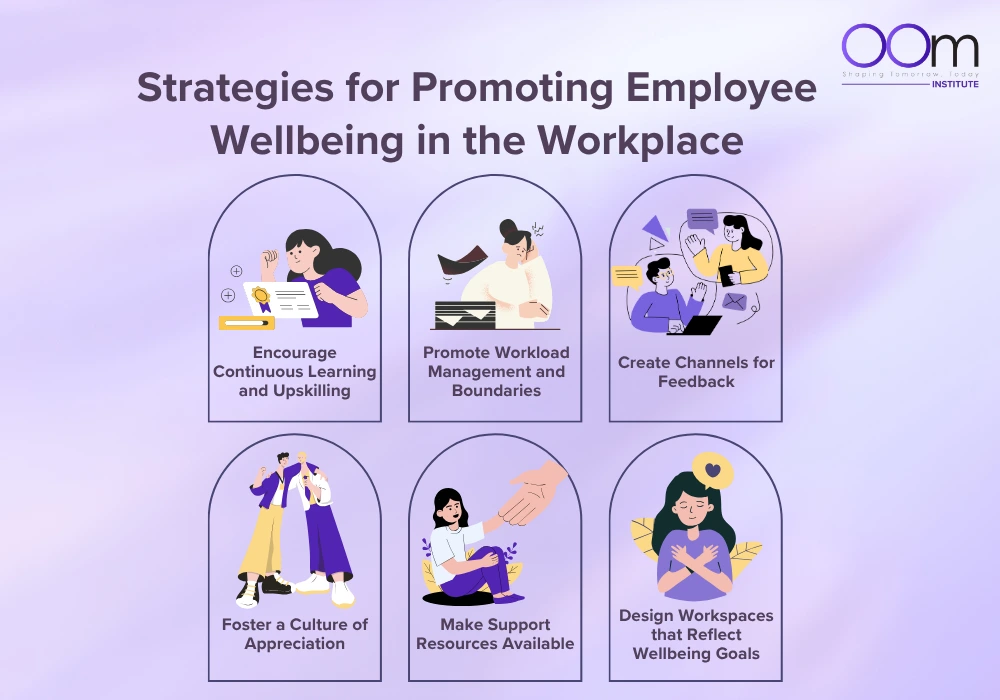
• Encourage Continuous Learning and Upskilling
When employees see opportunities to grow, they feel more confident, motivated, and engaged. Supporting career development is one way to show that the organisation values long-term progress, not just short-term output. Enrolling staff in relevant programmes that provides practical tools that enhance both individual wellbeing and team performance.
• Promote Workload Management and Boundaries
Staff wellbeing depends on clarity and balance. When workloads are realistic and expectations are well communicated, employees are better able to manage stress and stay focused. Encouraging regular breaks, discouraging after-hours messaging, and respecting personal time all contribute to a more sustainable rhythm at work.
• Create Channels for Employee Feedback
People are more invested when they feel heard. Open lines of communication, whether through surveys, town halls, or suggestion boxes, give employees space to share ideas and voice concerns. Acting on that feedback reinforces trust, strengthens workplace relationships, and helps improve employee wellness across the board.
• Foster a Culture of Appreciation
Appreciation does not need to be extravagant. A thoughtful message, a team shout-out, or celebrating a milestone can go a long way. When recognition becomes part of everyday culture, staff feel seen and valued, key ingredients for long-term motivation and stronger workplace wellbeing.
• Make Support Resources Visible and Accessible
Appreciation does not need to be extravagant. A thoughtful message, a team shout-out, or celebrating a milestone can go a long way. When recognition becomes part of everyday culture, staff feel seen and valued, key ingredients for long-term motivation and stronger workplace wellbeing.
• Design Workspaces That Reflect Wellbeing Goals
The physical space where people work has a quiet influence on how they feel. Thoughtful design, such as quiet corners for focus, open areas for collaboration, natural lighting, and small comforts like pantry zones, can make the workplace more welcoming and attuned to human needs. These environments support daily wellbeing in subtle but powerful ways.
Building a Culture That Sustains Wellbeing
Employee wellbeing is no longer a nice-to-have. It has become a key part of long-term business success. As the demands of work evolve, companies that take deliberate steps to support their people will be better equipped to adapt, grow, and lead.
By prioritising wellness in the workplace, organisations can foster an environment where individuals feel respected, supported, and empowered to do their best work. Whether it is rethinking workloads, investing in development, or creating space for stronger connections, every effort matters.
OOm Institute is ready to help you turn those efforts into lasting change. Through practical training and evidence-based programmes, you can strengthen your workplace from the inside out.
Begin the journey today. Partner with OOm Institute to build a healthier, more resilient workforce, one grounded in care, purpose, and shared success.