
Cyber Security Course
WSQ Understanding Scams and Frauds in the Digital World
TGS-2024044057
$346.32 (After 70% support)
Claimable with SkillsFuture Credits and PSEA
Duration:
2 Days
Delivery Mode:
Onsite Training
Medium of Instruction:
English
Claimable Using
SkillsFuture
Up to
70%
Claimable Using
PSEA
UTAP
Assistance Programme
EIS
Overview of OOm Institute’s Cyber Security Course
Scam victims in Singapore lost approximately $913.1 million in 2025. From phishing emails and phone scams to AI-generated impersonation and deepfakes, individuals and organisations face increasingly sophisticated cybersecurity risks. This has driven strong demand for cyber security awareness training in Singapore.
OOm Institute’s Cyber Security course builds essential awareness by helping learners recognise common scam tactics, protect sensitive information, and respond effectively to cyber threats.
Using a practical Recognise → Protect → Respond framework, this cyber security training Singapore programme supports modern workplace readiness. Participants will learn how to identify online and phone-based scams, apply everyday cybersecurity best practices, and follow proper reporting and escalation procedures.
By the end of the Cyber Security training, learners will be better equipped to prevent scams, safeguard data, and navigate the digital environment safely at work and in daily life.
Course Outline
Identify Online and Phone Scams
Understand current trends and statistics in cybersecurity threats and scams
Identify common scam categories, including phishing, smishing, and vishing
Explore emerging threats such as AI-generated scams and deepfake impersonation
Recognise characteristics and warning signs of different scam types
View the real-world scam examples and case study scenarios
Assessing and Protecting Online and Phone Scams
- Develop techniques for recognising scam attempts and suspicious communications
- Examine social engineering tactics used by cybercriminals
- Apply preventative measures to reduce the risk of becoming a scam victim
- Adopt best practices for protecting personal and business information
- Understand corporate IT security practices and safe use of workplace systems
- Familiarise yourself with common cybersecurity apps, tools, and protective features
- Follow cybersecurity best practices for safe online behaviour
- Evaluate risks of data leakage through AI platforms
Responding to Cybersecurity threats
- Take immediate actions if you fall prey to a scam
- Identify key authorities and support channels for reporting scams and seeking assistance
- Implement financial protection measures to minimise losses
- Follow proper incident reporting and escalation procedures within organisations
- Communicate effectively when reporting cybersecurity incidents
Skills You Will Gain
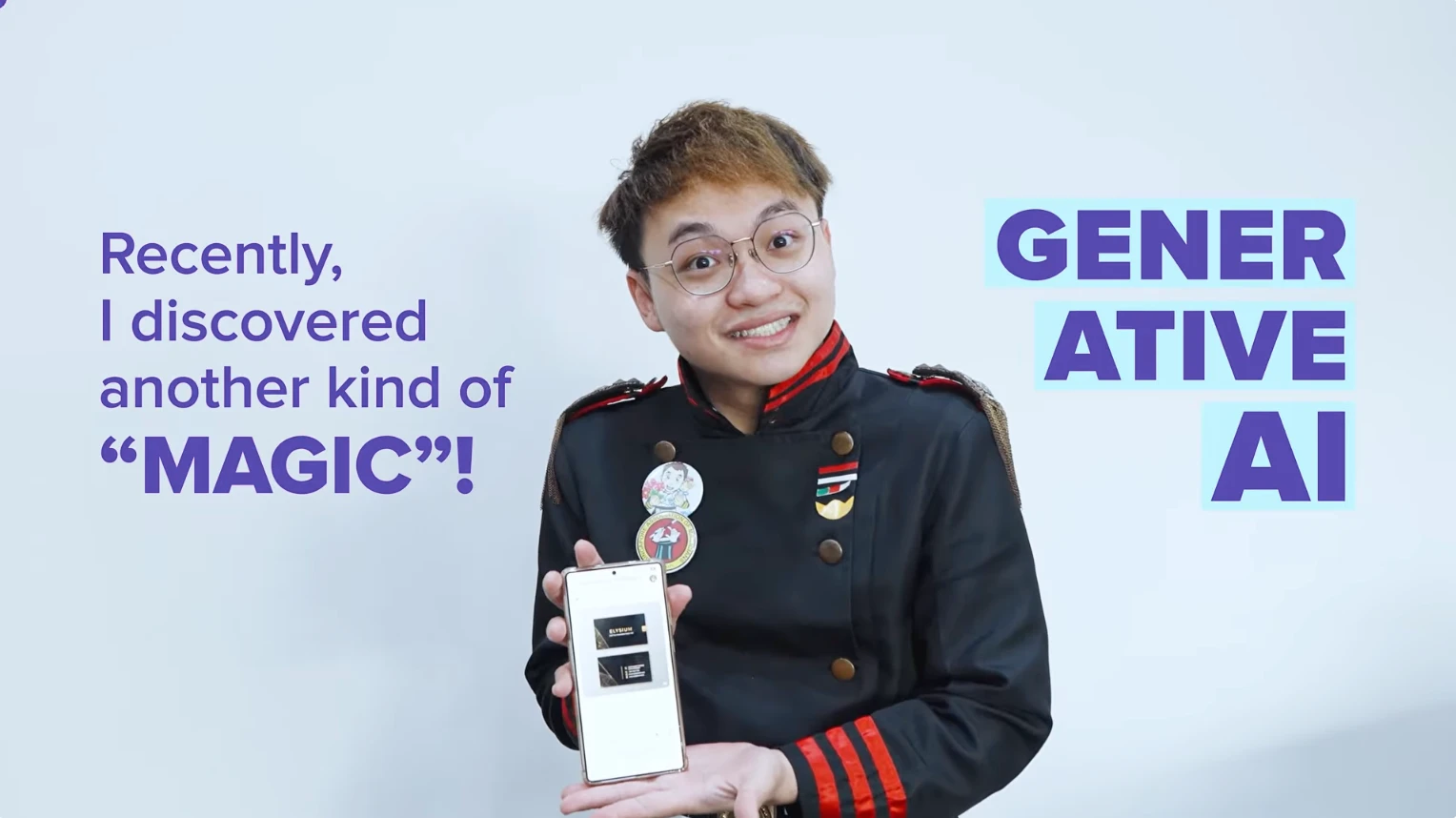
Real Story. Real Impact.
Gary applied the skills he learned in our Generative AI course and saw amazing results for his event company!
Watch to find out how AI helped him improve his business.
Here’s What Most Learners Ask Us

Can I Get Help With Course Fee Claims?
Absolutely. We assist all eligible learners in navigating the claim process.

Is A Laptop Provided?

Will There Be An Assessment?

Is Full Attendance Required?
Yes, to meet course requirements, all learners must attend the full course duration and mark their e-Attendance using Singpass.
Course Fees & Support
Singapore Citizens
(21 to 39 years old) & Permanent Residents (21 years old & above)
Singapore Citizens
(40 years old & above)
Course fees
S$888
S$888
Course fees after
SkillsFuture support
S$444 (After 50% support)
S$266.40 (After 70% support)
S$79.92
S$79.92
Nett Course Fee
Balance payable by SkillsFuture Credits*
S$523.92
S$346.32
Additional Support
SkillsFuture
*Singaporeans 25 years old & above can cover remaining fees with SkillsFuture Credits
UTAP
NTUC UTAP members can receive up to 50% support for course fees after SkillsFuture support**
PSEA
Singaporeans 30 years old and below can cover remaining fees with PSEA
**Validity period: 15 March 2024 – 31 March 2027
All Singaporeans aged 25 and above can use their $500 SkillsFuture Credit from the government to pay for a wide range of approved skills-related courses. Visit MySkillsFuture (at www.myskillsfuture.gov.sg) to choose from the courses available on the website.
*Registered or incorporated in Singapore. Employment size of not more than 200 or with annual sales turnover of not more than $100 million
Non Small-Medium Enterprises (Non SMEs)
Small-Medium Enterprises (SMEs)
Course fees
S$1,088
S$1,088
Course fees after
SkillsFuture support
Nett Course Fee
Balance payable by SkillsFuture Credits*
S$641.92
S$424.32
Additional Support
SFEC
Companies with existing SkillsFuture Enterprise Credit (SFEC) can receive up to 90% additional support to offset the remaining fees
Absentee Payroll
Additional Support via Absentee Payroll: Claimable up to $4.50 per hour, capped at $100,000 per enterprise per calendar year
EIS
Reimbursement via Enterprise Innovation Scheme (EIS):
Option 1: Annual tax deduction of 400%
Option 2: Convert 20% of course fees into cash payout
Upcoming Course Schedule
Who Is This Course For

Small business owners and employees who manage customer data, financial transactions, or online services and need stronger cybersecurity awareness

Older adults and vulnerable users who may be more exposed to social engineering tactics and fraud attempts

Anyone using AI tools or online platforms who wants to understand data privacy risks and avoid accidental data leakage

Organisations and teams looking to improve overall cybersecurity awareness and ensure proper incident reporting and response practices
Prerequisite
Why Learn at OOm Institute

Extensive Industry Expertise
We have over 20 years of experience in providing AI, digital marketing and tech solutions for individuals and businesses.

Seasoned & Expert Trainers

Relevant & Applicable

Practical Hands-On Approach
We emphasise interactive learning, allowing learners to apply concepts through practical exercises and real-world projects.
Your Cyber Security Course Certificate

Upon fulfilling the course requirements with a minimum attendance rate of 75% and demonstrating proficiency in the assessments, candidates will be awarded a Certificate of Completion from OOm, along with a prestigious WSQ Statement of Attainment.
*SkillsFuture Course Page here
Course Code: TGS-2024044057
Course Fees Support Validity Period: 5 Apr 2024 – 4 Apr 2027
Our Learners’ Reviews
Meet Our Cyber Security Trainers

Martin Li

Kirby Poh

Jonathan Lim

Serene Tiong
Leveraging a strong background in data privacy and risk mitigation, Martin brings valuable knowledge in cybersecurity. He has practical experience applying data protection laws and collaborating with IT teams to address real-world security challenges. His cybersecurity course equips learners with actionable strategies to navigate the challenges in the ever-evolving digital landscape.
There is no content yet.
Jonathan has over 20 years of experience in marketing and sales, excelling in digital marketing and utilising various AI tools. With more than 5 years of training experience, he co-develops courses on Critical Core Skills. Jonathan holds certifications in digital marketing and AI tools. Notably, he conducted a session at the IAL Learning Festival in 2023, earning a media feature on CNA938.
Serene is an MOE-certified trainer with an ACLP certification, integrating AI content creation, digital marketing, and positive psychology to enhance team communication and strategy. With 15 years of experience, her core expertise includes soft skills, AI content creation, digital marketing, website design, and customer service. Her training emphasises hands-on learning and workplace relevance.
FAQs
What are the most common scams in Singapore?
Common scams in Singapore include email phishing scams, fake links, SMS scams, job scams, and social media scams. These scams often attempt to trick individuals into clicking malicious links, sharing personal information, or transferring money.
To stay safe, individuals should verify suspicious messages, avoid clicking unknown links, and never share sensitive information with unverified sources.
What types of digital scams and frauds will this course cover?
Our Cybersecurity course covers a wide range of online and phone scams and frauds, including phishing, malware, and virus attacks, identity theft, hacking attempts, and social engineering tactics.
Through detailed exploration and practical examples, participants will learn how to recognise warning signs, avoid potential threats, and respond effectively to these threats. The course aims to strengthen participants’ ability to protect their personal information, devices, and online accounts from digital risks.
Is Cybersecurity Course designed to build general cybersecurity awareness or is it geared towards launching a cybersecurity career?
Our Cybersecurity training in Singapore is primarily designed to build general cybersecurity awareness rather than train participants for a professional cybersecurity career.
The main focus is to help individuals understand common digital threats and learn practical steps to stay safe online. While the course is not a career-focused cybersecurity course, it can provide a strong foundation for individuals who may later wish to explore more advanced cybersecurity training.
What are the key components of effective cybersecurity awareness?
Effective cybersecurity awareness involves understanding common cyber threats and adopting safe digital habits. Key components include:
- Recognising phishing emails, scams, and social engineering attempts
- Using strong passwords and enabling multi-factor authentication
- Protecting sensitive data and personal information
- Practicing safe browsing and email usage
- Knowing how to report suspicious activities or security incidents
Developing these habits helps individuals reduce the risk of cyberattacks and maintain better digital security.
Is cybersecurity difficult to learn?
Cybersecurity does not have to be difficult to learn, especially at the awareness level. Basic cybersecurity knowledge focuses on understanding common threats and developing safe online practices.
With the right training and practical examples, most individuals can quickly learn how to identify scams, protect their personal information, and respond to potential cyber risks.
For those interested in pursuing cybersecurity as a career, more advanced technical skills and continuous learning will be required.
What certificates will I receive upon completing the course?
Upon successful completion of the course, you will receive a Certificate of Completion from OOm Institute as well as a SkillsFuture WSQ Statement of Attainment (SOA). The SOA is a certification that not only validates an individual’s expertise in the course but is also widely recognised by employers in Singapore.
What do I need to bring for the course?
Please ensure that you bring a laptop to the course to engage in class activities. Additionally, you may consider bringing a jacket in case you feel cold.
How do I register for the course?
You can indicate your interest here, call us at 6993 9898 or email us at enquiry.institute@oom.com.sg and we will get back to you as soon as possible.
Cyber Security
TGS-2024044057
$346.32
(After 70% support)
Claimable with SkillsFuture Credits and PSEA
Duration: 2 Days
Delivery Mode: Onsite Training
Medium of Instruction: English