- QUICK ANSWER
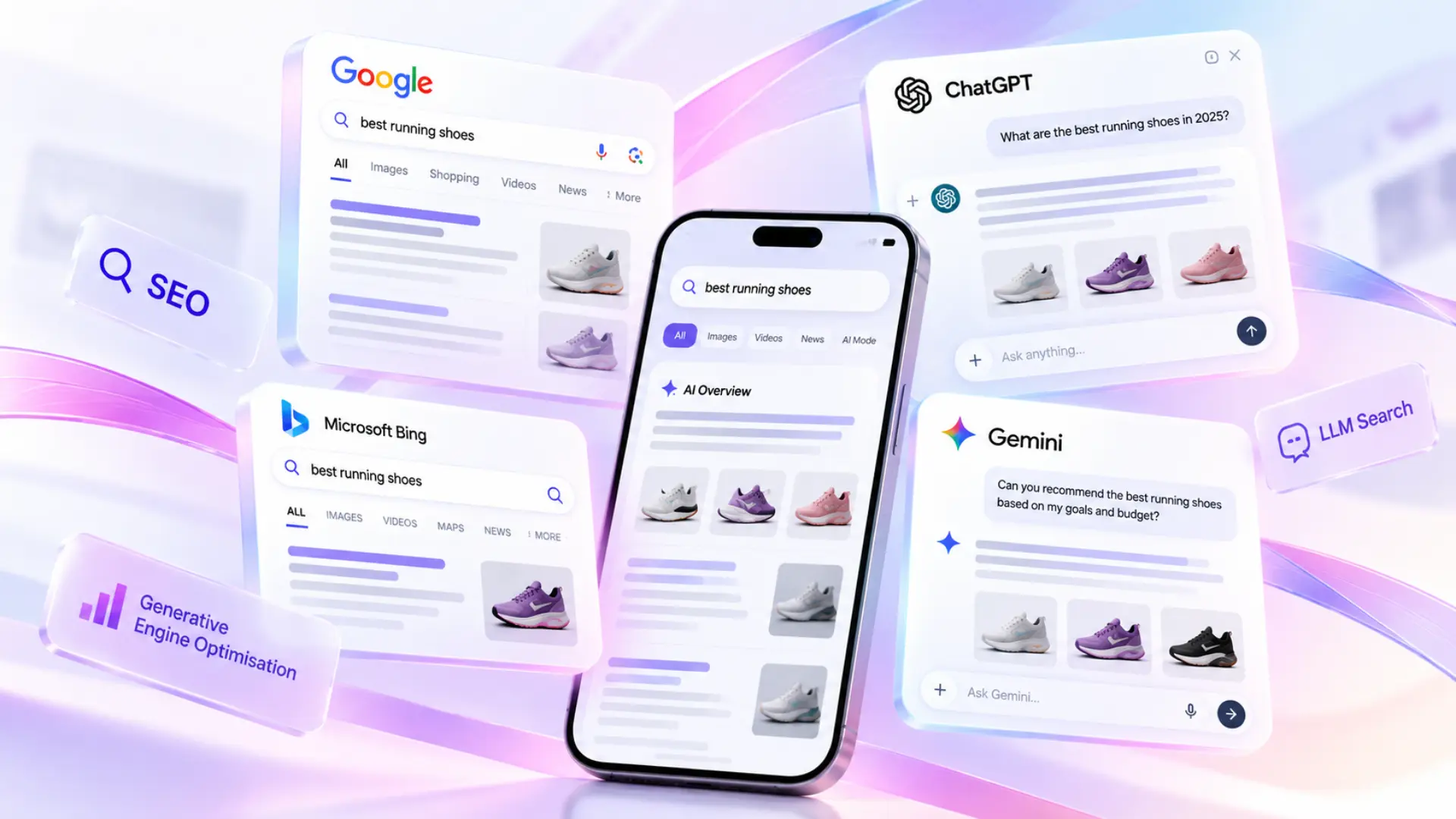
ChatGPT image prompts are text instructions used to generate AI images. A strong prompt includes the main subject, artistic style, composition, lighting, colours, camera perspective, and additional details to guide the AI. In this guide, you’ll learn prompt structures, examples, common mistakes to avoid, and tips for creating better AI-generated images.
Why Most AI Creative Work Looks Generic
Have you ever asked AI to create an image, advertisement, or creative concept and ended up with something that looked bland or repetitive?
The problem usually isn’t the AI.
It’s the instruction.
When instructions are vague, AI fills in the gaps using the most common patterns from its training data.
The result is often generic content that looks similar to everything else online.
A prompt like “Create a futuristic office.” gives the AI very little creative direction.
But a prompt like “Create a cinematic futuristic workspace with warm ambient lighting, matte black architectural surfaces, holographic UI elements, soft volumetric lighting, and a premium editorial photography aesthetic.” makes things different.
The difference isn’t the tool; the difference is the clarity of instruction.
This is why prompt engineering becomes one of the most valuable modern creative skills.
Also read: 10 Best ChatGPT Alternatives To Simplify Your Life
The CREATE Framework for Better AI Prompts
To make prompting easier, use the CREATE Framework.
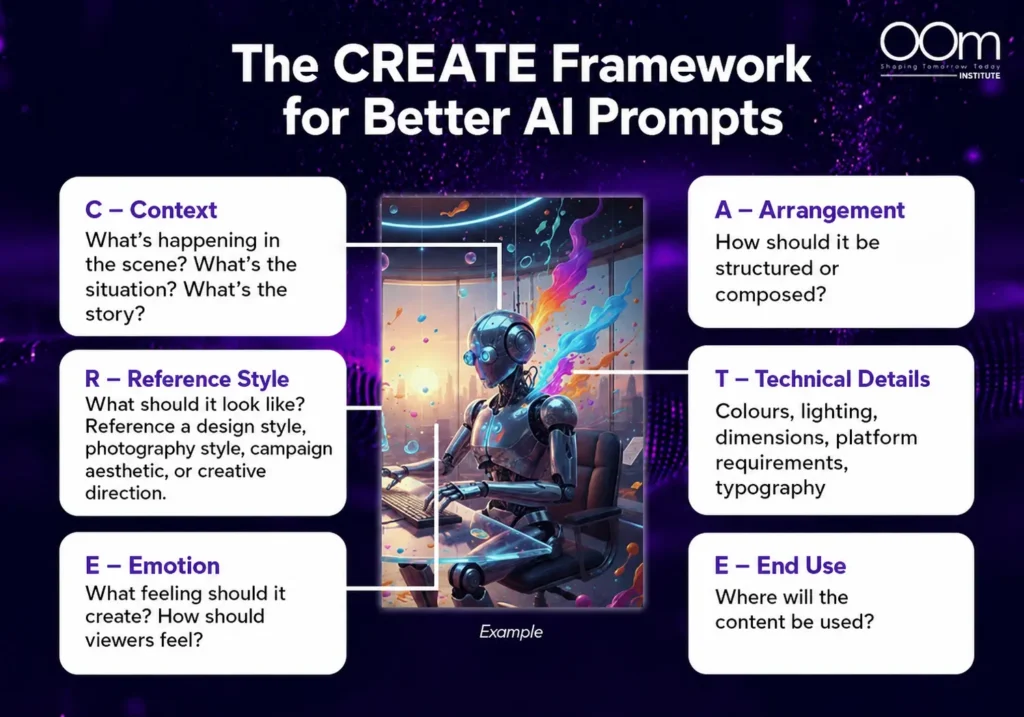
Instead of guessing what to write, simply work through these six elements.
| Component | What It Means |
| C – Context | What’s happening in the scene? What’s the situation? What’s the story |
| R – Reference Style | What should it look like? Reference a design style, photography style, campaign aesthetic, or creative direction. |
| E – Emotion | What feeling should it create? How should viewers feel? |
| A – Arrangement | How should it be structured or composed? |
| T – Technical Details | Colours, lighting, dimensions, platform requirements, typography |
| E – End Use | Where will the content be used? |
Your ChatGPT Image Prompt Template (Copy & Paste)
Context: Create an Instagram advertisement for a premium matte lipstick brand targeting young professional women aged 25–40. Luxury beauty campaign photography inspired by high-end cosmetic brands. Elegant editorial aesthetic with premium product presentation. Confident, sophisticated, glamorous, aspirational. The lipstick product is positioned at the centre of the composition. Soft makeup elements and subtle beauty accessories surround the product. Leave clear negative space at the top for promotional text and branding. Deep burgundy, rose gold, and soft nude colour palette. Soft diffused studio lighting with realistic reflections on the lipstick packaging. Ultra-realistic product photography style with shallow depth of field. Aspect ratio of 9:16. Instagram advertisement designed to increase product awareness and encourage online purchases. Avoid cluttered backgrounds. Maintain a premium luxury aesthetic. Ensure the lipstick packaging remains the primary focal point. Do not include excessive text overlays or unrealistic visual effects. |
ChatGPT Image Generation Prompts
Different image categories require different prompt structures.
A product advertisement prompt should not be written the same way as an infographic, a cinematic storyboard, a website banner, or an editorial portrait
The more complex the creative objective becomes, the more structured your prompt should be.
A. Editorial Photography Prompts
Here’s the prompt I used.
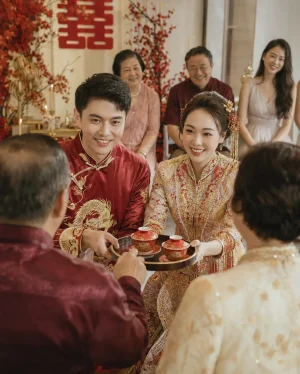
Context: Create a luxury Chinese traditional wedding editorial photoshoot featuring an Asian bride and groom celebrating their tea ceremony. The scene should capture an authentic moment of cultural tradition and family connection in a modern Singapore wedding setting. Premium wedding editorial photography inspired by luxury Asian bridal magazines and contemporary Singapore wedding campaigns. Elegant, timeless, sophisticated, and cinematic. Joyful, heartfelt, intimate, celebratory, respectful. The bride and groom are seated during the tea ceremony while presenting tea to their elders. Family members are visible in the background with warm smiles and natural interactions. Focus on authentic expressions and emotional moments. Maintain a balanced composition with the couple as the primary focal point. Warm natural lighting with subtle golden highlights. Rich red, gold, and champagne colour palette inspired by traditional Chinese wedding symbolism. Ultra-realistic photography with shallow depth of field and professional editorial quality. Intricate details on the bride’s kua and the groom’s traditional attire should be clearly visible. High-detail facial expressions and realistic skin tones. Vertical 4:5 aspect ratio. Create a premium wedding editorial image suitable for a luxury bridal magazine, wedding venue marketing campaign, or professional wedding photography portfolio. Feature a modern Singapore Chinese wedding aesthetic. Prioritise authenticity and cultural accuracy. Include traditional Chinese wedding elements such as the tea ceremony set, red and gold decorations, double happiness symbols, and elegant wedding attire. Avoid exaggerated fantasy effects or overly staged poses. |
And this is what ChatGPT generated.
A. Editorial Photography Prompts
Photography prompts focus on visuals. Infographic prompts focus on communication.
That means the CREATE framework is applied differently.
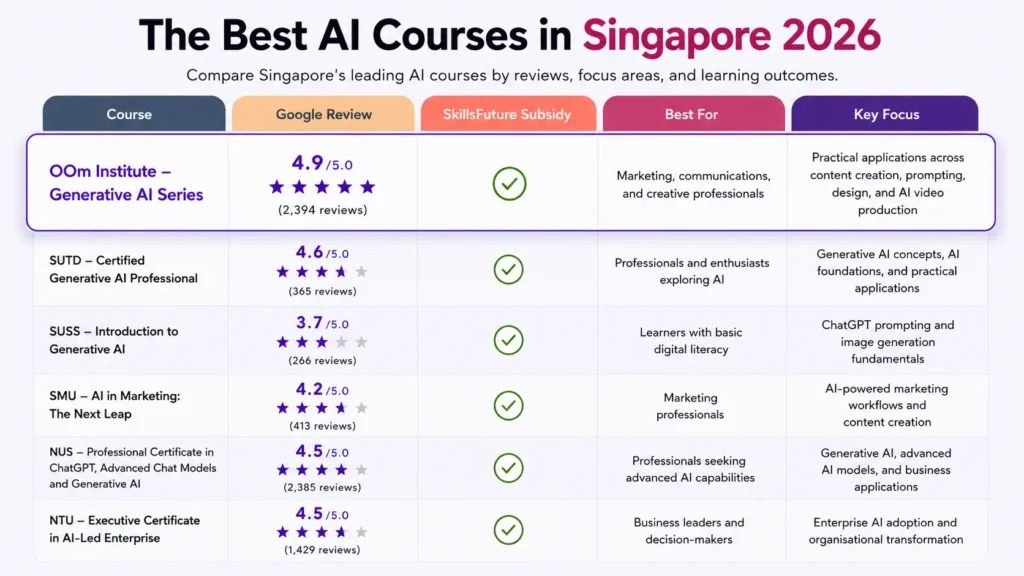
Context: Create a professional infographic-style comparison chart. The infographic compares leading AI courses available in Singapore and helps readers identify the most suitable course based on their career goals, learning objectives, and professional background. Professional editorial infographic design that is clean, modern, data-driven, highly readable, and suitable for educational content marketing. Visually highlight OOm Institute as an editor’s recommended choice using a subtle badge and premium visual treatment. Trustworthy, informative, professional, future-ready, credible. Create a visually enhanced comparison table with alternating row colours, icons, rating badges, and clear hierarchy. Include subtle AI-themed illustrations, data visualisation elements, and modern technology-inspired design accents. Columns: Course, Google Review, SkillsFuture Subsidy, Best For, Key Focus OOm Institute brand colours using purple, blue, white, and charcoal grey. Clean grid-based layout. Proxima Nova typography. Strong visual hierarchy. Professional iconography. Balanced whitespace. High readability. Editorial infographic style. 16:9 aspect ratio. 1080 × 1350 resolution. Blog article graphic. |
Here’s the output it produced.
C. Product Advertisement Prompts
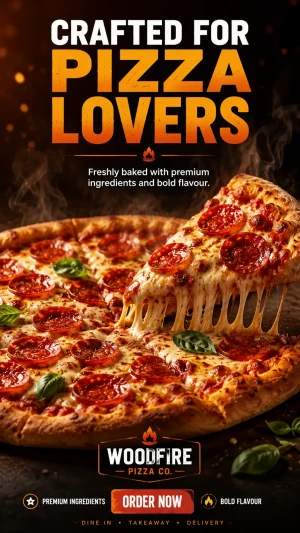
Context: Create a social media advertisement promoting a gourmet pizza restaurant’s signature pepperoni pizza. The campaign targets food lovers looking for a premium dining experience. Premium food photography commonly seen in high-end restaurant advertising campaigns. Modern, cinematic, and appetising visual style. Crave-worthy, indulgent, exciting, satisfying. A freshly baked pizza positioned prominently in the centre of the frame. Melted cheese stretches naturally between slices. Leave sufficient negative space at the top and bottom for promotional copy and branding elements. Warm orange, deep red, and golden-brown colour palette. Dramatic studio lighting that highlights the pizza’s texture, melted cheese, and premium ingredients. Visible steam rising naturally from the pizza. Ultra-realistic food photography with shallow depth of field. Vertical 9:16 aspect ratio optimised for social media advertising. Bold modern sans-serif typography with strong readability and clear visual hierarchy. Header Text: Crafted For Pizza Lovers Supporting Text: Freshly baked with premium ingredients and bold flavour. Instagram and Facebook advertisements designed to increase brand awareness and drive restaurant orders. Additional Instructions: Focus on realistic food textures and premium presentation with steam rising subtly, glossy textures, and visible seasoning and detail. Ensure the pizza remains the primary focal point. Highlight melted cheese, crispy crust, and fresh ingredients (rich tomato sauce, fresh basil leaves, pepperoni slices). Avoid cluttered backgrounds. |
And here’s the advertising creative ChatGPT generated.
Using ChatGPT to Create AI Video Storyboards
One common misconception is that ChatGPT can generate professional AI videos on its own.
While some AI platforms are beginning to support video generation, ChatGPT’s real strength lies elsewhere.
Think of ChatGPT as your creative director.
Before an AI video tool can generate a compelling video, it needs clear instructions about:
- What happens in each scene
- Camera movements
- Character actions
- Visual style
- Lighting
- Emotional tone
- Story progression
This is where ChatGPT becomes incredibly valuable.
Instead of manually planning every shot, you can use ChatGPT to transform a simple idea into a structured storyboard that can later be used in AI video generation tools such as Sora, Runway, Kling, Pika, Luma, or Veo.
In other words:
ChatGPT helps you plan the video.
AI video generators help you produce the video.
This ability to transform ideas into structured prompts is one of the core skills taught in many modern ChatGPT course Singapore programmes, particularly those focused on content creation, marketing, and AI-assisted design.
- Pro Tip: Why Storyboards Matter?
Many people write prompts like:
Create a video promoting a luxury hotel.
The problem is that the instruction is too broad. The AI has to guess:
- Which scenes to show
- Which camera angles to use
- Which emotions to communicate
- How the story should flow
The result is often generic. A storyboard removes that ambiguity.
By breaking the video into individual scenes, you gain greater control over the final output while creating a more engaging viewing experience.
Interested in how to create storyboards with AI for video creation? Take a look at our AI Videography course!
4 Bonus Tips for Better ChatGPT-Generated Creatives
Even with a strong prompt framework, the quality of your output often depends on how much context and direction you provide.
These practical techniques can help you generate more accurate and professional-looking results while reducing the amount of trial and error required.
1. Provide Brand Guidelines
AI performs significantly better when it understands your brand identity.
Before generating visuals, provide the brand’s specific color codes and font preferences before asking for design variations.
The more specific your brand instructions, the more consistent the output becomes.
2. Iterate One Element at a Time
Many users make the mistake of rewriting the entire prompt whenever the output isn’t perfect. A better approach is to treat the first result as a draft.
Reply with specific adjustments like “Change the background to dark mode” or “Make the typography larger”
Making targeted adjustments helps preserve the elements that already work while improving the areas that don’t.
3. Use Clear Constraints
Many people assume creativity comes from giving AI complete freedom.
In reality, the opposite is often true.
The more specific your constraints, the more focused the output becomes.
By defining what should and shouldn’t appear, you guide the AI toward a much clearer creative direction.
4. Use Reference Images
Reference images are one of the fastest ways to improve ChatGPT-generated creatives.
Rather than describing every detail manually, you can provide visual examples and tell the AI what to keep and what to change.
When using reference images, be specific about which elements should remain consistent and which elements should be modified.
This reduces ambiguity and often produces more reliable results than text-only prompting.
How to Build Creative AI Skills Without a Technical Background
Building creative AI skills without a technical background requires focusing on prompting, workflow automation, and AI-assisted design.
Instead of writing code, you act as an AI director, providing context, curating outputs, and shaping the creative direction.
Master Advanced Prompting
Focus on Conceptual Understanding and Taste
Learn Through AI Courses & Practice Regularly
1. Master Advanced Prompting
Generic prompts yield generic results. To build creative AI skills, you need to learn how to guide the AI with precision.
When you learn how intent, context, and constraints shape AI outputs, you develop a clear thinking framework that guides everything you create.
This foundation matters more than familiarity with any single tool, because it can be applied across different platforms and creative formats.
2. Focus on Conceptual Understanding and Taste
Developing creative AI skills is less about learning how the algorithms work and more about honing your “taste and judgment”.
Because AI can hallucinate or produce biased results, your most valuable skill is evaluating its output. Knowing what a “high-quality” final product looks like is what separates a beginner from an expert.
Keep up to date with the latest practical AI applications by following creators who focus on applied AI, design thinking, and prompt design rather than hard coding.
3. Learn Through AI Courses & Practice Regularly
In-person or online AI courses, such as those focused on AI design or prompt engineering courses, often emphasise transferable principles that help learners focus on how to think rather than specific tools or interfaces.
Regular practice is equally important. Working across images, video, and music using similar prompting approaches helps patterns emerge naturally.
Over time, prompts become more precise, outputs become more consistent, and decision-making becomes more confident. What begins as experimentation gradually develops into a strategic creative skill applicable across professional contexts.
The Future of Creativity Is Prompt-Driven
Most AI-generated content doesn’t look generic because the AI lacks creativity. It looks generic because the prompt lacks direction.
Our goal isn’t to write longer prompts. It’s to give clearer instructions.
The CREATE framework gives you a simple way to do that by breaking a prompt into the elements that matter most: context, style, emotion, structure, technical details, and outcome.
The next time a result feels “almost right”, don’t start over. Look at which part of the prompt needs work and refine that element instead.
Prompting is less about talking to AI and more about thinking like a creative director. The better you can communicate your vision, the better the output becomes.
If you’re serious about developing prompt engineering skills beyond experimentation, a structured ChatGPT course Singapore programme can help you learn how to apply these frameworks consistently across images, video, content creation, and business workflows.
Frequently Asked Questions
1. What are ChatGPT prompts?
ChatGPT prompts are written instructions that guide the AI on what to generate and how to generate it. In creative work, they shape images, video concepts, and music directions by clarifying purpose, tone, and constraints. The quality of the prompt directly influences the usefulness of the output.
2. What is a creative AI prompt?
A creative AI prompt is designed to produce expressive or conceptual output rather than factual text. It typically includes cues on style, mood, audience, and format. Creative prompts help AI generate work that feels intentional instead of generic.
3. Do I need technical or design skills to use AI prompts?
No. Effective prompt writing relies on clear thinking and communication, not technical expertise. Professionals without design or production backgrounds can produce strong creative outputs once they understand how to clearly describe intent and expectations.
4. Why do my AI-generated images or videos look generic?
Generic results usually come from prompts that are too broad or lack context. When the purpose, audience, or style is unclear, the AI defaults to common patterns. Adding specific direction and refining prompts improves originality and relevance.
5. What is prompt engineering in simple terms?
Prompt engineering is the skill of giving clear, structured instructions so AI understands what you want. In creative work, it means translating ideas into guidance that the system can interpret accurately and consistently.
6. Can the same prompt be used for images, video, and music?
The core idea can be reused, but the prompt structure should be adapted. Images focus on visual detail, video on sequence and pacing, and music on mood and tempo. Adjusting prompts ensures the output suits each format.
7. Are ChatGPT prompts transferable across different AI tools?
Yes. Well-written prompts that account for intent, context, and constraints work across most AI platforms. This makes prompt skills transferable and resilient as tools continue to change.
8. Are AI-generated outputs copyright safe?
Copyright rules depend on the platform and intended use. Some tools allow commercial use under specific conditions. Outputs should constantly be reviewed against platform terms before public or commercial deployment.