While the saying “content is king” holds true, even the best content needs a solid strategy to succeed. This is where a robust content marketing strategy becomes essential, ensuring that your campaigns are well-coordinated, targeted, and aligned with your business objectives.
In this article, we’ll explore the essentials of developing a content marketing plan and how you can leverage it to boost your brand’s visibility and engagement.
What is a Content Marketing Strategy?
A content marketing strategy is a detailed plan outlining how your business will create, distribute, and manage content to achieve specific marketing goals. This encompasses everything from detailed information about your target audience to the types of content you create. Essentially, it acts as the backbone of your content marketing, ensuring that every piece of content is purposeful and contributes to your specific goals.
Importance of a Content Marketing Strategy
A well-crafted content marketing plan is indispensable for three main reasons. Firstly, it provides direction and purpose, ensuring all efforts align with your business objectives. This, in turn, enables you to create relevant and valuable content, enhancing audience engagement and driving higher conversion rates. Additionally, the precision offered by a comprehensive plan empowers strategic and data-driven content, optimising the use of resources and enhancing overall effectiveness.
How to Develop a Content Marketing Strategy
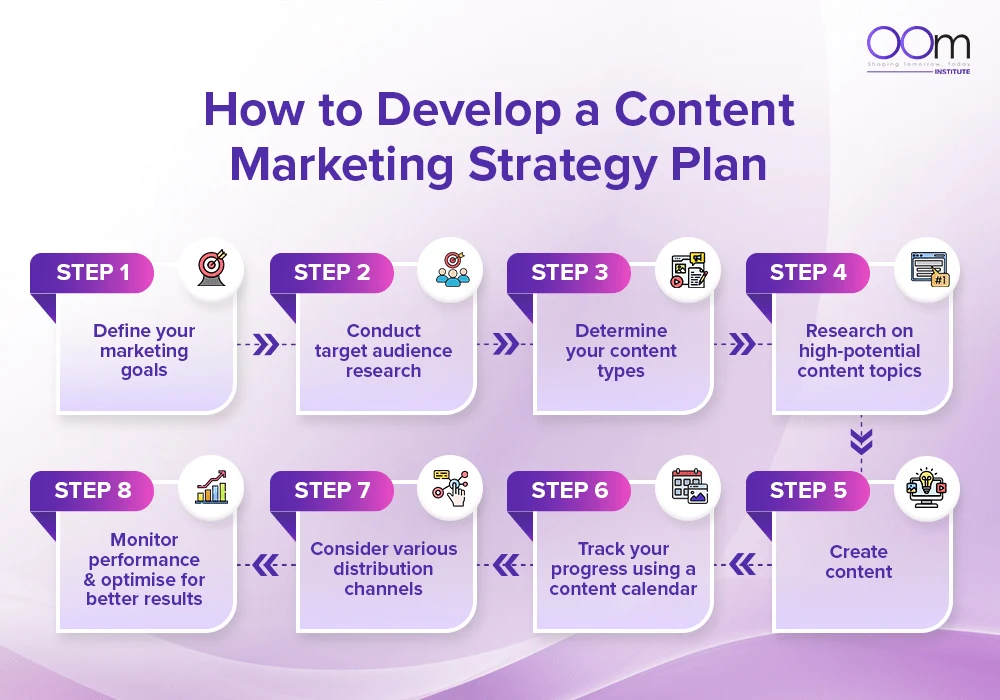
To develop a strategy that delivers results, follow these eight essential steps:
1. Define Your Marketing Goals
The development process begins by defining clear marketing goals. Whether you’re aiming to increase brand awareness, generate leads, or boost sales, your goals should be specific, measurable, achievable, relevant, and time-bound (SMART). These goals will guide your marketing approach and help you measure success effectively.
2. Conduct Target Audience Research
Next, conduct thorough research to identify your audience’s demographics, interests, and pain points. This will help you create content that addresses their needs and preferences to boost engagement and effectiveness. Tools like surveys, social media analytics, and customer interviews will also provide valuable insights into your audience’s behaviour.
3. Determine Your Content Types
Different types of content — blog posts, videos, and infographics — resonate with different audiences. Each type has its unique advantages and can serve varying purposes within your content marketing strategy. For instance, blog posts are great for driving organic traffic, while videos can be more engaging and shareable. Consider which formats will best serve your audience and help you achieve your marketing objectives. Alternatively, opt for a diverse content mix to help you reach different audience segments and cater to various stages of the buyer’s journey.
4. Research on High-Potential Content Topics
To create content that stands out, you need to conduct research and identify high-potential topics that are consistent with your audience’s interests and current trends. Use tools like Google Trends, keyword research tools, and competitor analysis to discover popular topics, keywords, and content gaps that your competitors haven’t addressed. This research will help you create content that not only attracts but also retains your audience’s attention.
5. Create Content
Once you have your topics and content types defined, it’s time to start creating. Focus on producing high-quality, informative, and engaging content that provides value to your audience. Prioritising SEO (search engine optimisation) is crucial here, as it improves your content’s search engine rankings, boosting visibility and driving organic traffic to your site.
6. Track Your Progress Using a Content Calendar
A content calendar is an essential tool for managing and scheduling your content. This tool helps you plan ahead, maintain consistency, and ensure a balanced mix of content types and topics. Additionally, it can help you align your content with important dates, events, or product launches, maximising the impact of your content marketing.
7. Consider Various Distribution Channels
Your content marketing strategy should include a plan for distributing your content across various channels. Consider using social media, email newsletters, and other digital platforms to reach your audience. Each channel has its own audience and best practices, so tailor your content and distribution methods accordingly for greater reach and engagement.
8. Monitor Performance and Optimise for Better Results
Finally, monitoring the performance of your content is crucial to understanding what works and what doesn’t. Monitor metrics such as website traffic, engagement rates, conversion rates, and social shares. Use these insights to refine your content marketing strategy, doubling down on what works and adjusting or eliminating what doesn’t. Continuous optimisation is key to ensuring long-term content marketing success.
How to Upskill Yourself & Build Effective Content Strategies
The content marketing landscape is constantly evolving, with new technologies, platforms, and shifts in consumer behaviour emerging regularly. To build effective, future-proof content strategies, consider these key tips:
1. Stay Updated with Trends and Best Practices
Stay up-to-date with the latest trends and best practices by following industry blogs, attending webinars, and subscribing to newsletters from thought leaders. This will help you keep up with any changes in algorithms, audience preferences, and digital marketing technologies. For instance, you could incorporate the latest AI (artificial intelligence) tools, such as automated copywriting and personalisation platforms, into your content production process to streamline and enhance your marketing efforts. Embracing these technologies will enable you to continuously adapt your approach and create relevant, engaging, and personalised content.
2. Practise Data-Driven Decision Making
A strong grasp of data analysis will enhance the effectiveness of your campaigns. With analytics tools like Google Analytics and social media insights, you can track performance and understand what types of content appeal best to your audience and why. This allows you to optimise your content marketing strategy based on real performance metrics, leading to more informed and effective marketing.
3. Invest in Continuous Learning and Skill Development
To build effective content strategies, you need to continuously expand your skill set. Consider enrolling in WSQ (Workforce Skills Qualifications) courses or certification programs focusing on various aspects of content marketing. These could include courses on SEO, data analytics, social media marketing, or content creation techniques, helping you become better equipped to create strategies that drive results.
Master Content Marketing with Oom Institute
Ultimately, a successful content marketing strategy is not just about creating content; it’s about delivering the right content to the right audience at the right time. To master this approach, let OOm Institute’s educational courses be your guide. We offer a range of WSQ-accredited courses, providing the tools and insights you need to craft targeted, effective campaigns. Plus, with up to 70% course fee subsidies available for businesses in Singapore, investing in your team’s development has never been more affordable.