Key Takeaways
|
Introduction
Disagreements are a natural part of any workplace. Different personalities, priorities, or communication styles can sometimes lead to tension, but how these moments are managed makes all the difference. Applying clear and consistent conflict management strategies helps prevent small misunderstandings from developing into larger challenges that affect morale and productivity.
Instead of reacting only when disputes occur, proactive management builds a workplace culture that values respect and open communication. By identifying early signs of conflict and encouraging constructive dialogue, teams can focus on collaboration rather than division.
In Singapore’s fast-paced business environment, learning how to resolve workplace conflict is not just about maintaining harmony. It also strengthens teamwork, supports employee engagement, and improves overall performance. A thoughtful approach to conflict management strategies enables leaders and staff to handle differences professionally while fostering trust and understanding across all levels of the organisation.
What is Conflict Management in the Workplace
Conflict management in the workplace is the process of recognising, addressing, and guiding disagreements towards constructive outcomes before they disrupt teamwork or performance. It focuses on proactive communication, empathy, and clear decision-making to create a respectful and productive environment.
While conflict resolution deals with repairing relationships after tension has already surfaced, conflict management strategies work to prevent issues from escalating. They equip both leaders and employees with the awareness to recognise early signs of disagreement, understand different viewpoints, and establish systems that encourage cooperation.
Through effective conflict management strategies, teams learn to discuss concerns openly and find solutions without letting emotions or assumptions take over. This promotes balance and mutual respect, helping colleagues work through challenges with professionalism and care.
Ultimately, these strategies transform potential disagreements into opportunities for growth, learning, and stronger collaboration, ensuring that workplace harmony is built on trust, accountability, and shared purpose.
Importance of Conflict Management Strategies
Disagreements are a natural part of any organisation, but without structure or guidance, they can quickly grow into larger issues that affect productivity, morale, and trust. Applying effective conflict management strategies ensures that these moments are addressed with understanding and purpose rather than emotion or reaction.
The importance of these strategies lies in their ability to preserve stability and build a culture where communication remains open and respectful. When employees feel confident expressing their views and raising concerns early, potential misunderstandings can be resolved before they escalate. This sense of openness also strengthens accountability across teams.
Structured conflict management strategies help reduce the hidden costs of workplace tension, including absenteeism, disengagement, and staff turnover. They give leaders a clear framework for intervention and provide employees with the confidence to handle disagreements constructively.
Over time, well-managed conflict contributes to stronger performance, trust, and collaboration. By promoting dialogue, clarity, and empathy, organisations can transform differences into opportunities for learning and shared success.
Benefits of Conflict Management in the Workplace
Implementing structured conflict management strategies benefits both individuals and organisations. Beyond preventing minor misunderstandings from escalating, these approaches help nurture a workplace culture built on respect, accountability, and collaboration. Below are the key advantages of applying proactive conflict management in daily operations.
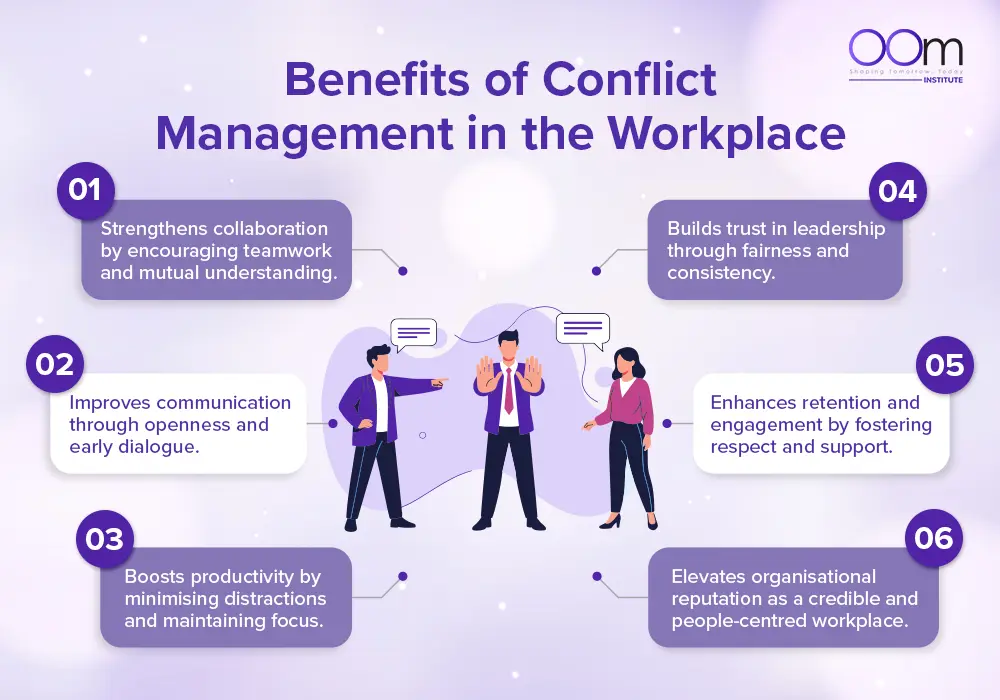
1. Improved Collaboration
Addressing disagreements constructively encourages employees to work together despite differing views. Through active listening and empathy, teams learn to find common ground and pursue shared goals. This cooperation enhances creativity, innovation, and teamwork across departments.
2. Enhanced Communication
With effective conflict management, communication becomes clearer and more transparent. Employees are encouraged to raise concerns early, while leaders develop the ability to guide discussions calmly and objectively. This open exchange reduces misunderstandings and strengthens working relationships.
3. Increased Productivity
Unresolved conflict often distracts employees and reduces efficiency. Managing issues early allows teams to stay focused on objectives, ensuring that time and energy are directed towards meaningful outcomes. Conflict management helps minimise disruptions and maintain steady progress.
4. Greater Trust in Leadership
Leaders who apply conflict management strategies consistently demonstrate fairness and balance. When employees see that concerns are handled impartially, trust in leadership grows. This trust encourages honest communication and deeper engagement at all levels.
5. Higher Retention and Engagement
A workplace that values transparency and mutual respect naturally fosters loyalty. Employees who feel supported during disagreements are more likely to stay, contributing to a stable and motivated workforce. Engaged employees also bring greater enthusiasm and commitment to their roles.
6. Stronger Organisational Reputation
Organisations with good conflict management practices are viewed as credible and people-centred. A positive internal culture enhances reputation externally, attracting skilled professionals and reinforcing confidence among partners and clients.
When applied consistently, conflict management strategies transform friction into opportunities for improvement. They create a resilient workforce that thrives on cooperation, trust, and shared success.
7 Conflict Management Strategies in the Workplace
Every organisation benefits from having clear, structured approaches to managing differences before they escalate. Effective conflict management strategies strengthen understanding, improve communication, and foster respect across all levels of a company. Below are seven practical approaches that help create harmony, trust, and lasting productivity in the workplace.
Learning how to prevent workplace conflict begins with building awareness, promoting empathy, and maintaining open dialogue.
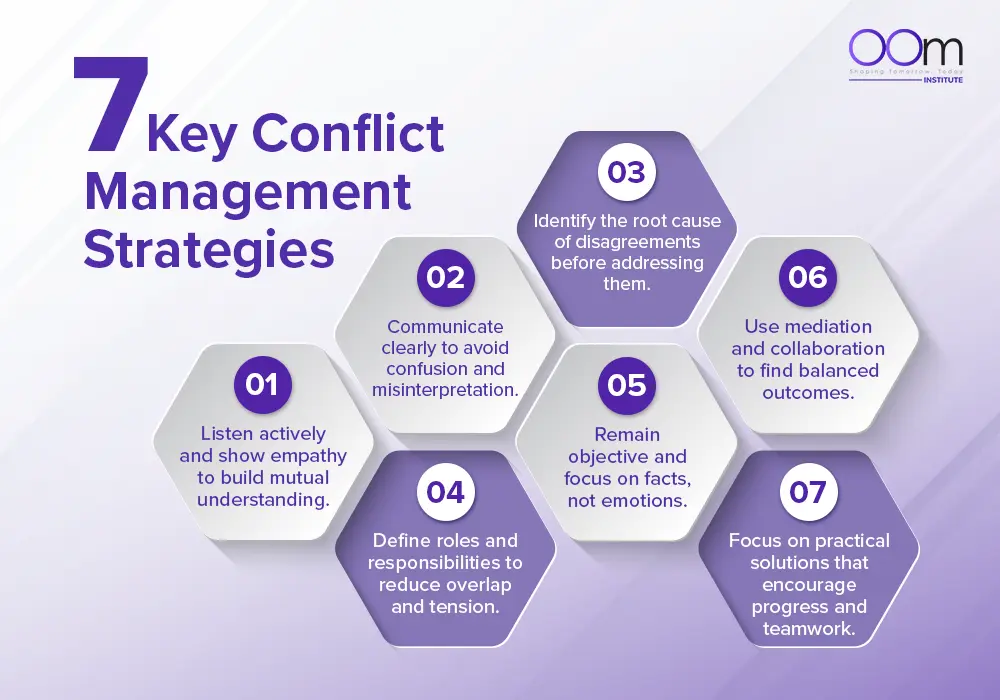
a. Active Listening and Empathy
Active listening forms the foundation of all conflict management strategies. It involves paying full attention to what others are saying, acknowledging their emotions, and showing genuine interest in their perspective. Empathy helps to reduce tension, as employees feel valued and understood. When people feel heard, they become more willing to work together to find fair and lasting solutions.
b. Clear Communication
Miscommunication is one of the most common triggers of workplace conflict. Promoting open, direct, and respectful dialogue helps prevent misunderstandings before they occur. Regular feedback sessions, transparent updates, and clear documentation ensure that everyone shares the same expectations and objectives.
c. Identifying the Root Cause
Addressing only surface-level issues often leads to recurring disagreements. Effective conflict management strategies involve identifying the underlying causes, such as unclear expectations, misaligned goals, or interpersonal friction. By understanding what drives the conflict, teams can resolve it meaningfully and prevent similar situations from arising again.
d. Defining Roles and Responsibilities
Unclear job scopes or overlapping duties often create frustration within teams. Clearly defining responsibilities builds accountability and reduces confusion. When employees understand their contributions and boundaries, projects run more smoothly and tension is minimised. Clear role definition is an essential part of conflict management that supports cohesive teamwork.
e. Remaining Objective
Workplace conflicts can become emotionally charged. Remaining objective helps individuals and managers focus on facts rather than personal differences. By approaching disagreements calmly and fairly, leaders model professionalism and show that all concerns are treated with equal respect. Objectivity builds confidence in how conflicts are managed across the organisation.
f. Mediation and Collaboration
When disputes cannot be resolved directly, mediation offers a neutral and constructive platform for discussion. Collaborative conflict management encourages each party to share perspectives and contribute to a mutually beneficial outcome. Mediation not only resolves the issue at hand but also strengthens cooperation for future interactions.
g. Focus on Solutions
The most effective conflict management strategies are centred on solutions. Teams should channel their energy into creating actionable steps that achieve shared goals instead of revisiting past mistakes. A solution-focused mindset promotes accountability and progress, turning disagreements into opportunities for improvement and innovation.
By integrating these strategies into daily workplace interactions, organisations can cultivate a culture where issues are addressed early, communication remains open, and collaboration thrives. Such an environment not only prevents disputes from escalating but also supports long-term harmony and productivity.
The Thomas-Kilmann Conflict Modes (TKI): Applying to the Workplace
The Thomas-Kilmann Conflict Mode Instrument (TKI) is a well-recognised framework that helps individuals understand how they approach disagreements. It identifies five distinct modes of behaviour that describe how people respond to tension, assert their needs, and manage interpersonal challenges. Incorporating this model into conflict management strategies enables teams to handle disputes with greater awareness, respect, and cooperation.
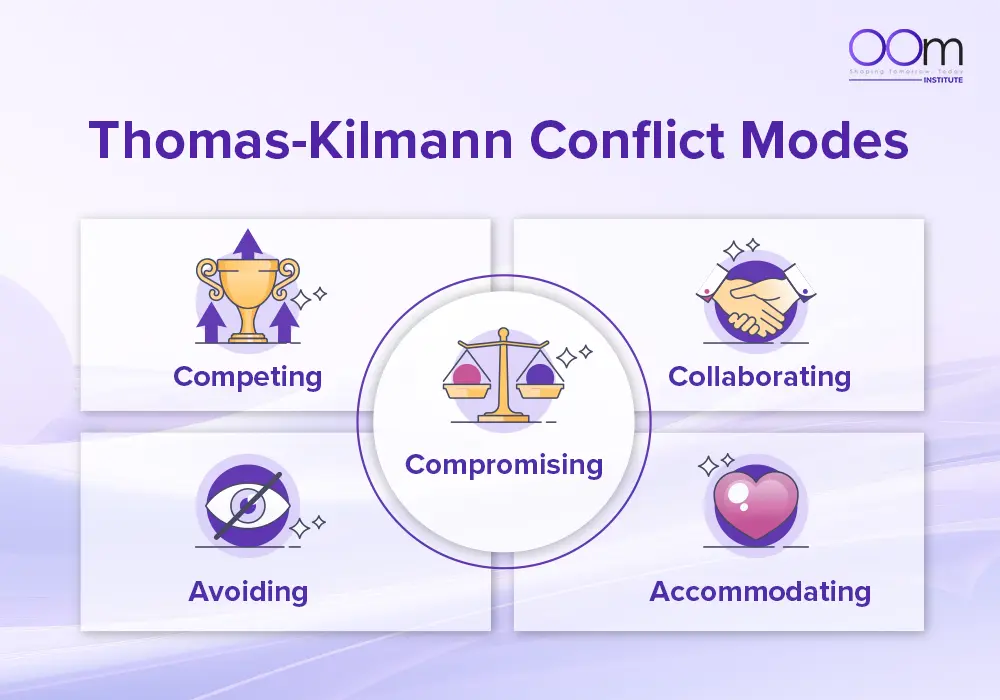
The five modes include:
1. Competing
This mode focuses on standing firm to achieve a specific goal. It is valuable in situations that require fast, decisive action, such as emergencies or critical decision-making. However, relying on it too often can create strain if others feel their input is undervalued.
2. Collaborating
Collaboration seeks outcomes where everyone benefits. Through open dialogue and mutual respect, this mode encourages creativity, innovation, and stronger working relationships. It is one of the most balanced approaches within conflict management, promoting trust and long-term cooperation.
3. Compromising
Compromise involves finding a middle ground where each party gives up something to reach a practical solution. It works well when time or resources are limited, and a balanced outcome is more important than achieving perfection.
4. Avoiding
At times, taking a step back allows emotions to settle before re-engaging in discussion. While avoidance can prevent unnecessary escalation, it should be temporary. Readdressing the issue once all parties are ready helps maintain progress and understanding.
5. Accommodating
This mode prioritises maintaining relationships over immediate outcomes. It can preserve harmony when issues are minor or when one side values goodwill more than the result. However, it must be used carefully to prevent long-term imbalance or resentment.
When integrated into workplace conflict management strategies, the TKI model helps employees and leaders recognise their behavioural tendencies and adapt their approaches to different situations. Understanding when to compete, collaborate, or compromise allows teams to resolve differences consciously and build outcomes that align with both organisational objectives and mutual respect.
Equip Your Team with Conflict Management Training
Even in well-functioning teams, disagreements can occur. The key difference lies in how prepared employees are to manage these moments constructively. Providing structured training helps individuals develop the awareness, confidence, and skills needed to apply effective conflict management strategies in day-to-day workplace situations.
A well-designed training programme equips participants with practical tools to recognise early signs of tension, communicate with empathy, and maintain objectivity during difficult conversations. It also allows managers to practise mediation techniques, understand different communication styles, and guide discussions towards productive outcomes.
Enrolling in a conflict management course in Singapore helps organisations build a culture of professionalism and mutual understanding. Through guided workshops, employees learn how to apply conflict management strategies consistently, preventing minor disagreements from escalating into major disruptions.
Teams can also enhance their communication abilities through structured learning. Complementing conflict management training with mastering effective workplace communication skills enables employees to express ideas clearly, listen actively, and collaborate more effectively. Together, communication and conflict management strengthen workplace relationships and promote long-term cohesion.
OOm Institute offers professional workplace training programmes designed to help teams master these essential skills. Through guided learning, scenario-based practice, and expert facilitation, participants gain the confidence to handle disagreements constructively and foster a culture of trust.
Take the next step towards creating a respectful and resilient workplace. Empower your team with the knowledge, confidence, and practical tools to manage challenges constructively through OOm Institute’s comprehensive corporate training programmes.