Key Takeaways
|
Introduction
Digital skills encompass the practical abilities employees need to work confidently with digital platforms, systems, and information.
In a corporate setting, digital skills extend beyond basic software knowledge. They include collaborating through digital platforms, interpreting data to inform decisions, adapting to new technologies, and practising responsible cybersecurity habits.
An employee with strong digital capabilities is not merely comfortable using a computer; they can navigate digital workflows confidently and contribute meaningfully to organisational objectives.
As automation, artificial intelligence (AI), and data-driven processes continue to reshape industries, the need for digital capability across the workforce is becoming increasingly urgent.
Organisations that invest in digital upskilling are better positioned to improve efficiency, explore new ideas, and respond quickly to changing market conditions.
Those who postpone this investment may find it harder to keep pace as technology becomes an everyday aspect of business operations.
Why Digital Skills Are Non-Negotiable for Corporations
The definition of digital skills has evolved considerably over the last decade. Previously, these skills were typically linked to IT specialists or technical departments.
Now, digital competence is expected in almost every role within an organisation, from administrative and operational staff to senior management.
This shift is partly due to the rapid growth of AI-powered tools, automation systems and advanced analytics. Many routine processes that once required manual effort can now be completed using intelligent technologies.
However, this does not negate the need for human input.
Instead, employees are increasingly expected to oversee digital systems, interpret results and refine processes to ensure technology supports business objectives.
When employees lack these capabilities, organisations may find themselves possessing advanced tools without fully benefiting from them.
Technology alone does not guarantee efficiency or innovation; it is the people who understand how to use and improve these systems who ultimately unlock their value.
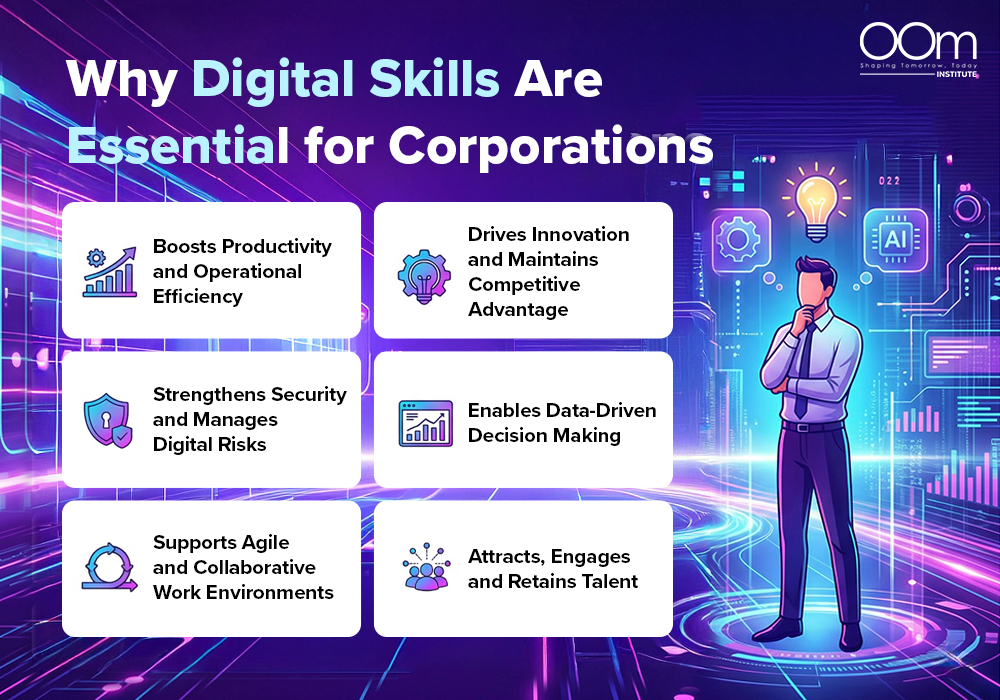
A. Enhanced Productivity and Operational Efficiency
When employees cultivate robust digital capabilities, they can complete everyday tasks more efficiently and with fewer errors.
Digital platforms, integrated systems and automated workflows using AI help to minimise duplicated effort while improving information flow across teams and departments.
This enables employees to spend less time on routine tasks and more time on meaningful work, such as analysing information, planning strategies and developing new ideas that support organisational progress.
B. Competitive Advantage and Continuous Innovation
Organisations that invest in workforce development often find it easier to adopt and adapt to new technologies.
Employees confident in using digital tools are more likely to experiment with new systems, suggest improvements to existing processes, and recognise opportunities where technology can support innovation.
Strengthening AI skills across departments also helps organisations explore emerging technologies with greater confidence.
Instead of depending entirely on external consultants, internal teams can integrate digital solutions into everyday workflows, allowing innovation to develop from within the organisation itself.
C. Improved Safety, Security and Risk Management
Cybersecurity threats are constantly evolving, and many incidents stem from human error rather than technical system failures.
Employees who understand safe digital practices are better equipped to recognise phishing attempts, manage sensitive information responsibly, and avoid actions that could compromise organisational data.
Training that emphasises responsible digital behaviour helps build a stronger culture of awareness throughout the organisation.
When employees understand how their daily actions affect data security, companies are better able to reduce operational risks and strengthen their overall resilience against cyber threats.
D. Data-Driven Decision-Making
Modern organisations generate substantial volumes of operational and customer data daily.
However, this data only becomes valuable when employees can interpret it and apply the resulting insights effectively.
When staff develop analytical skills, they can more readily work with dashboards, reports, and visual data to identify patterns and trends.
These insights enable management teams to make better-informed decisions, based on measurable evidence rather than assumptions or conjecture.
E. Modern, Agile Work Environments
Digital tools have transformed collaboration and work management within organisations.
Remote platforms, cloud-based document systems and project management software now enable teams to coordinate tasks and share information seamlessly across departments and locations.
Employees who are comfortable working in digital environments adapt more easily to these working methods.
Strong workplace communication skills enable teams to exchange information clearly, stay aligned on projects and remain productive, even when operating across different time zones or in hybrid work arrangements.
F. Talent Attraction, Engagement and Retention
Employees are increasingly seeking workplaces that foster continuous learning and professional development.
Organisations that invest in skills development often attract individuals motivated to enhance their capabilities and build long-term careers.
Digital upskilling initiatives demonstrate a company’s commitment to developing its workforce, rather than merely expecting employees to adapt to change independently.
This sense of investment can strengthen engagement, improve job satisfaction, and encourage employee retention.
Core Digital Skills Every Corporate Should Prioritise
Digital capabilities evolve at different rates and to varying degrees across roles. While some skills are fundamental for daily tasks, others support more specialised or technical responsibilities.
Consequently, organisations often categorise digital competencies into foundational, intermediate, and advanced levels when planning workforce development.
This structured approach enables companies to identify the priority capabilities for employees and to chart the progressive development of skills as technology becomes more integrated into routine operations.
I. Foundational Skills
A. Digital Literacy and Device Proficiency
For many employees, digital literacy is the foundation for confident working in a technology-driven environment. This includes understanding how to operate common devices, organise digital files, and navigate the essential workplace software used in daily tasks.
While these abilities may seem basic, they provide the groundwork for developing more advanced digital competencies. Without a solid grounding in digital literacy, employees may struggle to adopt new tools or participate fully in increasingly digital workflows.
B. Communication and Collaboration
Digital platforms are now central to team communication and collaboration. Employees are routinely expected to use messaging tools, shared documents, and project management systems to exchange information, coordinate tasks, and monitor progress.
Strong communication skills ensure that ideas are shared clearly and responsibilities remain aligned across teams. When employees are adept at using digital platforms, collaboration is smoother, even when colleagues are working remotely or across different departments.
C. Cybersecurity Basics
Protecting organisational data is not solely the responsibility of IT departments; every employee plays a part in maintaining digital security within the workplace. Foundational cybersecurity awareness often includes practices such as creating secure passwords, recognising suspicious emails, and handling sensitive information with care.
When employees understand these basic precautions, the organisation is better protected against avoidable security incidents. Small, everyday actions, when practised consistently across teams, can significantly reduce the risk of data breaches or system compromise.
II. Intermediate Skills
A. Data Analysis and Visualisation
Effective business decisions rely on the ability to interpret and apply data. Employees with intermediate digital skills can work with datasets, recognise patterns, and present findings using charts, dashboards, or other visual formats.
When teams understand how to translate data into meaningful insights, they are better equipped to identify inefficiencies, monitor key performance indicators, and make informed adjustments to improve processes and outcomes.
B. Digital Content Creation and Marketing
In sectors reliant on customer engagement, the capacity to create and manage digital content has become ever more valuable.
Employees in marketing or communications roles may be responsible for producing digital assets, coordinating online campaigns, or analysing customer behaviour across digital platforms.
Developing these capabilities enables organisations to communicate more effectively with their target audiences. It also bolsters brand presence and facilitates more targeted outreach based on customer interactions across digital channels.
C. Problem-Solving in Digital Environments
Technology often introduces new challenges, from software disruptions to unexpected workflow issues. Employees who develop strong problem-solving skills are better equipped to identify the root cause of these problems, evaluate potential solutions, and adjust processes where necessary.
This adaptability becomes especially valuable in organisations that regularly adopt new tools or systems. When employees can respond calmly and methodically to digital challenges, teams are better able to maintain productivity while adapting to evolving technologies.
III. Advanced Skills
A. AI and Machine Learning
AI technologies are expanding rapidly across numerous industries, influencing how organisations analyse data, automate tasks, and support decision-making.
Understanding how AI systems function enables employees to work more effectively with these tools, rather than simply relying on them.
Employees who develop digital skills can supervise automated processes, assess the outputs produced by algorithms, and recognise potential limitations or biases within AI systems.
This awareness supports more responsible technology use, while helping organisations apply AI solutions in ways that genuinely improve efficiency and outcomes.
B. Cloud Computing and Automation
Cloud platforms allow organisations to store data, run applications, and manage workflows across distributed systems, without reliance on a single physical location.
Familiarity with cloud-based tools enables teams to access information easily, collaborate in real time, and support scalable operations as business needs evolve.
Automation technologies also play a key role in contemporary digital environments.
By reducing repetitive administrative tasks through solutions such as workflow automation, employees can dedicate more time to analytical work, planning, and other responsibilities that contribute more directly to organisational goals.
C. Programming Basics
While not every employee needs to become a programmer, a basic understanding of coding concepts can help individuals to better grasp how digital systems and applications work.
This foundational knowledge makes it easier for employees to communicate with technical teams, understand system limitations, and participate more effectively in discussions about digital projects or process improvements.
Strategies for Implementing Digital Upskilling in Your Organisation
Adopting new technology alone does not guarantee meaningful transformation. For digital initiatives to deliver real value, employees must understand how to use these tools confidently and integrate them into their daily workflow.
Effective digital upskilling focuses on building practical capabilities throughout the organisation, ensuring that teams are prepared to adapt to new systems, workflows, and technologies as they emerge.
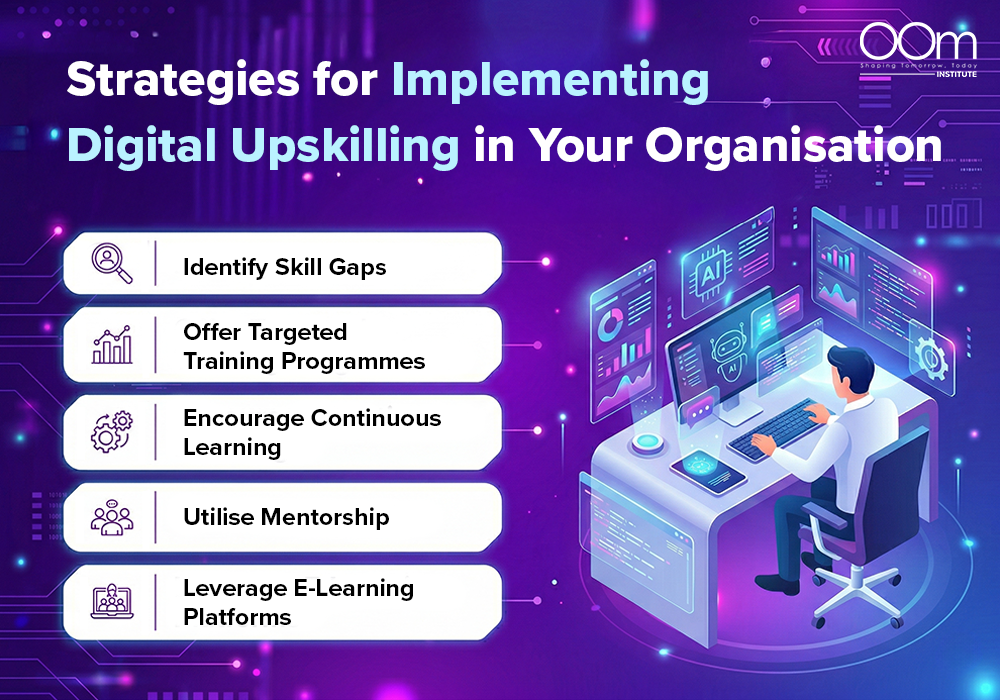
1. Identify Skill Gaps
The starting point for any digital upskilling endeavour is to understand the existing capabilities of the workforce. Skills assessments, employee surveys, and performance reviews can reveal knowledge gaps and highlight areas that require further development.
With clearer insights into these gaps, organisations can plan training initiatives that address specific needs, rather than relying on broad, generic programmes that may not produce meaningful results.
2. Offer Targeted Training Programmes
Structured learning opportunities remain one of the most effective ways to strengthen workforce capabilities. Many organisations partner with training providers that deliver specialised corporate training programmes focused on practical digital competencies.
These programmes may range from introductory workshops that build foundational knowledge to more advanced courses aligned with industry frameworks. Programmes such as WSQ Courses provide structured learning pathways that support recognised professional standards.
3. Encourage Continuous Learning
Digital technologies evolve rapidly, which means employees need opportunities to update their knowledge regularly. Encouraging continuous learning helps ensure that digital capabilities remain relevant as new tools and systems emerge.
Organisations can support this by providing access to short courses, professional development workshops, and online learning resources that allow employees to strengthen their skills over time.
4. Utilise Mentorship
Learning from colleagues can be a valuable complement to formal training. Employees who are already comfortable with digital tools can guide others through new systems or workflows, helping teams to adapt more quickly.
Mentorship initiatives also encourage collaboration across departments, while creating opportunities for knowledge sharing within the organisation.
5. Leverage E-Learning Platforms
Digital learning platforms provide flexible training options for employees who may not always be able to attend in-person sessions. Online modules, virtual workshops, and interactive learning environments allow staff to develop new competencies while continuing with their daily responsibilities.
This flexibility makes it easier for organisations to support workforce development without disrupting ongoing operations.
Navigating Challenges and Emerging Trends
While digital upskilling offers distinct advantages, organisations often encounter challenges when implementing these initiatives.
One common obstacle is resistance to change. Employees accustomed to familiar processes may feel uncertain about adopting new tools or systems.
Addressing these concerns requires open communication and reassurance that digital technologies are intended to support, rather than replace, their roles.
Another challenge lies in the rapid pace of technological evolution. New platforms, applications and tools appear regularly, meaning training efforts cannot remain static.
Organisations may need to review their learning strategies periodically to ensure that the skills being developed continue to reflect current workplace demands.
Concurrently, several trends are shaping the future of workforce development. The growing use of artificial intelligence, wider adoption of automation and increasing reliance on data analytics are changing how organisations operate.
Businesses that recognise these shifts early can better prepare their teams to adapt, enabling employees to remain effective as digital technologies continue to evolve.
How OOm Institute Supports Organisations in Digital Upskilling
Organisations seeking to strengthen workforce capabilities often collaborate with specialist training providers that focus on practical, workplace-relevant learning.
OOm Institute offers structured programmes designed to help companies build meaningful digital skills across various roles and departments.
Through hands-on learning modules and industry-focused frameworks, organisations can develop internal capabilities that keep pace with evolving technologies and business demands.
These programmes cover areas such as digital marketing, data analysis, AI applications and workplace communication, helping employees understand how technology supports everyday business functions.
By applying their learning to real-world scenarios, employees gain greater confidence in using digital tools while contributing more effectively to organisational goals.
Conclusion
Digital transformation continues to influence how organisations operate, communicate, and make decisions. As technology becomes increasingly embedded in daily business processes, the need for strong digital skills across the workforce is growing.
Companies that invest in workforce development are better positioned to innovate, adapt, and remain competitive in a rapidly changing environment.
From foundational digital literacy to advanced capabilities, such as automation and AI, each level of skill strengthens organisational performance.
When businesses prioritise digital skills in their corporate development, employees are better prepared to navigate evolving technologies and contribute meaningfully to modern workflows.
Speak with our team today to find a training programme that supports your organisation’s digital transformation goals.
Frequently Asked Questions
1. How has AI changed our understanding of digital skills?
Artificial intelligence has broadened organisational expectations of employees. Digital skills now extend beyond simply operating software. Employees are increasingly expected to understand how AI tools support workflows, review automated outputs, and apply these technologies responsibly within their roles.
2. Which digital skills deliver the greatest productivity boost for employees?
Skills related to automation, data analysis, and digital collaboration often yield the most noticeable productivity improvements. When employees can streamline processes, interpret data clearly, and work efficiently through digital platforms, tasks are completed faster, and decisions can be made with greater confidence.
3. What is the difference between basic and advanced digital skills?
Basic digital skills focus on everyday abilities, such as operating devices, organising files, and using communication or productivity tools. Advanced digital skills involve more specialised knowledge, including automation systems, artificial intelligence applications, data engineering, or programming concepts.
4. How can employers help close the digital skills gap?
Employers can help close the digital skills gap by investing in structured training, encouraging continuous learning, and creating opportunities for employees to practise new technologies in their daily work. Clear learning pathways and practical application help employees build confidence while strengthening organisational capabilities.
5. How can companies pursue digital upskilling in Singapore?
Companies in Singapore often partner with accredited training providers that offer industry-recognised professional development programmes. These programmes provide structured learning pathways that help organisations strengthen practical digital capabilities while supporting broader workforce development initiatives.
6. Are foreign employees or non-Singaporeans in our company eligible for SkillFuture subsidies meant for digital upskilling?
Most SkillsFuture subsidies are intended for Singapore citizens and permanent residents. Companies may still enrol foreign employees in training programmes, although subsidy eligibility may vary depending on the specific course and funding scheme. Organisations are encouraged to check the latest eligibility guidelines before enrolling employees.