Key Takeaways
|
Introduction: What Are Agentic AI Tools?
Agentic AI tools represent a new generation of artificial intelligence that can take purposeful action rather than wait for repeated prompts. These systems are able to plan tasks, make context-aware decisions, and complete multi-step workflows with minimal guidance. This creates a more active form of support that helps you move towards real outcomes instead of isolated responses.
What makes these tools especially compelling is their goal-oriented behaviour. Once you set a direction, they can gather information, decide what to do next, and adjust their actions as new details appear. Instead of functioning as passive content generators, they become participants in your daily work, capable of progressing through tasks with a sense of continuity.
As digital demands grow, many people are exploring agentic AI as a practical way to manage complexity and maintain efficiency. Understanding how these tools operate, how they differ from traditional AI systems, and where they fit in modern organisations provides a helpful foundation for anyone considering their adoption.
Why Agentic AI Matters for Businesses
Agentic AI tools matter because they move organisations beyond basic automation and into goal-driven execution. Many companies today face growing workloads, higher customer expectations, and increasing pressure to operate efficiently. Traditional AI can support part of this demand, but agentic systems offer a more active way to manage work and maintain momentum.
Businesses benefit when a tool can carry out a task from start to finish rather than producing isolated outputs. Agentic AI tools can gather information, organise the steps needed, and progress through a workflow without constant checking. This helps reduce repetitive effort, shorten decision-making time, and create processes that run more consistently across teams.
The technology is especially relevant for organisations that depend on knowledge-intensive work. Activities such as research, analysis, planning, and drafting often require time and sustained focus. Agentic AI tools can support these tasks in the background and give employees more room to focus on judgment, creativity, and strategic thinking.
As companies in Singapore continue adapting to rapid digital shifts, agentic AI has become a practical way to strengthen productivity and manage complexity with greater confidence. These tools introduce a more responsive style of working that helps teams stay organised, move faster, and reduce everyday operational delays.
Key Features of Agentic AI Tools
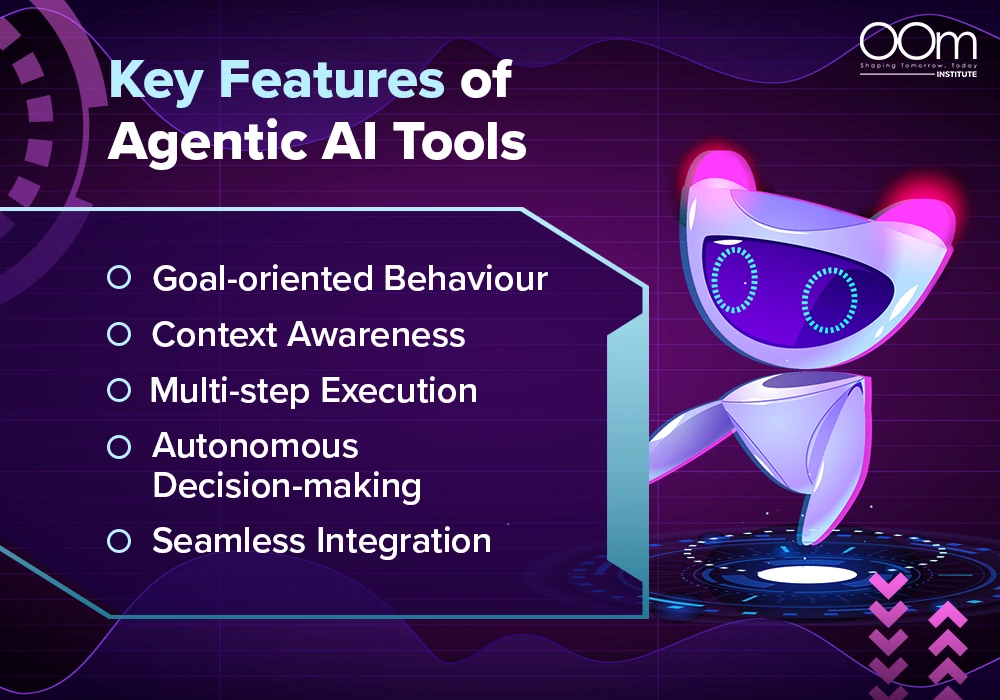
Agentic AI tools are defined by several core features that enable them to operate with a greater degree of independence and reliability. These characteristics set them apart from traditional AI systems that depend on step-by-step prompting.
Goal-oriented behaviour
Agentic systems work towards a defined objective rather than producing single, isolated responses. Once you set a goal, the tool evaluates what information it needs, identifies the required steps, and moves steadily towards the outcome.
Context awareness and adaptability
These tools can adjust their actions when new information becomes available or conditions change. Instead of waiting for further instruction, they update their plan and continue the task, creating smoother workflows and reducing the need for constant supervision.
Multi-step task execution
Agentic AI can break larger tasks into smaller components, complete each stage, and maintain progress until the work is finished. This is particularly helpful for research, report generation, and automation tasks that rely on sustained momentum.
Autonomous decision-making
Within user-defined boundaries, the system can decide what to prioritise, which resources to draw from, and how to approach each phase of the task. This keeps the process controlled while still allowing the tool to act with initiative.
Integration with business tools and data
Many agentic AI platforms connect directly to existing software, databases, and APIs. These integrations allow the tools to gather information, update systems, and coordinate work across different environments without manual intervention.
Together, these features allow agentic AI tools to act as active problem-solvers that work alongside your team, helping you achieve outcomes with greater consistency, clarity, and efficiency.
10 Best Agentic AI Tools for Businesses
Tool | What It Does | Strengths | Best Use Cases | Limitation |
GenSpark Super Agent | Focuses on rapid task execution and high-speed orchestration across complex workflows, including research, content pipelines, and data-driven tasks. *P.S. Learn more about GenSpark in our Gen AI course! | Handles large volumes of information quickly and coordinates multiple steps with reliable consistency. | Fast-turnaround work, automated research, structured content production, and operational workflows. | Depends heavily on clear prompts and well-defined task boundaries. |
Manus | Provides a framework for building multi-agent systems, with each agent performing a specific task and collaborating to meet larger objectives. | Strong inter-agent collaboration and flexible configuration for specialised roles. | Cross-functional automation, customer support analysis, business planning, and large-scale data processing. | Multi-agent setups may become complex without clear internal structures. |
Beam AI | Offers agentic systems tailored for sales and revenue operations, analysing communication patterns and supporting pipeline tasks. | Sales-focused features that streamline follow-ups, data entry, and communication workflows. | Sales teams, customer engagement work, and organisations needing consistent outreach. | Most effective in sales environments, limiting broader operational use. |
LangChain | Serves as a development framework for creating custom agentic workflows that integrate with large language models, APIs, and enterprise data. | Highly flexible with strong community support, suitable for organisations that want deeper control over agent design. | Custom agents, innovation labs, R&D environments, and internal productivity tools. | Requires technical expertise to build and maintain solutions. |
StackAI | Allows users to deploy agent-driven workflows without coding, focusing on practical applications such as chatbots and internal assistants. | User-friendly interface with accessible drag-and-drop features. | Non-technical teams that want to launch agentic workflows quickly. | Offers less customisation compared to developer-oriented platforms. |
Dataiku | Combines data analytics, machine learning, and agentic automation to support enterprise-level decision-making. | Strong governance, collaboration tools, and the ability to manage large datasets. | Data teams, analysts, and organisations linking agentic systems to business intelligence. | It can feel extensive or complex for small teams needing lightweight solutions. |
Amazon Bedrock AgentCore | Enables businesses to build fully managed agents that can access enterprise data, APIs, and tools through the Bedrock ecosystem. | Scalability, AWS integration, and robust enterprise controls. | Large organisations with cloud infrastructure and sophisticated automation needs. | Works best for companies already invested in AWS. |
Orby AI | Learns operational tasks by observing human actions, then automates those patterns as agentic workflows. | Reduces manual setup through direct observation of real work processes. | Back-office operations, administrative routines, document workflows, and repeated multi-step tasks. | Accuracy depends on high-quality demonstrations. |
ScreenMate AI | Acts as an on-screen assistant that interacts with software interfaces to complete tasks across applications. | Mimics human interactions with digital systems, making it useful for legacy tools. | Automation for teams that cannot alter existing software or rely on interface-level tasks. | Performance varies when software layouts or system stability change. |
Devin AI | Positions itself as an autonomous software engineering agent capable of planning, coding, debugging, and executing development tasks. | Offers structured support for technical teams handling development workflows. | Software engineering projects, prototypes, documentation, and repeated coding tasks. | Requires human review to ensure safe and accurate production-level output. |
How to Choose the Right Agentic AI Tools
Choosing the right agentic AI tools begins with understanding your organisation’s specific needs. Each tool is designed with different strengths, so the best option depends on the workflows you want to improve. Some teams may prioritise research and content creation, while others focus on sales operations, data analysis, or software development.
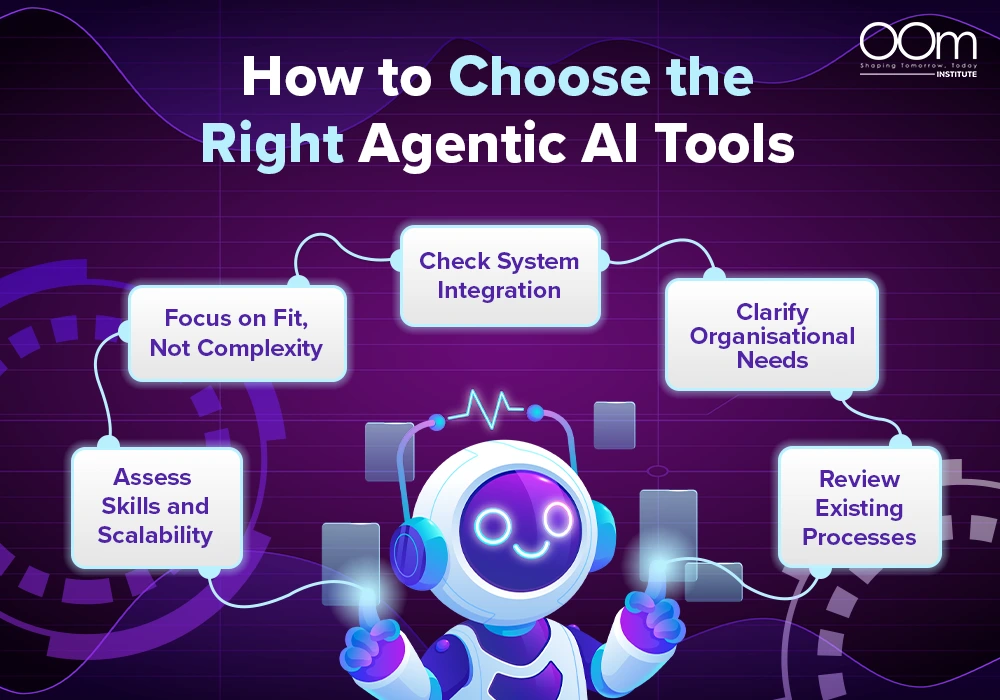
A practical first step is reviewing your current processes. Identify tasks that take the most time, involve repeated steps, or require consistent accuracy. Agentic AI tools are most effective when they support tasks with clear patterns, structured decision points, or predictable outcomes.
It is also crucial to consider how well a tool integrates with your existing systems. Certain platforms connect seamlessly with common business applications, while others are better suited for custom environments. Aligning the tool with your technology stack reduces friction during adoption and supports smoother long-term use.
Budget, internal skill sets, and future scalability are also part of the evaluation. A sophisticated platform may seem appealing, but it can introduce complexity if your team is not prepared for it. In contrast, a flexible and well-supported tool can grow with your organisation and adapt as your digital capabilities evolve.
When you weigh these factors together, the comparison becomes clearer. The goal is not to choose the most advanced tool, but the one that aligns naturally with your daily operations and addresses real challenges within your organisation.
Challenges and Risks of Agentic AI Tools
Agentic AI tools create meaningful opportunities, but they also introduce practical challenges that organisations must understand before using them at scale. Recognising these risks early allows businesses to plan responsibly and reduce disruption during implementation.
- Overhyped Tools and “Agent Washing”
Growing interest in agentic systems has led some vendors to market basic AI features as agentic, even when the tools offer little autonomy. This can mislead buyers who expect goal-driven behaviour but receive a simple prompt-response model instead. The gap between expectations and actual performance often slows adoption and weakens trust. Careful evaluation, demonstrations, and hands-on testing are essential before committing to any platform.
- Complexity and Skill Requirements
Agentic AI tools often require users to think more deeply about workflows, decision points, and possible failure modes. Technical tools may call for skills in programming, data structures, or integration design. Even no-code platforms benefit from users who know how to break tasks into logical steps and set clear objectives. Without these skills, teams may find it difficult to realise the full benefits of the technology or may create agents that behave unpredictably.
- Security and Governance
Because these systems can access data, interact with applications, and take action across environments, strong security controls are critical. Unrestricted permissions or unclear boundaries can increase exposure to data risks and operational errors. Organisations also need governance frameworks that define how agents are monitored, approved, and audited. These safeguards are fundamental when tools interact with customer information or external services.
These challenges do not reduce the value of agentic AI tools, but they highlight the need for thoughtful preparation. When businesses approach adoption with clear expectations, structured oversight, and the right skills in place, the technology becomes far easier to manage and integrate sustainably.
Skills Teams Need Before Adopting Agentic Tools
Agentic AI tools work best when teams know how to guide them, monitor their behaviour, and refine their outputs. Skill readiness, therefore, becomes a key factor in successful adoption.
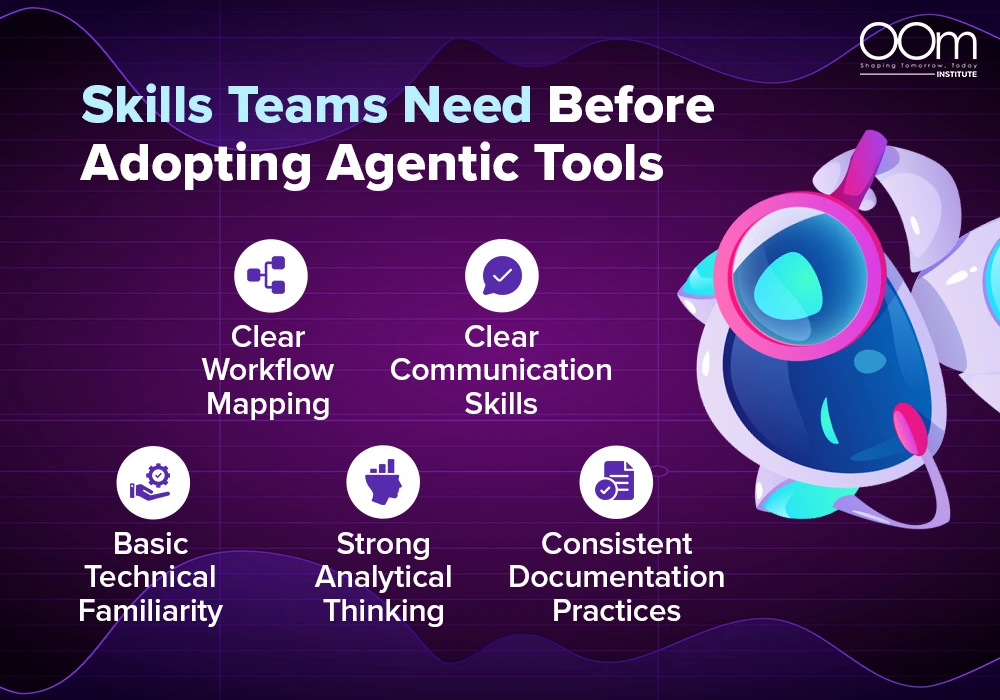
A strong foundation begins with the ability to map workflows clearly. Teams need to understand the steps involved in a task, recognise decision points, and define what a successful outcome should look like. Without this clarity, an agent may interpret the task incorrectly or produce results that do not align with organisational standards.
Analytical thinking is equally critical. Users must be able to evaluate how an agent behaves, interpret its choices, and identify where adjustments may be needed. This level of awareness keeps the system reliable, especially when agents handle tasks that involve judgment or sensitive information.
A degree of technical familiarity also helps teams adopt agentic tools more smoothly. Even when platforms offer no-code features, knowledge of APIs, data structures, and system permissions allows teams to design safer, more efficient workflows. This reduces the likelihood of errors when agents interact with internal systems and ensures that access controls remain secure.
Clear communication and documentation skills complete the picture. Teams must express instructions in a way that the system can interpret, record how tasks are structured, and maintain visibility over what the agent is doing. Strong documentation supports governance and helps new team members understand how to collaborate with automated systems.
When these skills are in place, organisations are far better positioned to use agentic AI tools confidently, reduce mistakes, and achieve long-term, reliable outcomes.
Upskilling Teams to Use Agentic AI Effectively
Upskilling is one of the most effective ways for organisations to unlock the full value of agentic AI tools. These systems work best when users understand both the technology and the workflows it supports. Structured learning helps teams design tasks with clarity, evaluate outputs more confidently, and refine agent behaviour over time.
Training that introduces foundational AI concepts gives employees a clearer sense of how agentic tools gather information, make decisions, and take action. This understanding reduces uncertainty and promotes more thoughtful use of the technology. It also helps teams troubleshoot issues, recognise limitations, and work more smoothly with technical specialists.
Hands-on learning plays an equally important role. When teams are able to see how agentic tools behave in real-world scenarios, test simple tasks, and gradually build toward more complex workflows, they gain a practical understanding that theory alone cannot provide. This approach reduces the risk of misunderstanding how the tool operates and supports more accurate expectations during adoption.
For organisations in Singapore, enrolling staff in a structured AI course can be a practical way to build these capabilities. Such programmes offer clear frameworks, real-world examples, and guided exercises that help both individuals and teams develop confidence as they begin to use agentic systems.
When organisations invest in upskilling early, they build a stronger foundation for responsible and effective use of agentic AI tools. Teams become better equipped to design workflows, monitor system behaviour, and ensure that the technology supports meaningful outcomes across the business.
Conclusion: Why Agentic AI Tools Are Becoming a Business Essential
Agentic AI tools have moved from emerging concepts to practical systems that help organisations manage work with greater structure, clarity, and efficiency. Their ability to plan tasks, take action, and respond to changing conditions allows teams to operate with more confidence in fast-paced environments. As digital demands continue to grow, these tools offer meaningful support for organisations seeking stronger workflows and more consistent outcomes.
Businesses in Singapore are increasingly recognising that agentic systems offer more than simple automation. They help teams reduce manual effort, improve focus, and redirect time toward more strategic responsibilities. When supported by clear governance and the right internal capabilities, agentic AI tools become dependable partners that enhance productivity across diverse functions.
Successful adoption begins with understanding how the technology works, assessing team readiness, and building the competencies required to guide and monitor these systems. Many organisations develop these capabilities through structured learning pathways, including programmes such as a generative AI course that provides practical frameworks and decision-making skills. Preparing early allows you to integrate agentic tools with confidence and position your organisation for long-term resilience as AI capabilities continue to evolve.
If you are ready to strengthen your skills and build practical confidence with AI-driven systems, reach out to OOm Institute. Our team is ready to support your organisation’s growth and help your teams prepare for the expanding role of agentic AI.
Frequently Asked Questions
1. What is an agentic AI tool?
An agentic AI tool is a system designed to take purposeful action toward a specific goal. Instead of producing single, isolated responses, it can plan tasks, make decisions, and complete multi-step workflows with minimal guidance. This gives the tool the ability to operate as an active assistant that supports meaningful business outcomes.
2. How is an agentic tool different from a standard AI tool?
A standard AI tool responds to a prompt and waits for the next instruction. An agentic tool can continue working after the initial request. It gathers information, determines the subsequent actions, and adjusts its behaviour when new inputs appear. This creates a more autonomous, goal-driven experience.
3. Can small businesses implement agentic AI tools?
Yes, small businesses can adopt these tools successfully. Many platforms now offer no-code or low-code interfaces that help non-technical users automate tasks, streamline routine processes, and improve daily operations. Starting with smaller, manageable workflows allows teams to build confidence before expanding their use of the technology.
4. Do you need developers to use agentic AI tools?
Not in every case. Some tools do require technical knowledge, particularly when they are integrated with internal systems or used to build complex workflows. Many others, however, offer accessible interfaces that allow non-developers to create agents, test behaviour, and manage tasks. The technical skill required depends on the level of customisation and the organisation’s goals.