Setting goals feels like progress; until weeks pass and nothing changes. You start with enthusiasm, but without a clear plan, tasks pile up, deadlines slip, and motivation fades. A goal like “get better at sales” sounds promising, but without a roadmap, where do you begin? Overly ambitious targets, like doubling revenue in a month, create pressure without direction. In the workplace, teams chase shifting priorities, meetings lead nowhere, and projects stall because no one knows what success looks like.
SMART goals bring clarity and direction, turning broad ideas into actionable steps. They help individuals and businesses focus on what matters, measure progress, and stay motivated. Instead of vague ambitions, actionable targets provide structure, making it easier to track results and stay accountable. This guide explores how to write SMART goals, real-world examples, and strategies to stay on course. Whether you want to advance in your career, grow a business, or develop new skills, setting the right goals gives you a better chance of success.
What Are SMART Goals?
SMART goals provide a structured approach to goal setting, increasing the chances of success by bringing clarity, focus, and accountability. Understanding the meaning of SMART goals helps individuals and businesses set clear, actionable objectives that drive real progress. The acronym SMART stands for:
- Specific: Clearly define what you want to achieve.
- Measurable: Set criteria to track progress.
- Achievable: Ensure the goal is realistic yet challenging.
- Relevant: Align your goal with broader objectives.
- Time-bound: Set a deadline for achieving it.
The SMART framework turns aspirations into concrete plans rather than vague ideas. Instead of setting goals without direction, SMART goals provide a clear roadmap, making it easier to track progress and stay motivated.
For example, a goal like “I want to improve my marketing skills” is too broad. A SMART version would be: “I will complete an online course on digital marketing within three months and apply the strategies to a campaign at work.”
This structured approach is widely used in personal development, business management, and education. By following the SMART framework, individuals can create effective career development plans and strengthen their leadership and decision-making abilities in a structured way.
Why Do We Need SMART Goals?

Setting goals is essential for growth, but without a clear framework, they can feel overwhelming or out of reach. This is where SMART goals provide structure and direction, ensuring that objectives are realistic, trackable, and actionable.
1. Clarity and Focus
SMART goals eliminate guesswork. Instead of vague aspirations like “I want to get better at sales,” a well-defined goal outlines the desired outcome, timeline, and measurement criteria. This makes it easier to take concrete steps toward success.
2. Measurable Progress
Tracking progress keeps motivation high and allows for adjustments along the way. Focused milestones help individuals and businesses stay on course, ensuring steady progress rather than vague efforts with no clear endpoint.
3. Increased Motivation and Accountability
Breaking a goal into manageable steps makes it less overwhelming and more achievable. Deadlines create a sense of urgency and accountability, reducing the chances of procrastination or losing focus.
4. Realistic and Achievable Outcomes
Unrealistic goals often lead to frustration and burnout. Actionable goals encourage setting objectives that are both challenging and attainable, fostering steady growth rather than unattainable expectations.
5. Alignment with Bigger Objectives
In both personal and professional contexts, SMART goals help ensure individual efforts contribute to broader ambitions. For example, a company focused on improving customer satisfaction can set SMART goals for its service team that directly support this mission.
How to Write SMART Goals?

Writing priority-driven goals requires a structured approach that brings clarity, feasibility, and motivation. A well-crafted SMART goal provides direction and makes it easier to track progress. Here is how to create effective goals, along with examples of strong and weak goal-setting.
1. Make It Specific
A specific goal clearly defines what needs to be achieved. It should answer who, what, where, when, and why.
- Bad Example: “I want to improve my sales skills.”
- Good Example: “I will attend a sales training workshop and apply three new sales techniques in client meetings over the next two months.”
The second example provides a clear action plan and timeline, making it easier to follow through.
2. Ensure It Is Measurable
A measurable goal includes criteria that allow you to track progress and determine success.
- Bad Example: “I want to increase website traffic.”
- Good Example: “I will increase website traffic by 20% over the next three months by optimising blog content and implementing an SEO strategy.”
Measuring progress helps maintain accountability and allows for adjustments along the way.
3. Make It Achievable
A goal should be ambitious but still realistic based on available resources and capabilities.
- Bad Example: “I will triple my sales revenue within a month.”
- Good Example: “I will increase my sales revenue by 10% in the next quarter by expanding client outreach and refining my pitch.”
Unrealistic goals can lead to frustration, while achievable ones encourage steady progress.
4. Keep It Relevant
A relevant goal aligns with broader personal or professional objectives.
- Bad Example: “I want to learn how to bake bread.” (Irrelevant unless it aligns with your career or lifestyle goals.)
- Good Example: “I will write and publish two marketing blog posts each month for the next three months to improve engagement and brand awareness.”
Focusing on relevant goals ensures that time and effort are directed toward meaningful outcomes.
5. Set a Time-Bound Deadline
A goal without a deadline lacks urgency and direction.
- Bad Example: “I will get better at managing projects.”
- Good Example: “I will complete a project management certification course within six months and apply my knowledge to two upcoming projects.”
Setting a timeframe helps maintain consistency and prevents procrastination.
Final SMART Goal Formula
To write an effective goal, follow this structure:
“I will [specific action] by [measurable result] within [timeframe] by [method or strategy].”
Example: “I will strengthen my public speaking skills by delivering three presentations and attending one communication workshop within the next three months.”
By using this structured approach, you can create goals that are clear, realistic, and achievable, increasing the likelihood of success.
SMART Goals Examples
Strategic goals can be applied in various areas, from personal development to business growth. Below are examples of SMART goals across different contexts, demonstrating how clear, structured objectives drive meaningful progress.
A. Personal Career Growth Goal
Statement: “I will complete a project management certification within six months by studying for five hours per week and applying key concepts to my current projects”
- Specific: Completing a project management certification.
- Measurable: Progress is tracked through coursework and practical exercises.
- Achievable: Five hours per week is a reasonable commitment.
- Relevant: Enhances career growth in project management.
- Time-bound: Completion within six months.
B. Business Growth Goal
Statement: “I will increase my company’s customer retention rate by 15% over the next six months by implementing a loyalty programme and personalised email follow-ups.”
- Specific: Improve customer retention through loyalty programmes and follow-ups.
- Measurable: A 15% increase in retention.
- Achievable: Attainable with targeted strategies.
- Relevant: Directly impacts business growth.
- Time-bound: Achieved within six months.
C. Sales Goal
Statement: “I will increase my monthly sales revenue by 20% within the next three months by improving lead follow-ups and personalising client pitches.”
- Specific: Focuses on revenue growth through refined sales techniques.
- Measurable: A 20% increase in revenue.
- Achievable: Feasible with improved sales strategies.
- Relevant: Directly benefits personal and company sales performance.
- Time-bound: To be achieved within three months.
D. Marketing Team Goal
Statement: “Our marketing team will boost organic website traffic by 30% within four months by publishing weekly SEO-optimised blog posts and improving keyword strategy.”
- Specific: Increase organic website traffic through content and SEO improvements.
- Measurable: A 30% increase in traffic.
- Achievable: Realistic with consistent effort.
- Relevant: Supports brand visibility and engagement.
- Time-bound: To be reached within four months.
E. Customer Service Goal
Statement: “Our customer service team will improve response time from 24 hours to 12 hours within the next two months by streamlining ticket management and introducing AI-based chat support.”
- Specific: Reduce response time using AI chat support and better management.
- Measurable: Reduce response time from 24 to 12 hours.
- Achievable: Possible with process improvements.
- Relevant: Enhances customer satisfaction and retention.
- Time-bound: Achieved within two months.
F. Human Resources Goal
Statement: “The HR team will increase employee engagement scores by 20% in the next six months through monthly team-building activities and structured feedback sessions.”
- Specific: Improve employee engagement through activities and feedback.
- Measurable: A 20% increase in engagement scores.
- Achievable: Practical with planned initiatives.
- Relevant: Boosts employee satisfaction and productivity.
- Time-bound: To be achieved within six months.
G. Leadership Goal
Statement: “I will enhance my leadership skills by reading three leadership books and attending two workshops within the next five months, applying the insights to my team’s projects.”
- Specific: Focuses on learning from books and workshops.
- Measurable: Completion of three books and two workshops.
- Achievable: Practical within the given timeframe.
- Relevant: Supports leadership development.
- Time-bound: Achieved within five months.
H. Learning & Development Goal
Statement: “I will complete an AI course on automation tools within three months, applying at least two AI solutions in my current role to improve efficiency.”
- Specific: Completing an AI course and implementing two solutions.
- Measurable: Completion of the course and two implementations.
- Achievable: Feasible within three months.
- Relevant: Enhances workplace efficiency through AI.
- Time-bound: Achieved within three months.
I. Health & Wellness Goal
Statement: “I will improve my physical health by exercising for 30 minutes, five times a week, for the next four months.”
- Specific: A structured fitness plan.
- Measurable: 30 minutes per session, five times a week.
- Achievable: A reasonable and sustainable goal.
- Relevant: Improves overall health and well-being.
- Time-bound: To be maintained for four months.
J. Personal Finances Goal
Statement: “I will save $5,000 within the next 12 months by cutting unnecessary expenses and allocating 15% of my monthly income to savings.”
- Specific: A clear savings goal and strategy.
- Measurable: $5,000 over 12 months.
- Achievable: Realistic with disciplined budgeting.
- Relevant: Supports financial stability.
- Time-bound: Completed within one year.
Track Your SMART Goals
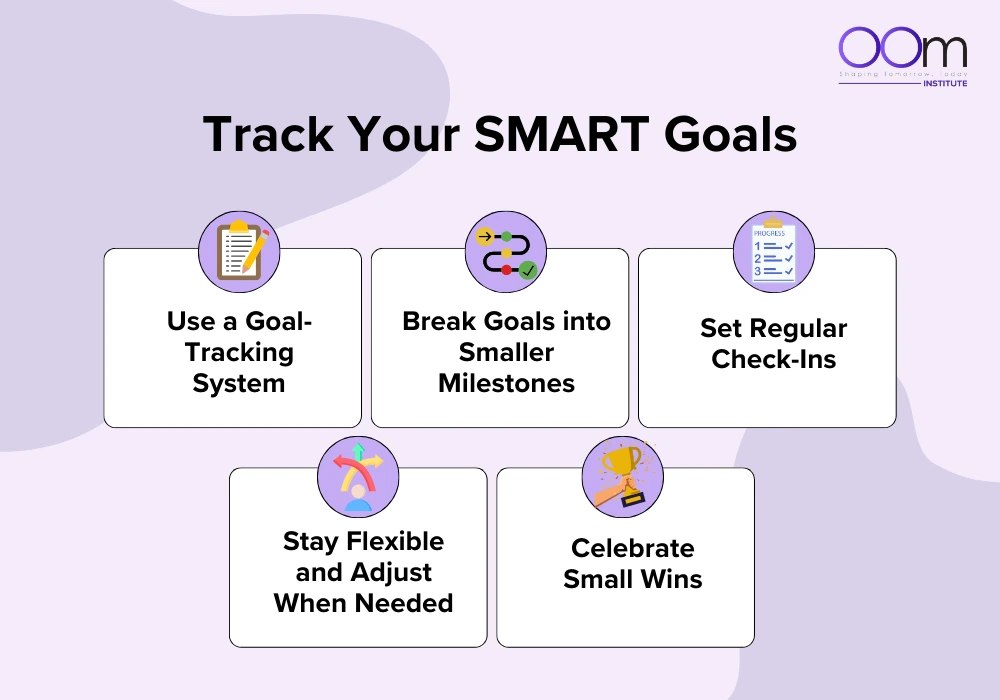
Setting clear goals is only the beginning; tracking progress is what keeps you moving forward. Regularly monitoring your goals helps you stay focused, make adjustments when needed, and maintain motivation. Here are some effective ways to track and measure your progress.
1. Use a Goal-Tracking System
Having a structured system makes it easier to stay organised and accountable. Some popular tracking methods include:
- Spreadsheets: A simple table to log milestones and progress.
- Goal-Tracking Apps: Tools like Trello, Notion, or Asana allow you to monitor goals visually.
- Journals: Writing down progress regularly reinforces commitment and motivation.
2. Break Goals into Smaller Milestones
Big goals can feel overwhelming. Breaking them down into weekly or monthly targets makes progress more manageable. For example, if you aim to increase website traffic by 30% in four months, setting smaller monthly goals, such as a 7-8% increase per month, helps maintain steady growth.
3. Set Regular Check-Ins
Review your progress at set intervals (e.g., weekly, bi-weekly, or monthly). Ask yourself:
- Am I on track to achieving my goal?
- What challenges have I faced, and how can I overcome them?
- Do I need to adjust my strategy?
4. Stay Flexible and Adjust When Needed
Sometimes unexpected challenges arise, making it necessary to modify your goals. Modifying your approach does not mean failure. It ensures your goals remain realistic and achievable based on current circumstances.
5. Celebrate Small Wins
Recognising progress, even in small steps, keeps motivation high. Rewarding yourself when you reach key milestones helps maintain momentum and encourages continued effort.
Tracking your goals effectively allows you to measure success, make improvements, and stay committed to your objectives, whether in personal development, business growth, or career advancement.
FAQs
What does the SMART goals acronym stand for?
SMART stands for:
- Specific: Clearly defines what you want to achieve.
- Measurable: Establishes criteria to track progress.
- Achievable: Sets a realistic yet challenging goal.
- Relevant: Ensures alignment with broader objectives.
- Time-bound: Includes a deadline for completion.
This framework helps individuals and organisations create structured, goal-oriented plans that improve focus and accountability.
Why Are SMART Goals Effective?
Actionable goals are effective because they provide a clear, focused framework for achieving objectives. By being Specific, Measurable, Achievable, Relevant, and Time-bound, they help individuals track progress, stay motivated, and confidently work toward their goals with a clear understanding of what needs to be accomplished and when.
What is an example of a SMART goal statement?
The goal statement should be structured, detailed, and actionable.
Example:
“I will improve my leadership skills by completing two leadership training workshops and applying key techniques in my team meetings over the next three months.”
This goal follows the SMART criteria:
- Specific: Focuses on leadership skills.
- Measurable: Completion of two workshops and practical application.
- Achievable: Realistic within three months.
- Relevant: Enhances leadership abilities.
- Time-bound: Clearly defined three-month timeframe.
How do I write my SMART goals?
To write an effective strategic goal, follow this structured format:
“I will [specific action] by [measurable outcome] within [timeframe] by [method or strategy].”
Example:
“I will increase my monthly sales revenue by 15% within four months by refining my client outreach strategy and improving lead follow-ups.”
- Start by identifying a clear, specific objective.
- Make sure it is measurable so you can track progress.
- Set a realistic and achievable target.
- Ensure the goal is relevant to your broader ambitions.
- Assign a timeframe for completion.
Using this formula ensures clarity and direction, making it easier to stay committed and reach your goals.
Conclusion
SMART goals provide a clear and structured approach to achieving personal growth, career advancement, and business success. By making goals Specific, Measurable, Achievable, Relevant, and Time-bound, you create a roadmap that keeps you focused, motivated, and accountable.
Regularly tracking progress, making adjustments when needed, and celebrating milestones help turn aspirations into tangible accomplishments. Whether you want to improve productivity, build leadership skills, or develop a long-term strategy, SMART goal setting provides a practical and effective way to stay on track and achieve meaningful results.
Take the Next Step with OOm Institute
Ready to develop your skills and advance your career? OOm Institute offers expert-led training programmes designed to help professionals and businesses build essential skills for success. Whether you want to enhance your people management skills, create a structured career development plan, or refine your soft skills, our courses provide the knowledge and practical tools to help you reach your goals.