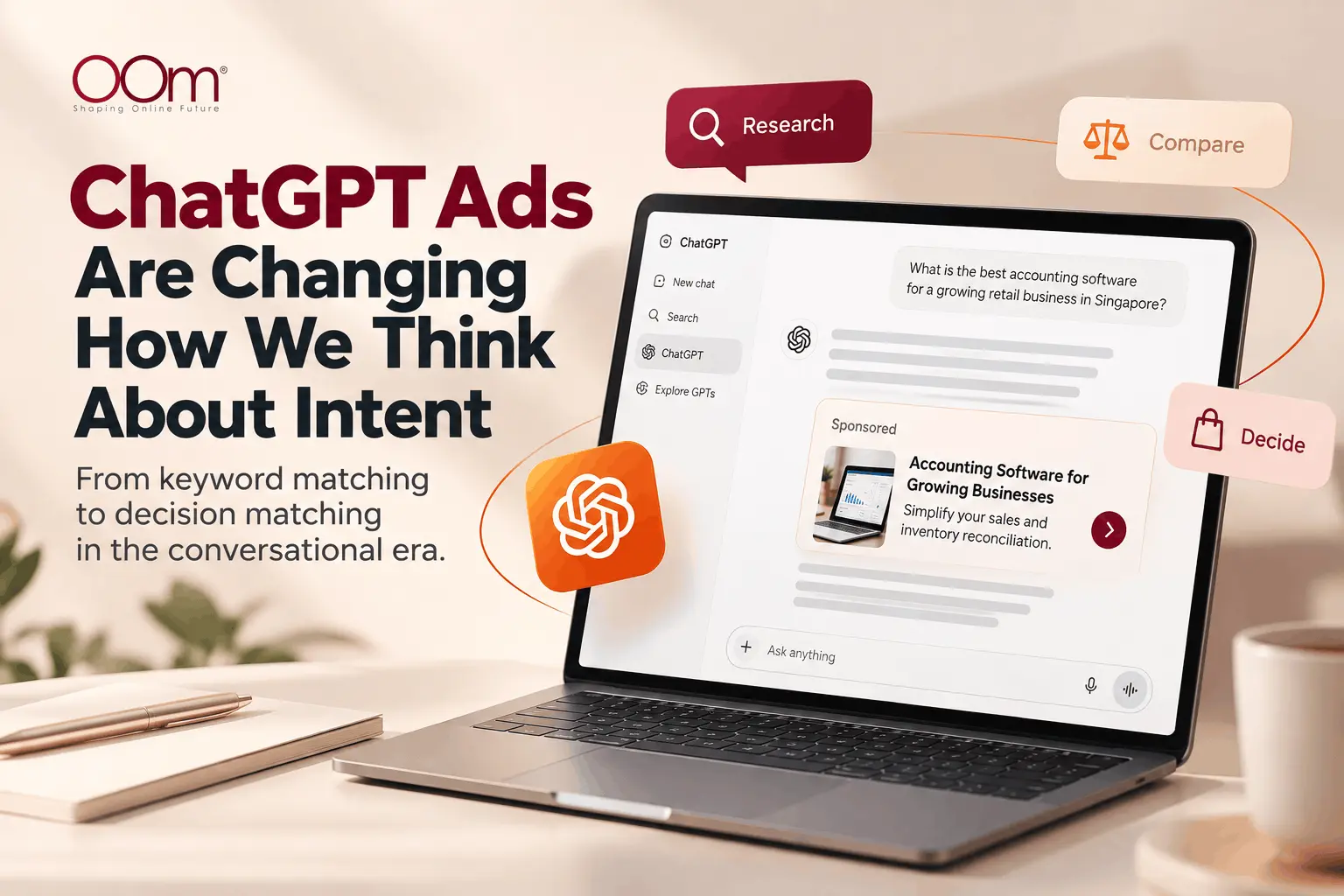
A buyer no longer has to visit five websites to form a shortlist. They can ask an AI search experience to compare options, explain trade-offs, identify likely providers, and suggest follow-up questions. That shift is the most commercially significant part of current ai search behaviour trends: discovery is becoming more compressed, while verification is becoming more demanding.
The common response is to ask how to appear in AI-generated answers. That is too narrow. A brand can be mentioned early and still lose the customer when they check the website, compare claims, look for local relevance, or seek evidence that the recommendation is current. AI visibility is not a new finish line for search. It is a new handoff point in the buying journey.
The real shift: fewer exploration clicks, higher-intent visits
Traditional search often exposed a customer’s research process. They searched a broad category, opened several results, refined their query, and gradually built confidence. Marketers could observe portions of that process through rankings, impressions, clicks, and assisted conversions.
AI-led discovery can collapse several of those early actions into one conversation. A prospective buyer may arrive at a website later in the decision process, after an answer has already framed the category and narrowed the field. This can make organic traffic look less valuable if the only question is volume. It may also make each visit more consequential, because the visitor expects immediate confirmation rather than a general introduction.
That does not mean website traffic will disappear, or that conventional search optimization no longer matters. It means traffic metrics need context. A decline in informational clicks may sit alongside stronger demand for proof pages, comparison content, pricing context, implementation details, locations, reviews, and contact routes. The pattern will differ by category. A low-consideration purchase may end within an AI interface; a complex B2B, healthcare, education, or financial decision is more likely to require verification beyond a generated answer.
OOm’s view is that the strategic question is not, “How do we get cited?” It is, “What evidence does a buyer need after we are cited?” The second question is where many search strategies remain underdeveloped.
AI search behaviour trends expose a proof gap
AI systems are effective at summarizing information that already exists. They are less useful to a buyer when the decision depends on details that are unclear, poorly maintained, or absent from the public record. That creates a proof gap between what a brand claims and what a customer can independently validate.
Consider a business that says it offers enterprise support, fast delivery, or specialist expertise. Those statements may be suitable for an overview page, but they are weak decision evidence without supporting detail. What does support include? Where is delivery available? Which specialist problems can the business solve? What is the process, and what should the buyer expect next?
The same issue applies to AI search. A concise answer may introduce a brand, but it cannot carry every qualification, exception, or commercial condition. Brands that provide clear, consistent source material are better placed to withstand the scrutiny that follows a recommendation.
This is particularly relevant in Singapore. First, a small physical geography does not remove location intent. A buyer may still care whether a provider serves the CBD, Jurong, Tampines, or an island-wide customer base, and whether onsite support is genuinely available. Second, English-language discovery often sits alongside local terms and context, from HDB-related services to MRT accessibility and neighborhood preferences. Third, Singapore’s four official languages mean that language clarity can be a customer-experience issue, not simply a translation task. A business should not assume that one generic English page resolves every audience need.
These are not reasons to create duplicate pages for every variation. They are reasons to make operational facts precise enough to be understood by people and systems alike.
Use OOm’s Discover-Decide-Verify lens
To assess AI search readiness, OOm uses a practical lens: Discover, Decide, and Verify. It is not a substitute for technical SEO, content quality, paid media, or conversion optimization. It helps connect them to the buyer’s changing behavior.
Discover: Can the market understand what you do?
At the discovery stage, the priority is category clarity. A business needs unambiguous descriptions of its products, services, audiences, locations, and differentiators. Vague positioning may sound polished, but it gives search systems and prospective buyers little to work with.
This is where foundational search work remains essential: accessible pages, coherent site architecture, accurate business details, and content that answers genuine category questions. Paid search can also remain valuable when demand is explicit and the business needs control over message, timing, and landing-page experience. AI discovery does not replace those disciplines; it changes the environments in which they influence consideration.
Decide: Is there enough substance to make a shortlist?
At the decision stage, generic thought leadership is rarely enough. Buyers need useful distinctions. They want to know who a service is for, when it is not suitable, what variables affect the outcome, and how alternatives differ.
For example, a logistics buyer may need coverage areas, handling capabilities, service windows, and escalation procedures. A software buyer may need integration requirements, onboarding responsibilities, and security documentation. A consumer may need stock availability, delivery timing, returns information, and physical location details. The right evidence depends on the purchase, but the commercial principle is consistent: reduce ambiguity where it blocks a decision.
Verify: Can a buyer trust the answer outside the AI interface?
Verification is where brand-owned properties, third-party signals, and operational consistency meet. Details on a website should not contradict business listings, social profiles, sales materials, or customer-facing teams. Old service pages, outdated office details, and unsupported claims can damage confidence even if the brand appears prominently in a search response.
Measurement also belongs here. Track the paths that indicate validation, not just top-level sessions: visits to service-detail pages, return visits, branded searches, form-start rates, calls, location requests, and sales feedback on how prospects first heard about the business. Attribution will not become perfect, but decision-makers can build a more credible picture by combining analytics with CRM and frontline insight.
The measurement problem is behavioral, not just technical
Marketers are accustomed to treating a click as the beginning of a measurable journey. In AI search, the meaningful journey may begin before the click, and parts of it may remain invisible. This is not entirely new. Word of mouth, social discovery, and offline research have always created attribution gaps. AI search makes that gap more common in a channel previously valued for its traceability.
The wrong reaction is to abandon measurement or declare every untracked conversion an AI outcome. Instead, establish a baseline before changing strategy. Separate branded and non-branded demand where possible. Monitor changes in query themes, landing-page mix, lead quality, and conversion lag. Ask sales teams a consistent intake question about discovery source, then review the language buyers use. When prospects start repeating category phrases or comparison questions that do not appear in conventional query reports, that is useful directional evidence.
A defensible expert opinion: businesses should resist using AI-answer mentions as a standalone KPI. A mention can create awareness, but it does not prove accuracy, preference, commercial fit, or revenue contribution. The more mature metric is whether AI-influenced discovery produces qualified visits and informed sales conversations that progress.
> Editorial evidence required before publication: Insert one verified OOm account example here, such as a documented change in landing-page behavior, search-query themes, or lead qualification after an AI-search-related content update. No client evidence was supplied for this draft, so a representative result should not be invented.
Build for the next question, not only the first answer
The strongest response to AI search behavior is not to publish more generic content. It is to identify the questions a prospective customer asks after receiving an initial answer, then make the evidence easy to find and easy to understand.
For a Singapore business expanding regionally, this may mean separating market availability from headquarters location. For a US-facing business, it may mean clarifying state coverage, fulfillment constraints, or support hours rather than relying on broad national language. For both, it means reviewing whether the website reflects how the business operates now, not how it described itself three years ago.
AI search will continue to change the route into a buying decision. The brands most likely to benefit will be those that treat visibility as an invitation to prove themselves, then give buyers a clear reason to continue.