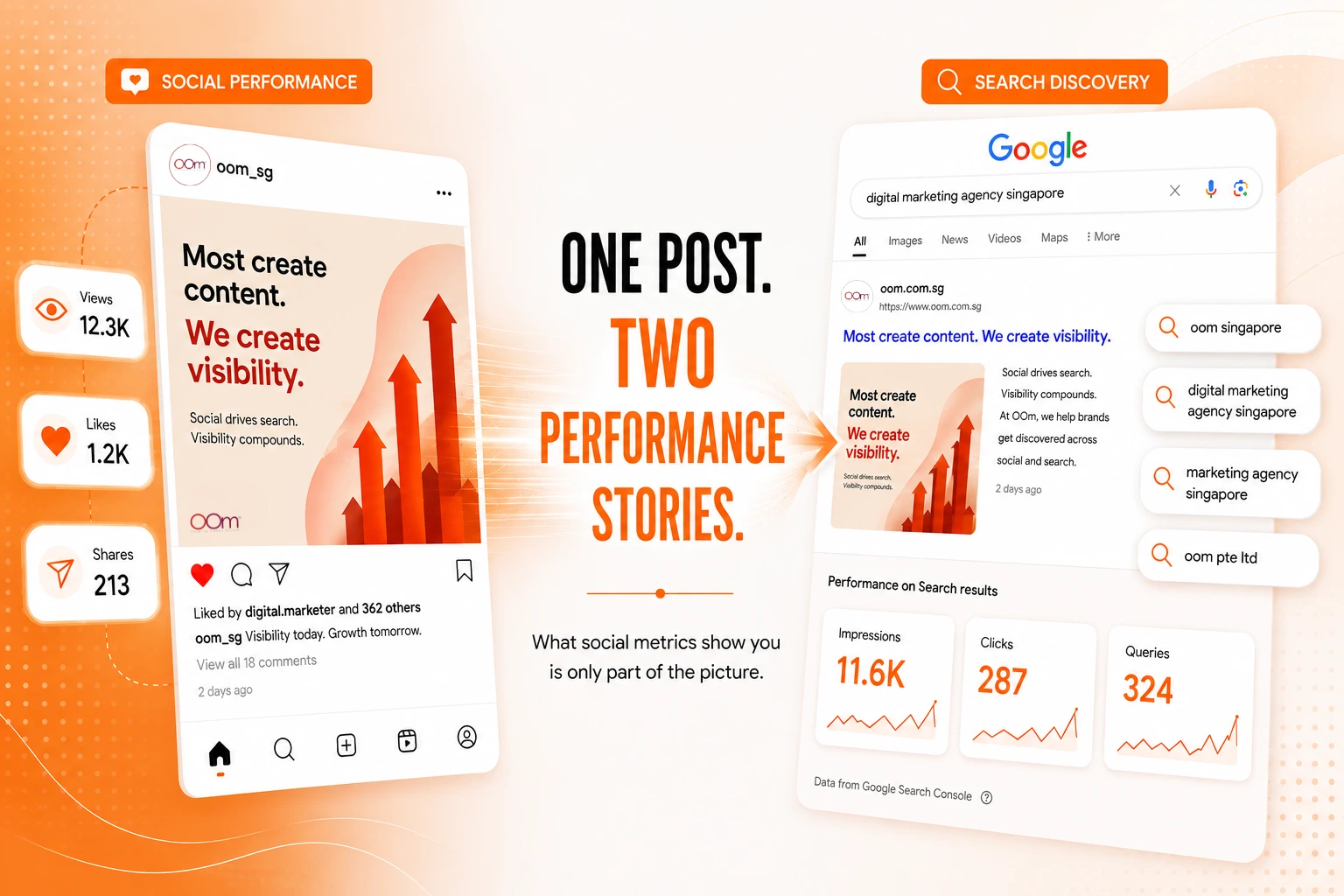
Google recently introduced Platform Properties, allowing eligible creators and publishers to understand how content from selected social platforms performs across Google Search and, where applicable, Discover and Google News.
Google Is Measuring More Than Websites
Google Search Console (aka GSC for short) can now help eligible creators and publishers understand how their Instagram, TikTok and YouTube content performs across Google Search and, where applicable, Discover and Google News. From OOm’s perspective, the update reflects a broader shift towards measuring digital discovery beyond websites alone.
The announcement may appear to be another product update, but it represents something more significant.
For years, SEO has focused primarily on websites. Meanwhile, social media, videos and other digital channels were often measured separately using their own analytics platforms.
The update reflects the reality that customers increasingly discover businesses across multiple digital touchpoints.
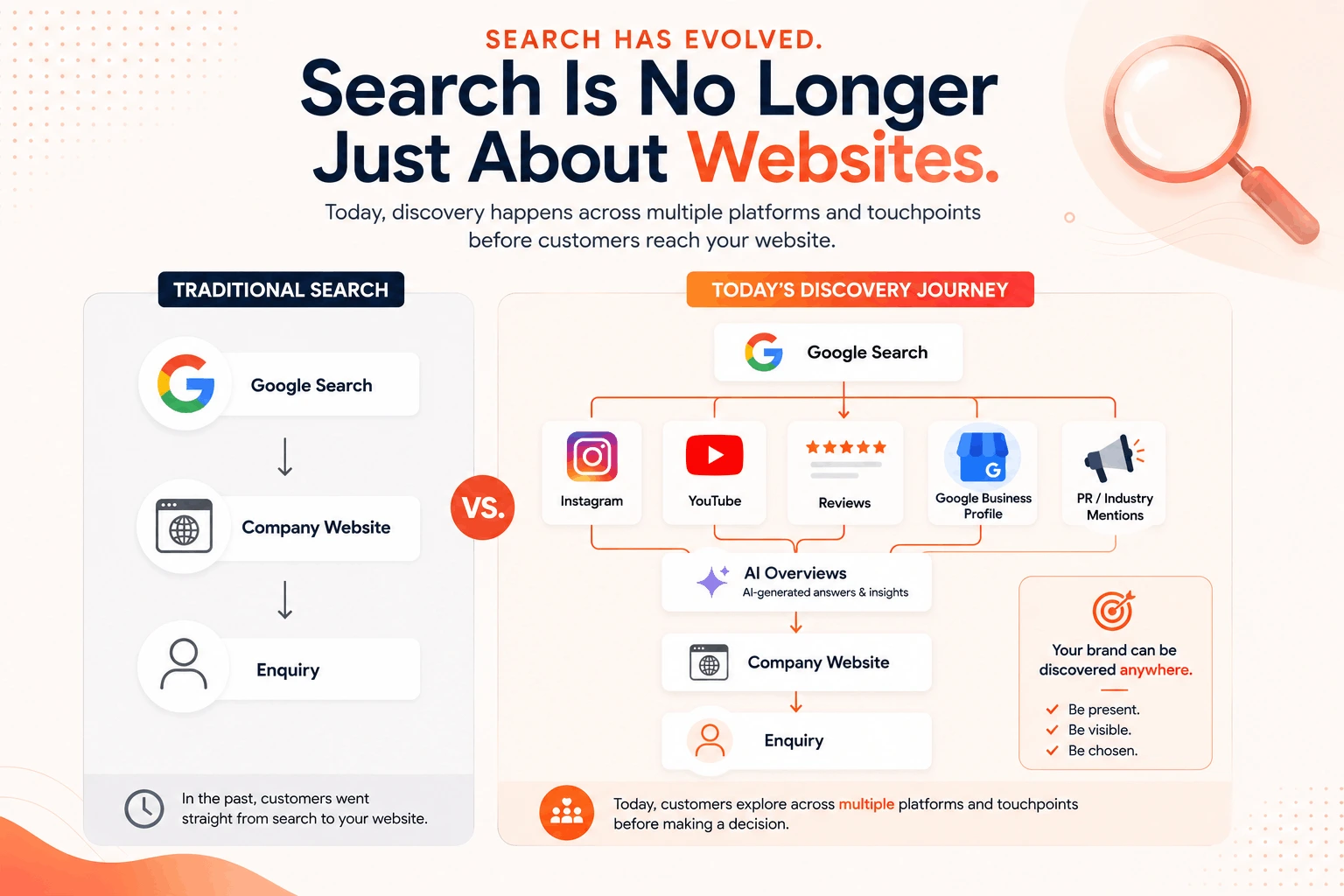
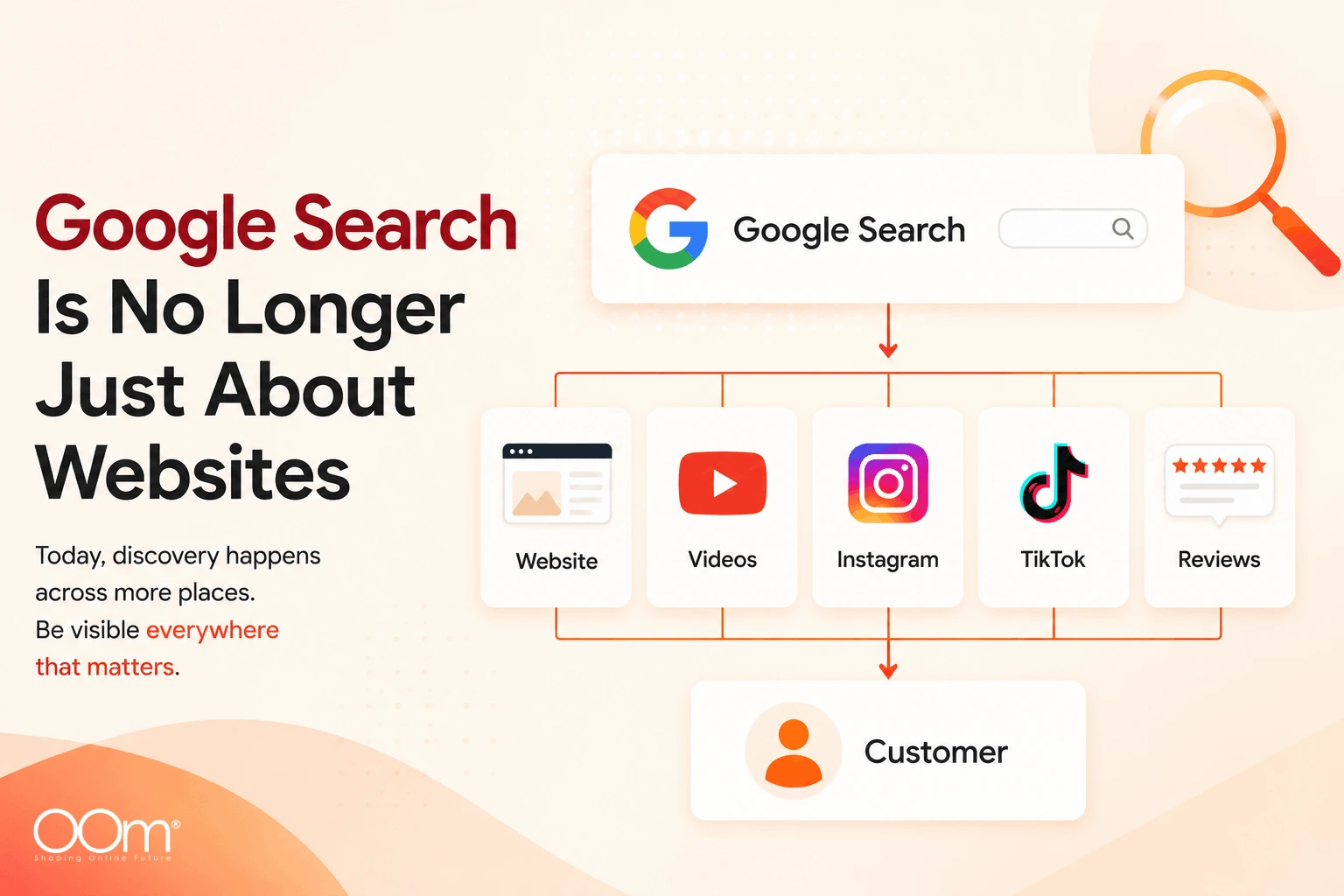
A search journey may begin on Google, continue through YouTube or Instagram, include customer reviews and finally end on a company website.
Platform Properties help businesses understand one part of that journey.
For marketers, the update also raises a bigger question.
If Google is expanding Search Console beyond websites, how should businesses think about SEO moving forward?
What Are Platform Properties?
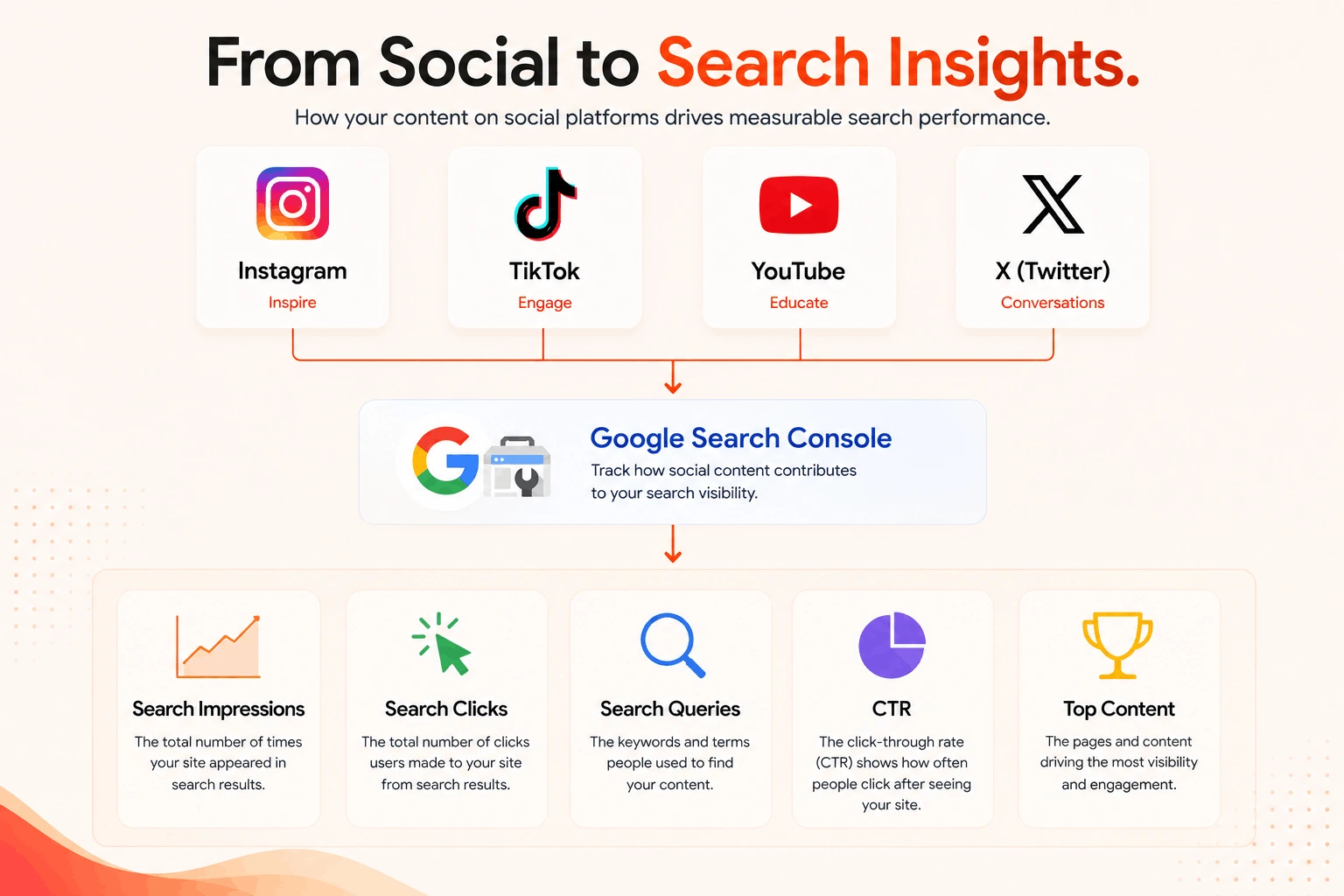
Platform Properties are a new property type within Google Search Console that enables eligible creators and publishers to understand how content from Instagram, TikTok, YouTube and X performs across Google Search and, where applicable, Discover and Google News.
At launch, Google supports:
- TikTok
- YouTube
- X (formerly Twitter)
Once a Platform Property has been verified, Search Console provides familiar search performance metrics, including:
- Search impressions
- Clicks
- Click-through rate (CTR)
- Search queries
- Top-performing content
- Performance trends
Unlike Instagram Insights or YouTube Studio, these reports focus on how people discover content across Google Search and, where applicable, Discover and Google News, rather than how they interact with it within the platform itself.
According to Moshe Samet, Product Manager Lead for Google Search Console:
“Content creators and publishers use many channels beyond their own websites to reach their audiences.”
Google also explained the purpose of the update:
“We want to make it easier for site owners and creators, even those without their own website, to get a consolidated view of how all of their content is getting discovered on Search.”
Taken together, these statements suggest that Google is expanding Search Console’s reporting beyond traditional websites to include content published across supported platforms.
Why Did Google Launch This Feature?
Every product update begins with a problem.
In this case, the problem is straightforward.
People no longer rely on a website alone when researching a business.
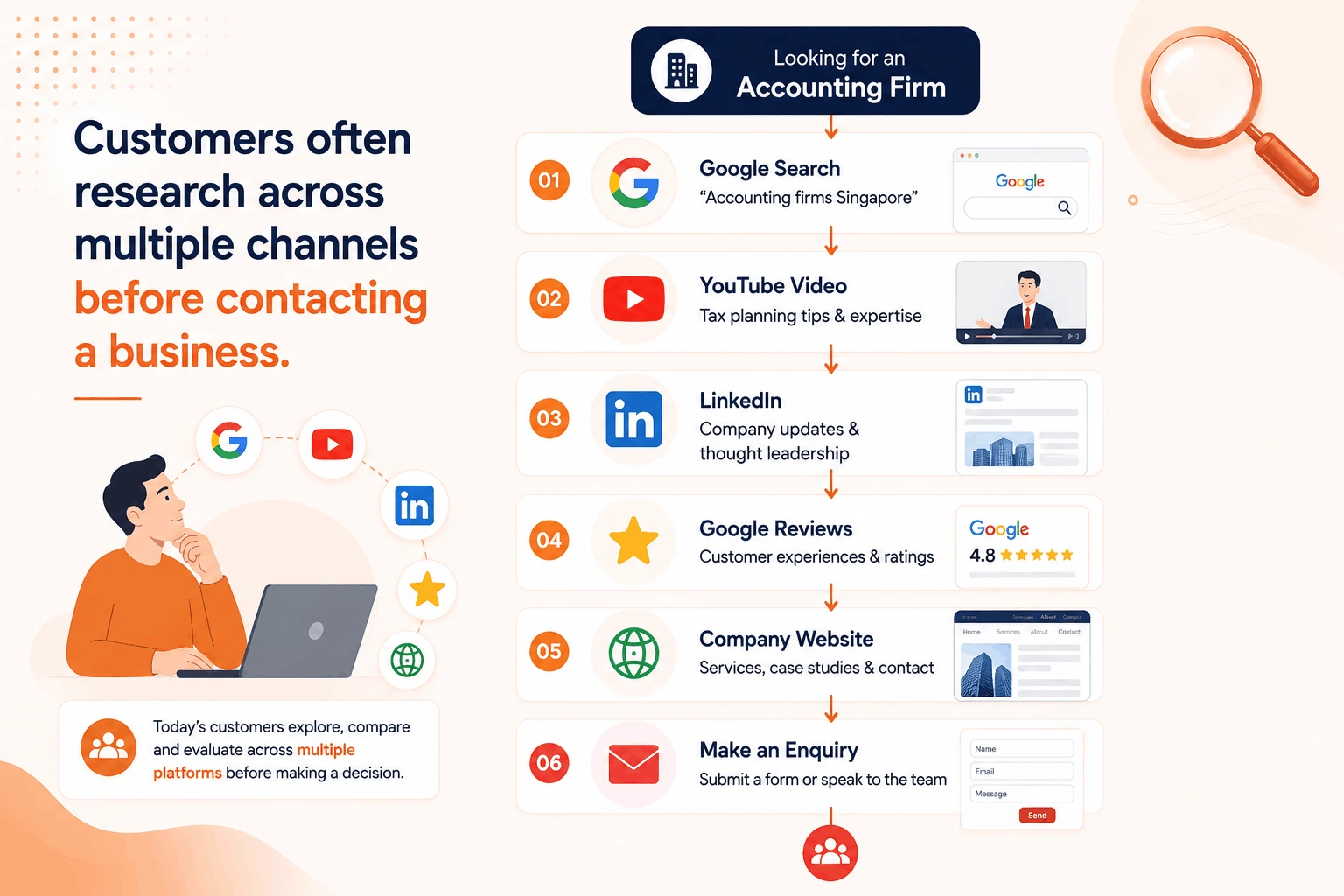
Someone looking for an accounting firm might begin with Google Search, watch a YouTube video explaining tax planning, browse the firm’s LinkedIn posts, read Google Reviews and then visit the website before making an enquiry.
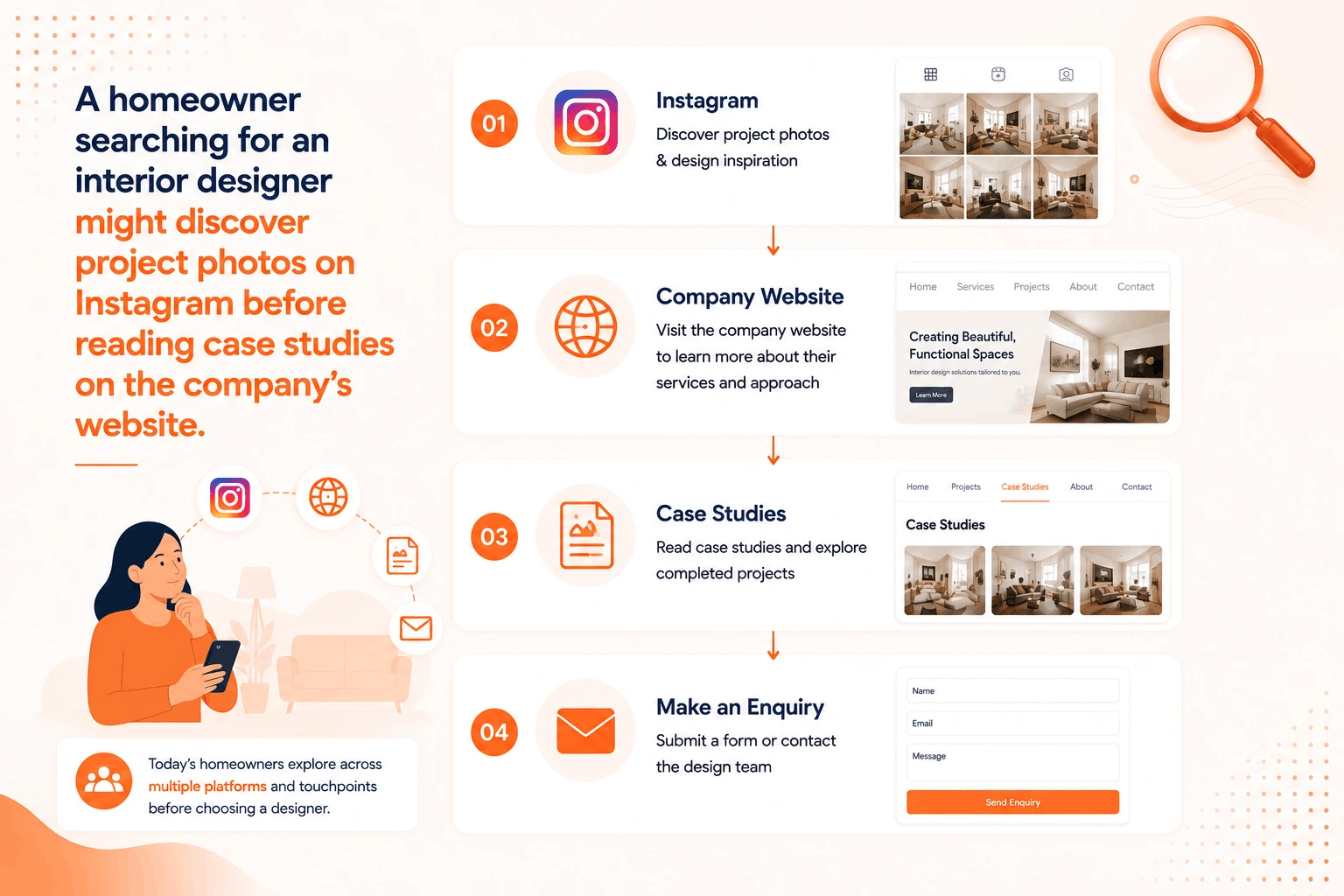
A homeowner searching for an interior designer might discover project photos on Instagram before reading case studies on the company’s website.
These journeys have become increasingly common.
Google’s latest update helps businesses understand how one part of that journey begins.
As Barry Schwartz reported in Search Engine Land, Platform Properties give businesses a consolidated view of how their social and video content performs within Google Search.
Rather than treating websites and social media as completely separate channels, the update suggests Google recognises the value of reporting on content published across multiple platforms.
OOm Insight
Customers rarely think in channels.
They simply look for trustworthy information wherever they can find it. Businesses should adopt the same mindset when planning their content strategy.
Search Visibility Is Becoming Broader
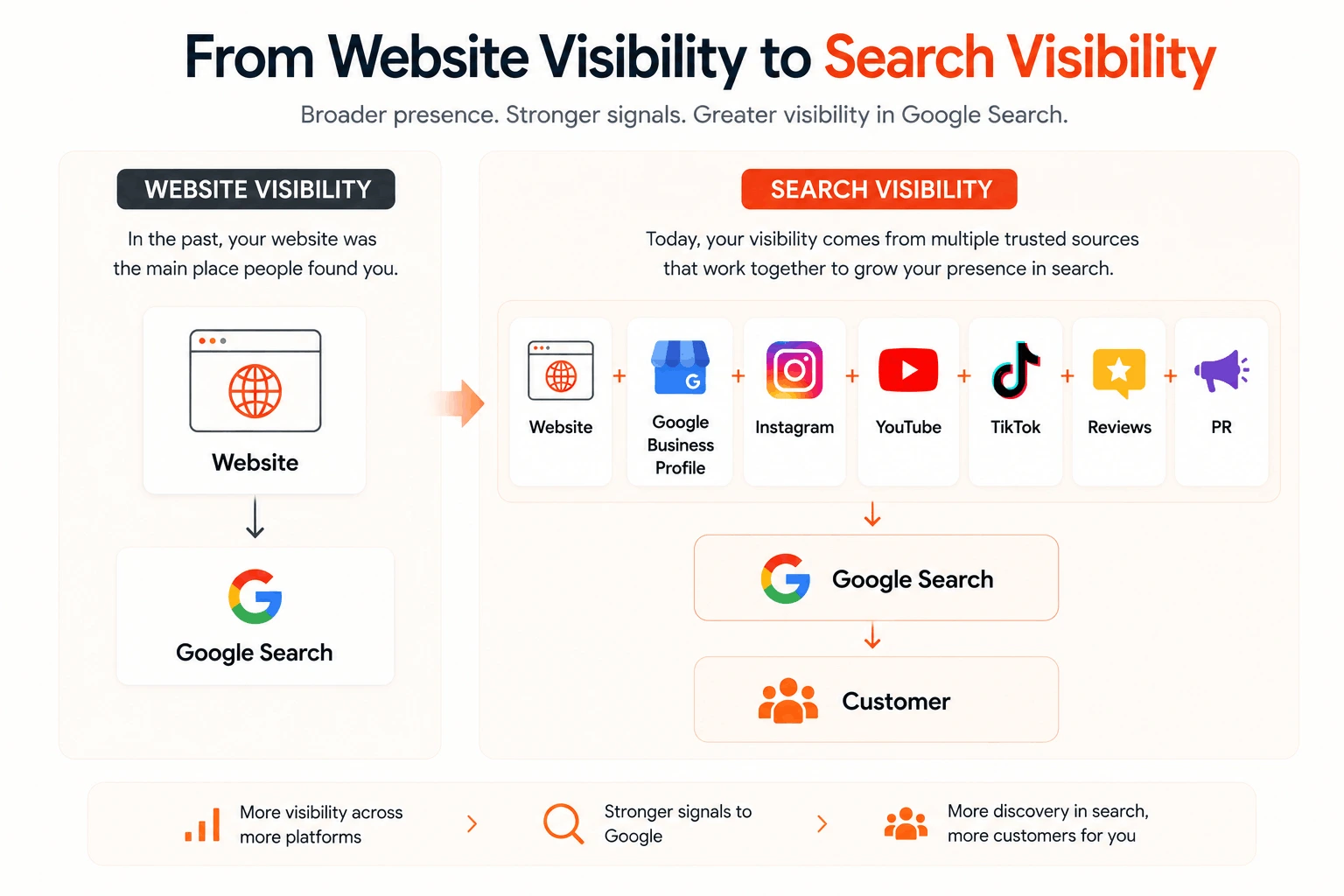
This isn’t simply about website SEO anymore. It’s about Search Visibility across every channel customers use to discover your business.
SEO has traditionally been measured using metrics such as:
- Rankings
- Organic traffic
- Click-through rate
- Conversions
These metrics remain valuable.
However, they describe only one part of a customer’s journey.
Before contacting a business, someone may:
- Read a blog article.
- Watch a YouTube video.
- Browse Instagram posts.
- Compare customer reviews.
- Search for the business name.
- Visit the company website.
Each interaction contributes to their understanding of the brand.
This is why many businesses are beginning to focus not only on website performance, but also on their broader online visibility.
Google’s Platform Properties support this way of thinking by providing another source of data about how customers discover content.
The feature does not replace traditional SEO.
Instead, it gives marketers another piece of the puzzle.
Why Businesses Should Care
The introduction of Platform Properties is useful even if your business publishes only a small amount of social content.
Search Console can now help answer questions such as:
- Which YouTube videos appear most often in Google Search?
- Which search queries lead people to your Instagram content?
- Does your social content attract organic discovery beyond the platform itself?
Those insights can influence future content planning.
For example, if a tutorial video consistently appears for relevant searches, it may be worth expanding that topic into a blog article, downloadable guide or webinar.
Likewise, if customers repeatedly discover your content through a particular search query, that topic may deserve additional coverage across other marketing channels.
Rather than treating blogs, videos and social posts as separate campaigns, businesses can begin using search data to connect them into a more consistent content strategy.
How to Set Up Platform Properties in Google Search Console
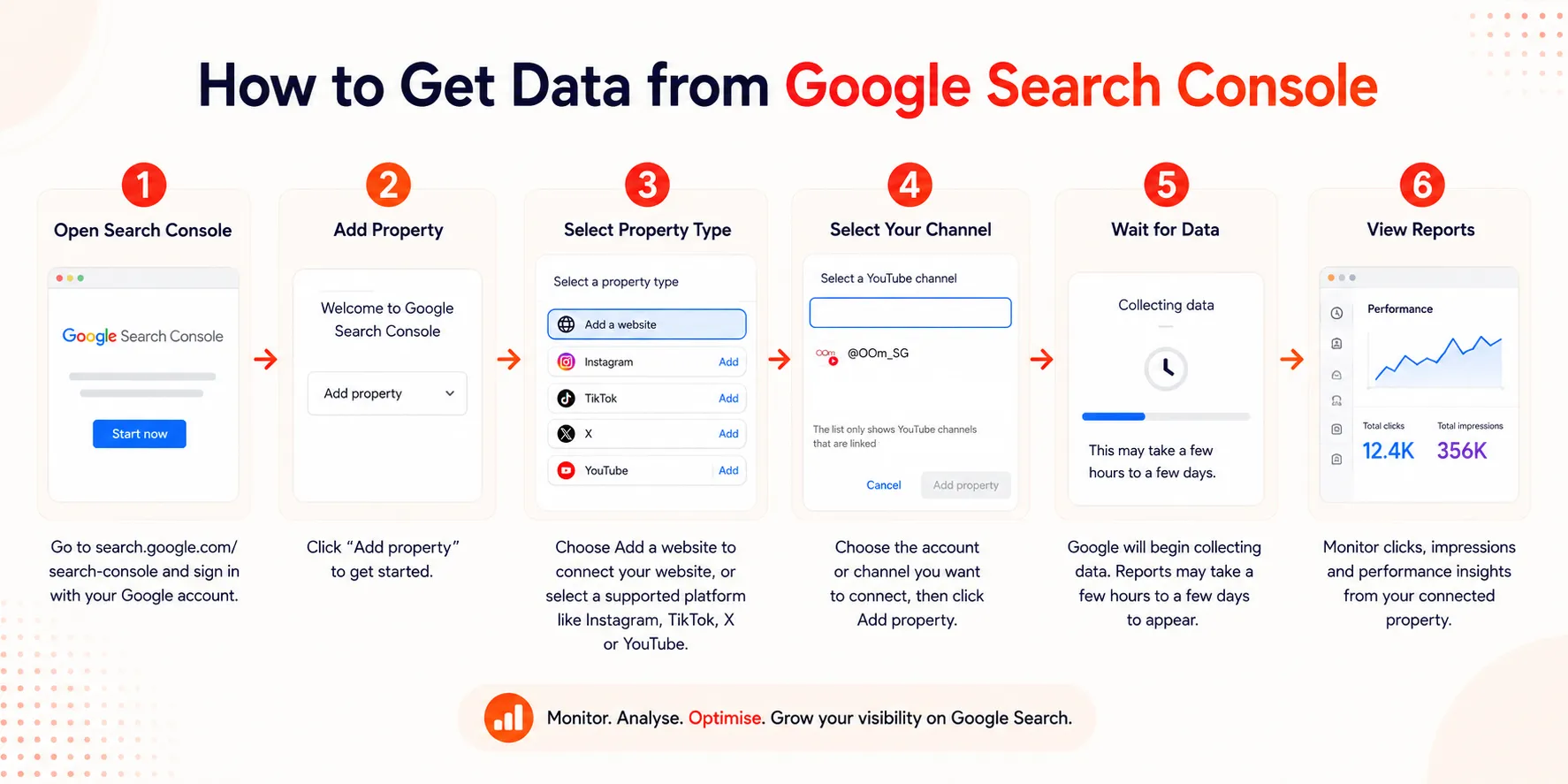
Setting up Platform Properties is similar to adding a website property in Google Search Console. Instead of verifying a domain, you’ll be verifying a supported social media account.
The setup process is straightforward, although the verification steps may vary by platform.
Step 1: Sign in to Google Search Console
Open Google Search Console and sign in using the Google account that manages your website or business.
If you have access to multiple properties, select the account you want to manage before adding a new property.
Step 2: Add a Platform Property
Click Add Property and select Platform Property.
Google will display a list of supported platforms.
At the time of writing, these include:
- TikTok
- YouTube
- X (formerly Twitter)
Select the platform you want to connect.
Step 3: Verify Ownership
Google needs to confirm that you own or manage the account before it can begin collecting search performance data.
The verification process varies depending on the platform. Follow the on-screen instructions and complete the required steps.
Once verification is successful, the Platform Property will appear alongside your existing Search Console properties.
Step 4: Allow Google to Collect Data
New Platform Properties do not populate historical data immediately.
Instead, Google begins collecting performance data after verification. It may take several days before reports become available.
If your reports appear empty immediately after setup, this is expected.
OOm Insight
Connect your Platform Properties as early as possible. Even if you don’t need the reports today, you’ll begin building historical data that becomes more valuable over time.
Understanding the Reports
Platform Properties use many of the same metrics found in traditional Search Console reports. The difference lies in what those metrics measure.
Instead of reporting how webpages perform, these reports focus on how your social content is discovered across Google’s supported surfaces, including Google Search and, where applicable, Discover and Google News.
Understanding what each metric represents will help you interpret the data more accurately.
Data does not appear immediately. Google begins collecting data once the property is added, and reports may take a few days to populate. Newly created properties will generally show data only from the period after collection began.
Search Impressions
Search impressions show how often your content appeared in Google Search.
For example, if someone searches for digital marketing agency Singapore and one of your YouTube videos appears in the results, that counts as an impression.
A high number of impressions indicates that your content is appearing frequently across relevant Google surfaces. Impressions should be interpreted alongside clicks, CTR and average position.
Clicks
Clicks measure how many users visited your content after discovering it through Google Search.
This differs from platform analytics.
Instagram Insights measures activity within Instagram.
YouTube Studio measures activity within YouTube.
Platform Properties measure traffic and visibility across supported Google surfaces, including Google Search and, where applicable, Discover and Google News. They do not measure engagement within Instagram, TikTok, YouTube or X.
Search Queries
Search Queries may become one of the most valuable reports for marketers.
Instead of guessing what people search before discovering your content, Search Console shows the actual queries that generated impressions and clicks.
For example, an agency may discover that users are finding its YouTube videos through searches such as:
- SEO agency Singapore
- Google Ads agency
- Website design company
- Digital marketing strategy
These insights can help shape future content planning.
Topics that already generate search demand often deserve further investment through blog articles, videos or downloadable resources.
Click-through Rate (CTR)
CTR measures the percentage of impressions that resulted in a click.
Like any Search Console report, CTR should be interpreted alongside other metrics.
A lower CTR does not necessarily indicate poor content. Highly competitive searches often generate lower click-through rates because users have more options to choose from.
Instead of analysing CTR in isolation, compare it with impressions, clicks and search queries to understand the overall performance of your content.
Top-performing Content
Platform Properties also identify the content receiving the greatest visibility through Google Search.
This allows businesses to answer questions such as:
- Which YouTube videos consistently appear in search results?
- Which Instagram posts continue attracting search traffic months after publication?
- Which topics generate the strongest organic discovery?
These insights can help prioritise future content production.
Rather than creating content based solely on trends, businesses can invest more heavily in topics that continue attracting search demand over time.
OOm Insight
High-performing content is not always the content with the highest engagement.
A tutorial that consistently appears in Google Search for months or even years may contribute more long-term business value than a viral social post with a short lifespan.
Common Misconceptions About Platform Properties
Platform Properties are still relatively new, so it’s understandable that there are questions about what they can and cannot do.
Here are some of the most common misconceptions.
“Platform Properties replace Instagram Insights or YouTube Studio.”
No.
Platform Properties measure how users discover your content through Google Search.
Instagram Insights, TikTok Analytics and YouTube Studio measure activity within their respective platforms.
Each provides different information, and all of them should be used together.
Source: Google Search Console Help.
“Data appears immediately after verification.”
Not necessarily.
Google begins collecting data after verification, so newly connected Platform Properties may take several days before reports become available.
Source: Google Search Console Help.
“One Platform Property covers every account.”
No.
Each supported account must be added and verified separately.
Businesses managing multiple YouTube channels or Instagram accounts should connect each account individually.
Source: Google Search Console Help.
“Platform Properties are only useful for creators.”
Businesses can benefit just as much.
Educational videos, customer testimonials, webinars, product demonstrations and thought leadership content all have the potential to appear in Google Search.
Platform Properties help businesses understand how that content contributes to online discovery.
Using Platform Properties to Improve Your Content Strategy
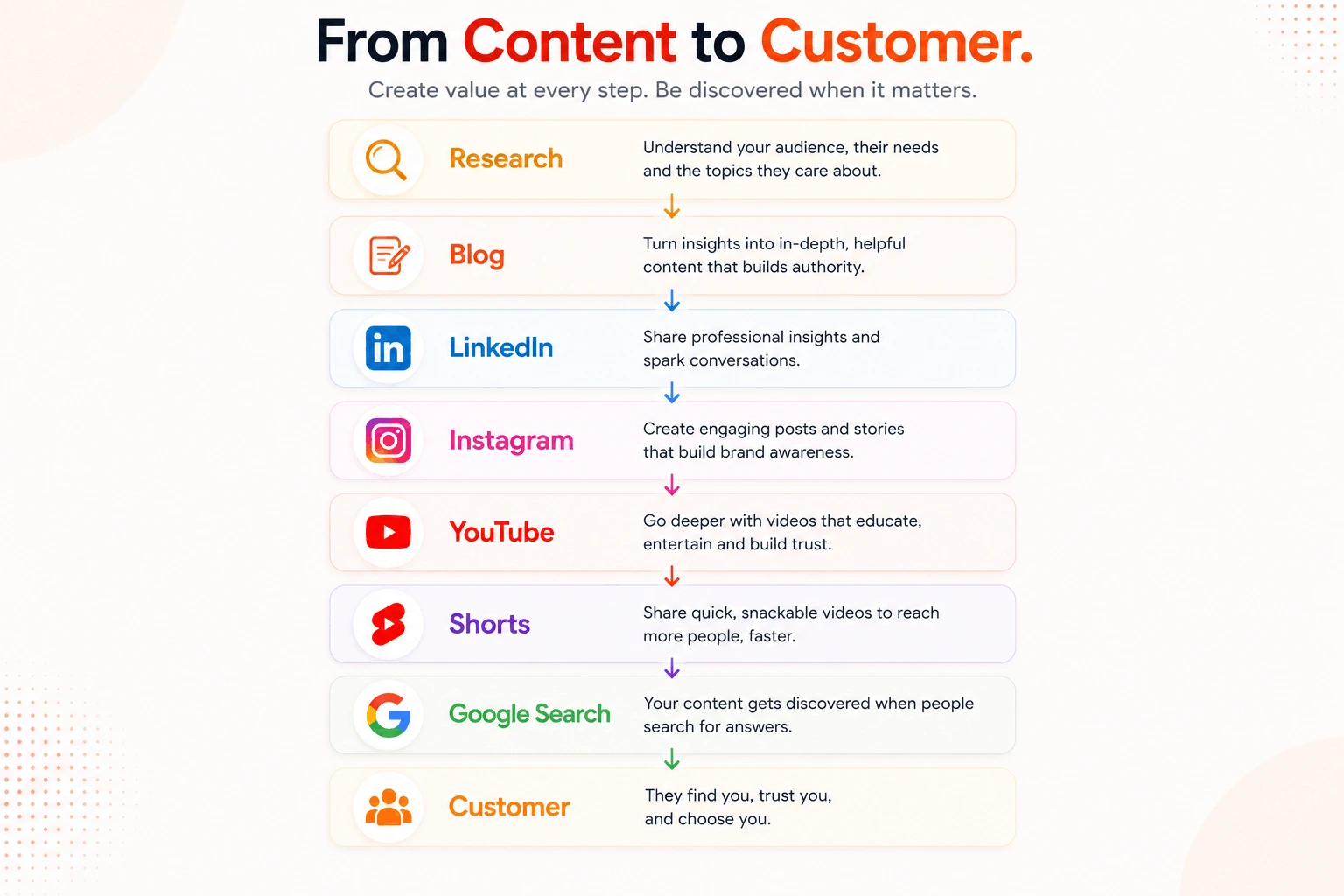
The value of Platform Properties extends beyond reporting.
They can help businesses make better decisions about the content they create.
Imagine you publish a blog article explaining common SEO mistakes.
You then create:
- a LinkedIn post summarising the key points
- an Instagram carousel highlighting practical tips
- a YouTube video explaining the topic in greater detail
- a short-form video answering one frequently asked question
Each piece of content supports the same topic while reaching audiences in different ways.
Platform Properties provide another way to understand which of those assets are being discovered through Google Search.
Over time, this information can help identify:
- topics that deserve further investment
- content formats that generate stronger search visibility
- opportunities to refresh or expand existing content
- gaps between what customers search for and what your business currently publishes
Rather than treating every blog, video or social post as a standalone campaign, businesses can begin building a connected content library that continues attracting customers long after publication.
That shift becomes even more important as search continues to evolve beyond traditional webpages.
Beyond Platform Properties: Rethinking Your Content Strategy
Platform Properties introduce a new source of data, but their real value lies in how businesses use that information.
Many organisations still plan content around individual channels. The marketing team writes a blog article, the social media team creates an Instagram post, and the video team publishes a YouTube video. Each piece of content is measured independently, even when they cover the same topic.
Google’s latest update encourages a different approach.
Rather than treating every channel as a separate campaign, businesses should think about how content works together to answer customer questions.
A single topic can often be adapted into multiple formats without changing its core message.
For example, an article explaining the benefits of SEO could also become:
- A YouTube video answering common questions
- An Instagram carousel highlighting key takeaways
- A LinkedIn post sharing industry insights
- A short-form video explaining one practical tip
- An FAQ page expanding on customer questions
Each format serves a different purpose while reinforcing the same expertise.
Instead of creating more content, businesses are creating more opportunities to be discovered.
Content Should Match How Customers Search
People do not always consume information in the same way.
Some prefer reading a detailed guide.
Others would rather watch a two-minute video.
Some want a quick answer before deciding whether to learn more.
Publishing content in multiple formats allows businesses to meet customers at different stages of their decision-making process.
Someone searching for how much does SEO cost may first find a YouTube video through Google Search.
Another person may discover the same topic through an Instagram carousel.
A third person may prefer reading a comprehensive guide before making an enquiry.
Each interaction answers the same question in a format that suits the user.
Google’s Platform Properties make it easier to understand which of those formats are generating visibility through Google Search.
OOm Insight
Don’t think about creating separate blog, video and social media strategies.
Start with the customer’s question, then decide which formats will answer it most effectively.
Helpful Content Still Matters Most
Although Search Console now includes social platforms, Google’s guidance on creating quality content has not changed.
Google continues to encourage the creation of helpful, people-first content. Google’s Experience, Expertise, Authoritativeness and Trustworthiness (E-E-A-T) framework provides guidance for evaluating content quality rather than acting as a direct ranking factor.
That means creating content that helps users solve genuine problems rather than producing material solely to attract clicks.
Useful examples include:
- Step-by-step guides
- Frequently asked questions
- Industry insights
- Product comparisons
- Case studies
- Educational videos
- Original research
The format matters less than the value it provides.
Whether someone discovers your content through a blog article, YouTube video or Instagram post, the objective remains the same.
Answer the user’s question clearly and accurately.
Measuring Success Beyond Website Traffic
Website traffic remains an important performance indicator, but it should not be the only measure of success.
A blog article may encourage someone to subscribe to your newsletter.
A YouTube video may introduce your brand to someone who later visits your website.
An Instagram post may reinforce trust after a potential customer has already found you through Google Search.
These touchpoints support one another.
Looking at each channel in isolation can make it difficult to understand how customers discover and evaluate your business.
Platform Properties help bridge part of that gap by showing how social content contributes to search discovery.
While they do not provide a complete picture of every customer journey, they offer another layer of insight that was previously unavailable.
Search Is Becoming More Conversational
Another trend is influencing how people search for information.
Instead of typing short keyword phrases, conversational and AI-powered interfaces make it easier for people to search using complete questions.
Examples include:
- Which SEO agency is best for SMEs?
- How long does SEO take to show results?
- Should I invest in SEO or Google Ads?
- How can I improve my website’s visibility?
This shift is changing the type of content that performs well.
Pages designed solely around individual keywords are becoming less useful than resources that answer questions comprehensively and demonstrate genuine expertise.
Businesses should consider whether their content addresses the questions customers actually ask, rather than simply targeting high-volume keywords.
The better your content answers those questions, the more opportunities you create for customers to discover your business through search.
AI Search Is Changing How People Discover Businesses
Search engines are no longer the only place where people look for answers.
A growing number of people are using AI-powered tools to research products, compare services and understand unfamiliar topics. Instead of reviewing multiple webpages, they ask a question and receive a concise response within seconds.
Some of the most widely used AI-powered search experiences include:
- Google AI Overviews
- ChatGPT
- Gemini
- Perplexity
Although each platform retrieves information differently, they generally aim to provide relevant responses by drawing from publicly available information and other available sources, depending on the platform.
This changes how businesses should think about online visibility.
Instead of asking whether a webpage ranks first on Google, marketers should also consider whether their business has enough credible information available for AI-powered systems to understand and reference.
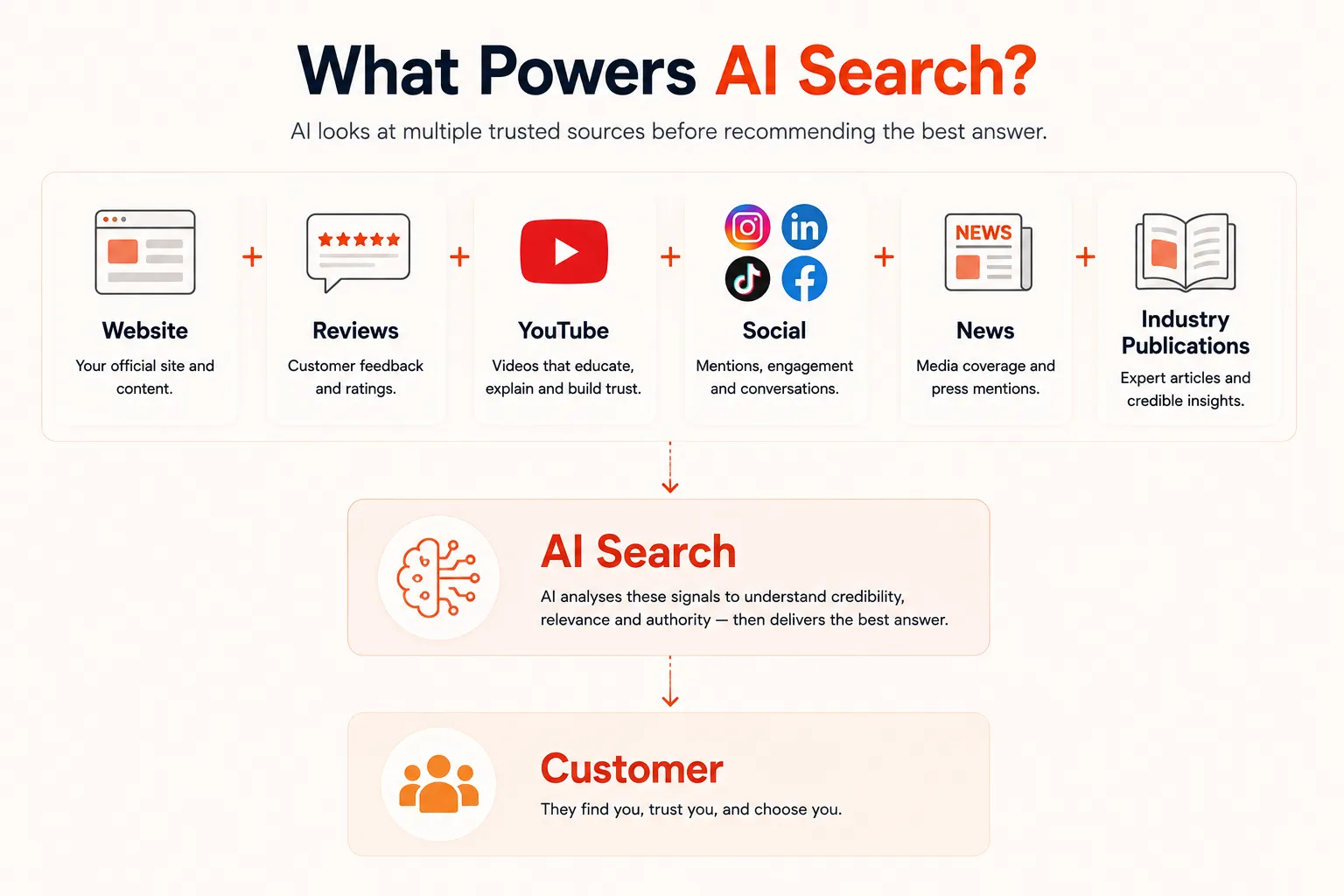
AI Search Relies on More Than One Source
Traditional search engines primarily present a list of webpages.
Depending on the platform, query and available information, AI-powered search experiences may draw from multiple publicly available sources before generating a response.
Depending on the platform and the query, these sources may include:
- Company websites
- News publications
- Industry resources
- Public datasets
- Customer reviews
- Videos
- Forums and community discussions
Google has not stated that Platform Properties directly influence AI-generated responses. Businesses should avoid assuming a direct relationship between the feature and AI search rankings.
What Google’s announcement does indicate is that the company continues to expand its understanding of content beyond websites alone.
This aligns with a broader trend across the search industry, where useful information is increasingly distributed across multiple platforms.
Consistency Builds Trust
Imagine someone researching your business.
They visit your website and learn about your services.
They then find your Google Business Profile, read customer reviews and watch one of your YouTube videos.
Finally, they ask an AI assistant to recommend agencies with experience in their industry.
If each source presents consistent information, your expertise becomes easier to understand.
If the information is outdated, incomplete or contradictory, it becomes more difficult for both users and search systems to develop confidence in your business.
Consistency is no longer just a branding exercise. It also helps search engines and AI-powered platforms understand who you are, what you do and where your expertise lies.
OOm Insight
Customers build trust over multiple interactions, not a single click. Every accurate blog article, video, review and case study contributes to that trust.
Introducing OOm’s Agentic Search Framework
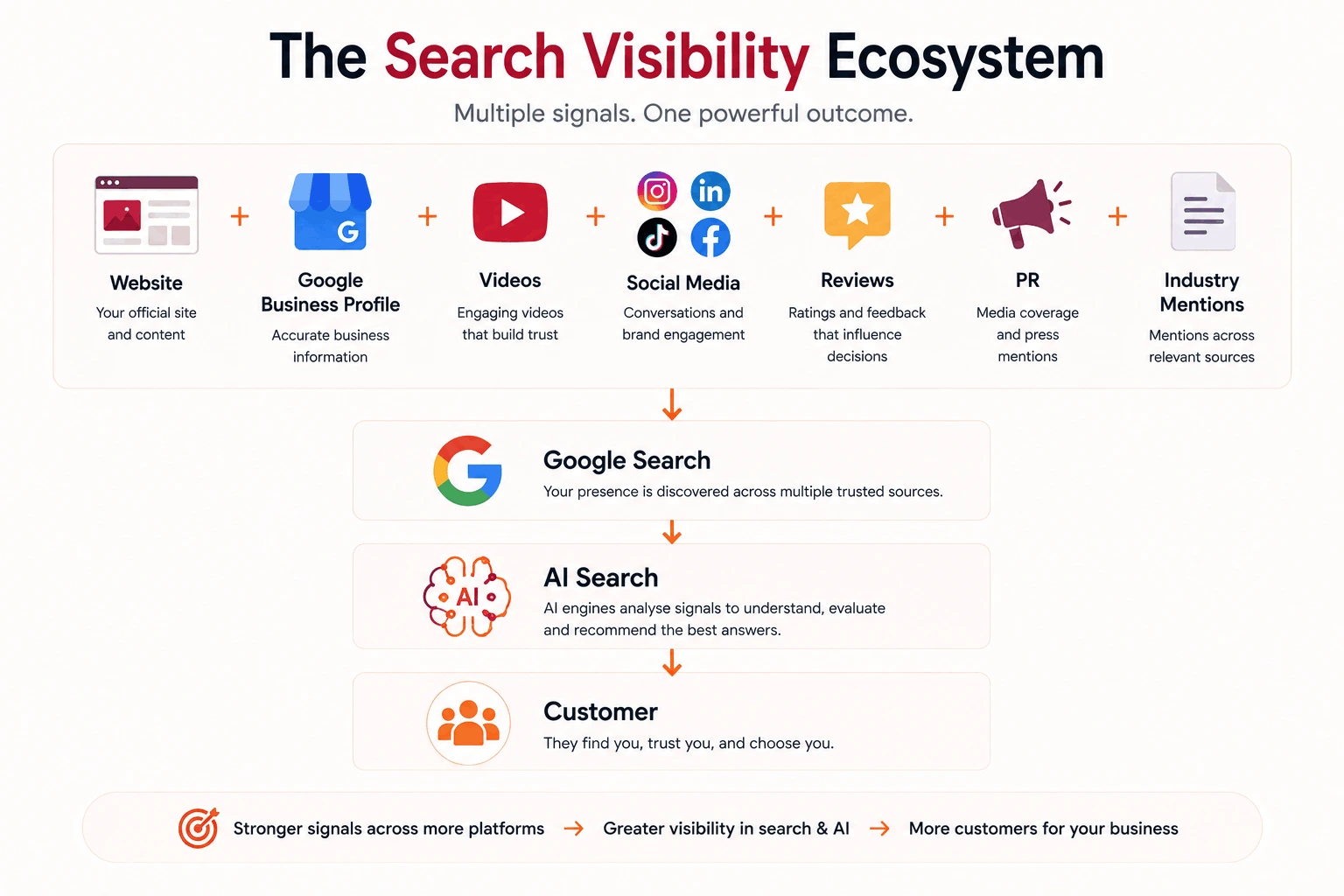
At OOm, we describe this broader approach to digital visibility as Agentic Search.
Agentic Search is the framework we’re developing to help businesses prepare for a search environment where customers move between search engines, AI assistants and multiple online platforms before making a decision.
Traditional SEO remains an essential foundation.
Technical optimisation, high-quality content, internal linking and authoritative backlinks continue to play a critical role in helping websites perform well in search.
Agentic Search builds on that foundation.
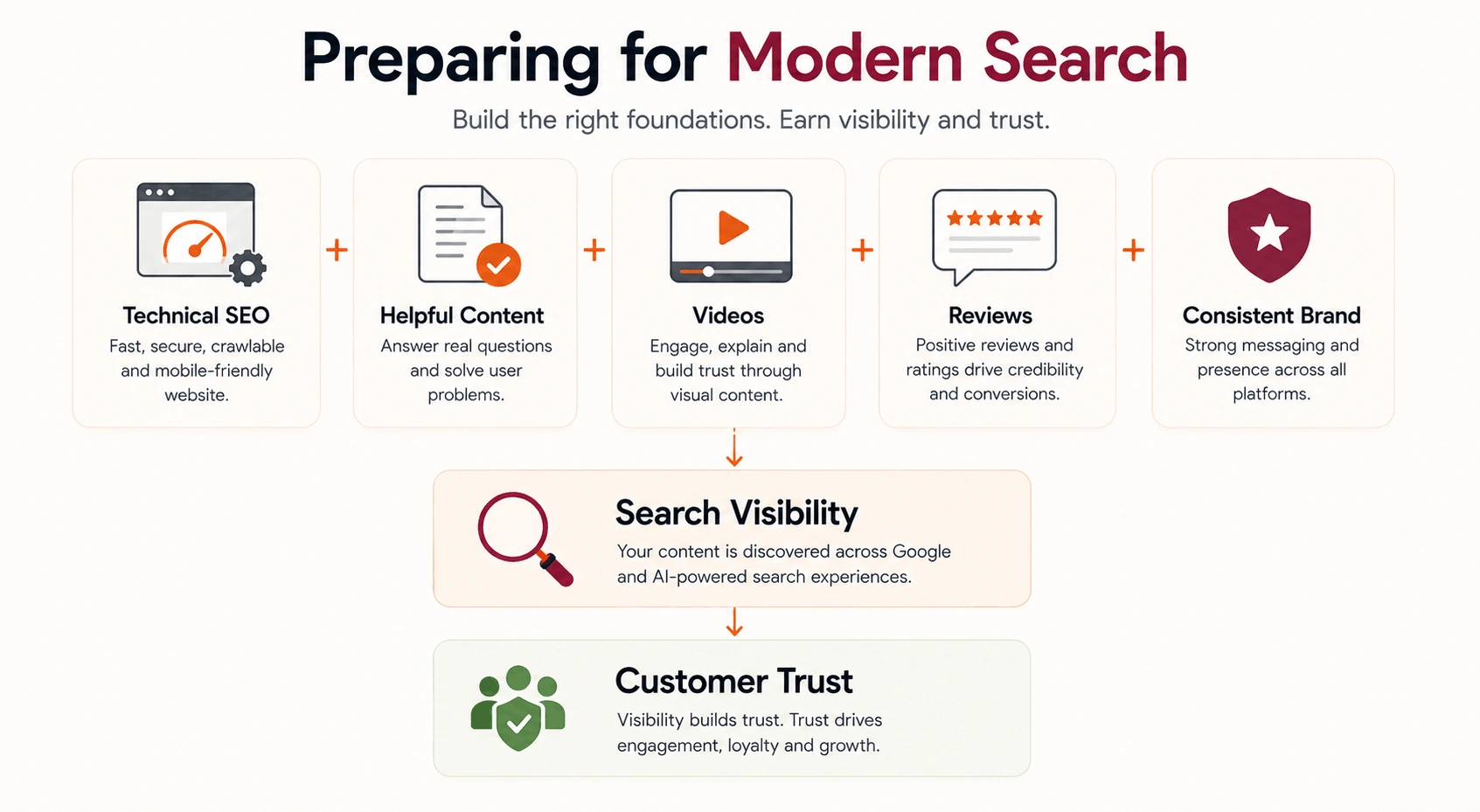
It encourages businesses to strengthen every public touchpoint that helps customers understand and trust their brand.
That includes:
- A well-optimised website
- Helpful educational content
- Accurate business information
- Videos that answer customer questions
- Genuine customer reviews
- Consistent messaging across channels
- Mentions from reputable third-party websites
Rather than optimising a single webpage, businesses are strengthening the entire digital ecosystem surrounding their brand.
Traditional SEO and Agentic Search Work Together
Agentic Search should not be viewed as a replacement for SEO.
Without a technically sound website and valuable content, businesses will struggle to build long-term visibility.
Instead, think of Agentic Search as the next layer of optimisation.
SEO helps search engines understand your website.
Agentic Search helps customers and AI-powered platforms understand your business.
The two approaches complement one another.
As search continues to evolve, businesses that invest in both will be better positioned to build authority across multiple channels rather than relying on a single source of traffic.
Why OOm Is Investing in Search Visibility
Search is evolving quickly. Features such as Google Search Console Platform Properties, AI Overviews and conversational search suggest that customers increasingly discover businesses through a wider range of digital touchpoints.
At OOm, we’re actively testing how businesses can strengthen their Search Visibility across websites, videos, social platforms and AI-powered search experiences. While the technology will continue to evolve, we believe businesses that build helpful, consistent and trustworthy content across these touchpoints will be better prepared for the future of search.
OOm Perspective
Search Visibility isn’t built through a single webpage alone. It grows as customers and search platforms encounter consistent, helpful information about your business across multiple trusted sources.
Preparing for the Next Stage of Search
Businesses do not need to change everything overnight.
The principles that have supported successful SEO for years remain relevant.
Continue to:
- Publish helpful, people-first content.
- Improve website performance and user experience.
- Build topical authority within your industry.
- Earn high-quality backlinks.
- Keep business information accurate and consistent.
- Encourage authentic customer reviews.
- Produce educational content in formats your audience prefers.
Google’s latest Search Console update provides another source of insight into how customers discover your content.
Used alongside existing SEO data, it can help businesses make more informed decisions about where to invest their time and resources.
As search expands beyond traditional webpages, the businesses that succeed will be those that focus on answering customer questions wherever those questions are being asked.
The Next Evolution of SEO
Google’s introduction of Platform Properties is more than a reporting update.
It acknowledges something many marketers have already observed. Customers no longer discover businesses through a single webpage or a single platform.
They research.
They compare.
They watch videos.
They read reviews.
They ask AI assistants.
They gather information until they feel confident enough to make a decision.
SEO remains one of the most effective ways to attract qualified traffic, but it now exists within a much broader digital ecosystem.
Businesses that continue producing helpful content, maintain a strong technical foundation and build trust across multiple platforms will be well placed for whatever comes next.
Google’s latest update is another reminder that Search Visibility is no longer measured solely by where your website ranks.
It is measured by how easily customers can discover, understand and trust your business wherever they choose to search.
Frequently Asked Questions
What are Google Search Console Platform Properties?
Platform Properties are a new property type in Google Search Console that allows eligible creators and publishers to understand how content from Instagram, TikTok, YouTube and X performs across Google Search and, where applicable, Discover and Google News. Instead of reporting website performance, Platform Properties provide insights into how users discover content across Google’s surfaces, including Google Search and, where applicable, Discover and Google News.
Which social platforms are currently supported?
At the time of writing, Google Search Console supports:
- TikTok
- YouTube
- X (formerly Twitter)
Google may expand support to additional platforms in future.
Do Platform Properties replace Instagram Insights or YouTube Studio?
No.
Platform Properties measure how your content performs across Google Search and, where applicable, Discover and Google News.
Instagram Insights, TikTok Analytics and YouTube Studio measure how users interact with your content within those platforms.
The reports complement one another and should be used together.
Does connecting Platform Properties improve SEO rankings?
Google has not stated that adding a Platform Property directly improves search rankings.
The feature is designed to provide additional reporting and insights rather than influence rankings.
Its value lies in helping businesses understand how their social content contributes to discovery through Google Search.
Can Platform Properties help shape my content strategy?
Yes.
The reports reveal which topics, keywords and content formats generate visibility through Google Search.
Businesses can use these insights to:
- Expand successful topics into additional content
- Refresh older content
- Identify new keyword opportunities
- Repurpose high-performing content across different formats
What is the difference between website visibility and search visibility?
Website visibility focuses on how well your website performs in search results.
Search visibility is broader. It considers every digital asset that helps customers discover your business, including your website, videos, social media profiles, reviews and other publicly available content.
Does AI search use Platform Properties?
Google has not confirmed that Platform Properties directly influence AI-generated answers.
However, Google’s continued investment in understanding content across multiple platforms reflects the growing importance of information beyond traditional webpages.
Businesses should continue publishing accurate, helpful and trustworthy content wherever their audience is looking for information.
What is Agentic Search?
At OOm, Agentic Search is our framework for preparing businesses for a search environment where customers move between search engines, AI assistants and multiple online platforms before making a decision.
Rather than focusing solely on website rankings, Agentic Search encourages businesses to build a consistent and trustworthy presence across every public touchpoint that helps customers understand and evaluate their brand.
It builds upon traditional SEO rather than replacing it.
Final Thoughts
Google Search Console’s Platform Properties represent more than a new reporting feature. They acknowledge that people discover businesses across a growing mix of websites, videos, social platforms and other online sources.
For marketers, the announcement offers two clear opportunities.
The first is practical. Businesses can now gain deeper insight into how their social content performs in Google Search and use that data to refine their content strategy.
The second is strategic. The update reinforces the importance of building visibility beyond a single website. Customers increasingly research businesses across multiple channels before making a decision, and search continues to adapt to those behaviours.
The fundamentals of SEO remain unchanged. A technically sound website, helpful content and a positive user experience continue to form the foundation of organic success.
Building on those foundations with consistent, high-quality content across multiple platforms helps businesses create more opportunities to be discovered, whether through Google Search, social platforms or emerging AI-powered search experiences.
Google’s latest update reminds us that search is no longer just about ranking webpages. It’s about helping customers discover and trust your business wherever they search.
Looking ahead, we expect Google to continue expanding how Search Console measures digital visibility as search increasingly spans websites, social platforms and AI-powered experiences. While the tools will evolve, the underlying principle is unlikely to change: businesses that consistently publish helpful, trustworthy content across multiple touchpoints will be better positioned for the future of search.