Key Takeaways:
- AI Mode is redefining search: Google’s AI Mode, powered by the Gemini 2.5 model, delivers conversational, structured answers that reduce reliance on traditional link-based rankings.
- Visibility now extends beyond clicks: With zero-click searches rising to around 60 percent, appearing inside AI-generated summaries is becoming as important as ranking on page one.
- New optimisation strategies are essential: Generative Engine Optimisation (GEO) and Answer Engine Optimisation (AEO) emphasise structured, authoritative, and context-rich content that AI systems are more likely to cite.
- OOm provides local expertise to adapt: Through tools like SEOCloud, businesses in Singapore can measure, optimise, and secure visibility in the evolving landscape of AI-driven search.
Introduction
Search is changing before our eyes. For years, typing a few keywords into Google was the gateway to information, but user behaviour has shifted. People now ask complex, conversational questions, and they expect equally detailed answers. Enter Google’s AI Mode, a new chapter in how search engines work and how businesses must think about visibility.
In Singapore, where digital adoption is among the highest in the region, the arrival of Google’s AI-powered search experience could not be more timely. For brands, it represents both disruption and opportunity. Traditional ranking battles are being reshaped by machine-generated summaries, contextual responses, and conversational relevance. Instead of competing solely for clicks, businesses are now vying for inclusion in AI-driven answers that users may trust as definitive.
This shift is more than a technical update; it signals a transformation in the way search will shape digital marketing. To understand its full impact, it is worth looking closely at AI Mode, how it works, and why it is already changing the SEO playbook.
What Is Google’s AI Mode?
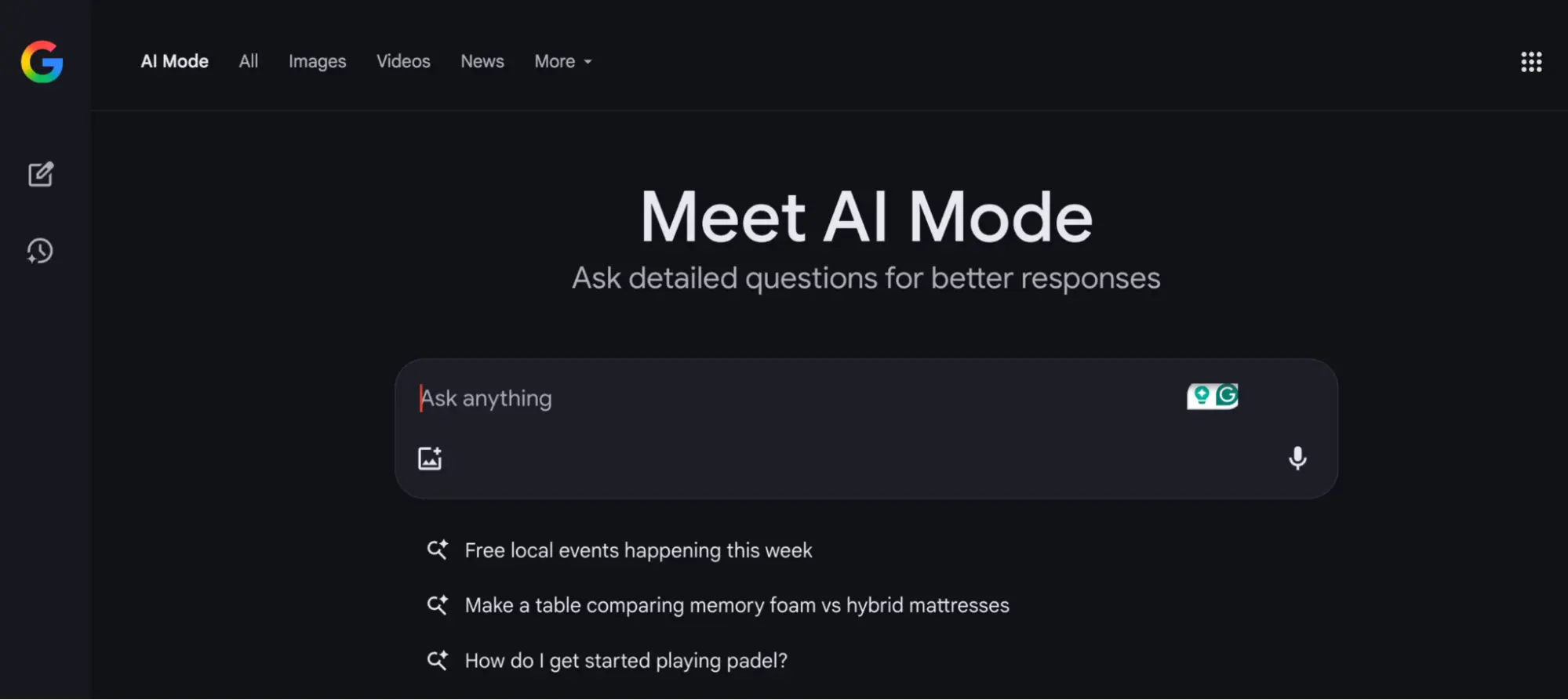
AI Mode is a newly launched search interface that represents a significant leap forward in how people interact with search engines. Powered by Google’s custom Gemini 2.5 model, it is now available to English users in Singapore and more than 180 countries worldwide. Unlike the traditional search bar, which relies heavily on keyword inputs, this mode is designed to handle longer, conversational queries that resemble natural human dialogue.
When a user types a complex question, AI Mode does not simply return a list of links. Instead, it breaks the query into sub-questions, analyses the intent behind them, and generates structured, detailed answers directly on the search results page. These responses often include summaries, suggested next steps, and embedded links that guide users toward deeper resources. The result is a search experience that feels less transactional and more like an intelligent conversation.
Why It Matters: AI Overview and SEO Deep Dive
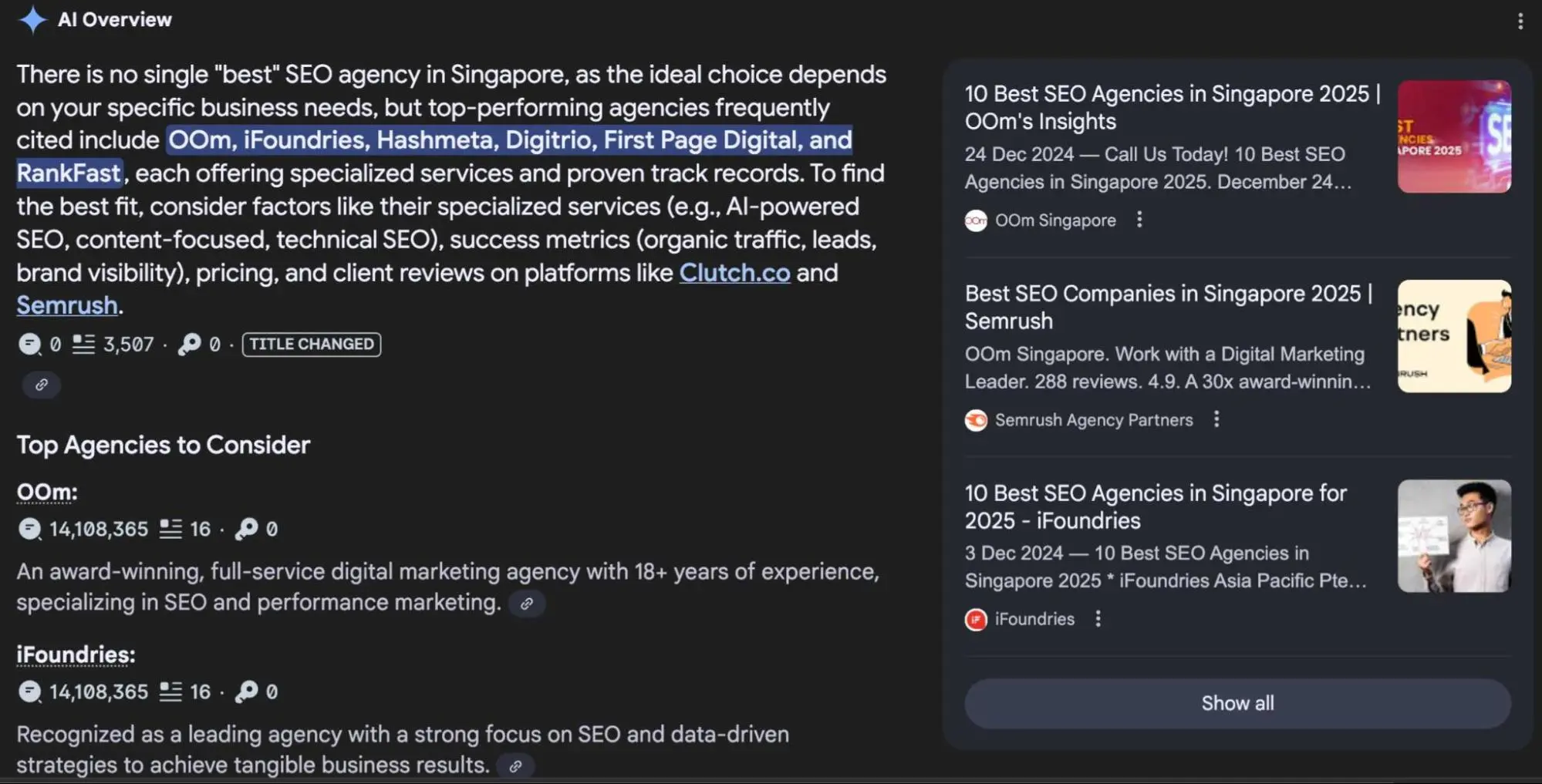
The launch of AI Mode is not an isolated update. It is the natural progression of Google’s earlier experiment with AI Overview, a feature introduced through the Search Generative Experience (SGE). That version offered quick summaries at the top of search results, but it often left users wanting more depth. It was useful for straightforward answers, yet struggled to untangle complex or multi-layered queries.
AI Mode changes that dynamic. It can interpret intent across longer, conversational searches and deliver responses that feel more like guided explanations than simple blurbs. The shift moves Google closer to acting as an intelligent assistant, capable of breaking down complicated questions into digestible insights supported by links and context.
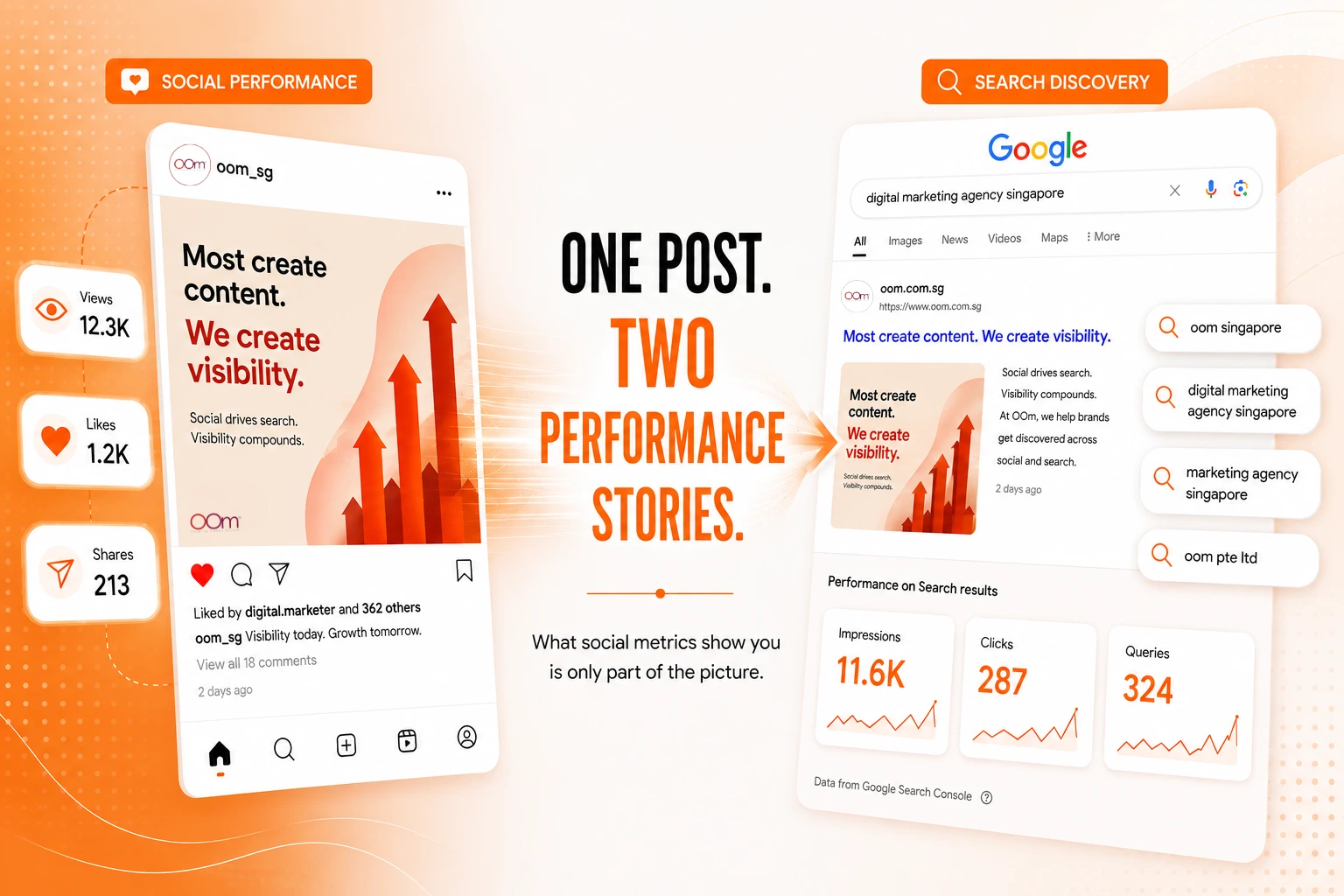
For businesses, this represents a turning point. Studies suggest that AI-generated results, including Overviews, have driven organic click-through rates down by as much as 30 to 70 percent. Zero-click searches now account for around 60 percent of interactions, indicating how often users are satisfied without leaving the search results page. In this environment, visibility within an AI-generated summary may outweigh the importance of traditional rankings, altering the foundations of SEO strategy itself.
Impact on SEO and Strategy
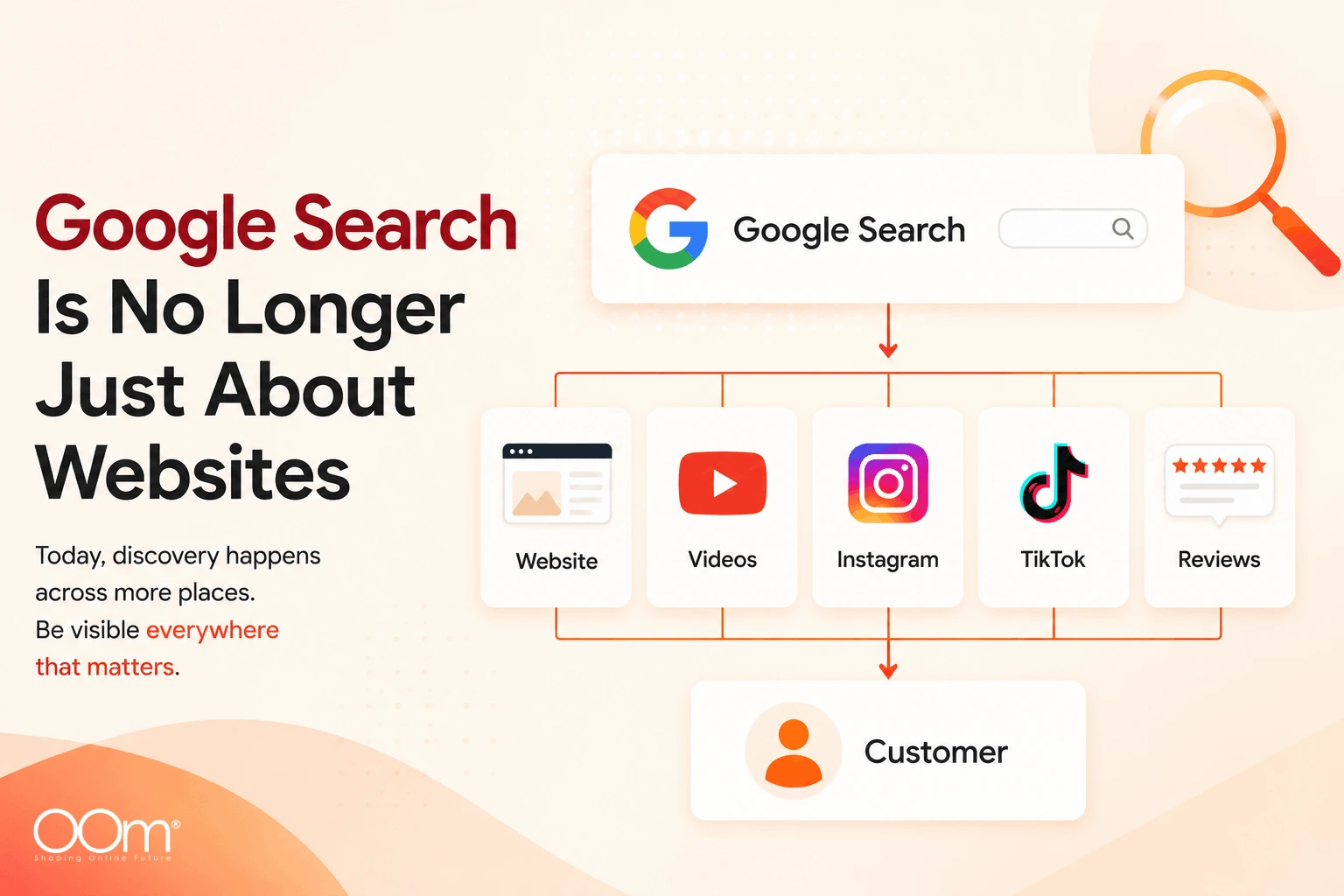
The rise of AI Mode is shifting the ground beneath the feet of digital marketers. For years, success was measured by page-one rankings, steady organic traffic, and growing click-through rates. Yet when answers are now being generated directly on the results page, these benchmarks no longer carry the same weight. Visibility today is about being included inside the summary itself, where the user’s attention naturally lingers.
This change is giving rise to new disciplines. Generative Engine Optimisation (GEO) is designed to help content become more recognisable and retrievable by AI-driven systems. Answer Engine Optimisation (AEO), meanwhile, focuses on creating content that search engines can confidently cite as part of their conversational responses. Both approaches reflect the reality that authority, structure, and clarity matter more than simply ranking for a handful of keywords.
It is a profound recalibration. Content that provides semantic depth, builds context across topics, and establishes brand credibility is far more likely to be surfaced within AI Mode. The brands that adapt to this new standard will not only secure visibility but also cultivate user trust by becoming the very sources that AI voices rely on when delivering answers.
GEO Scout by OOm — Your Local Advantage
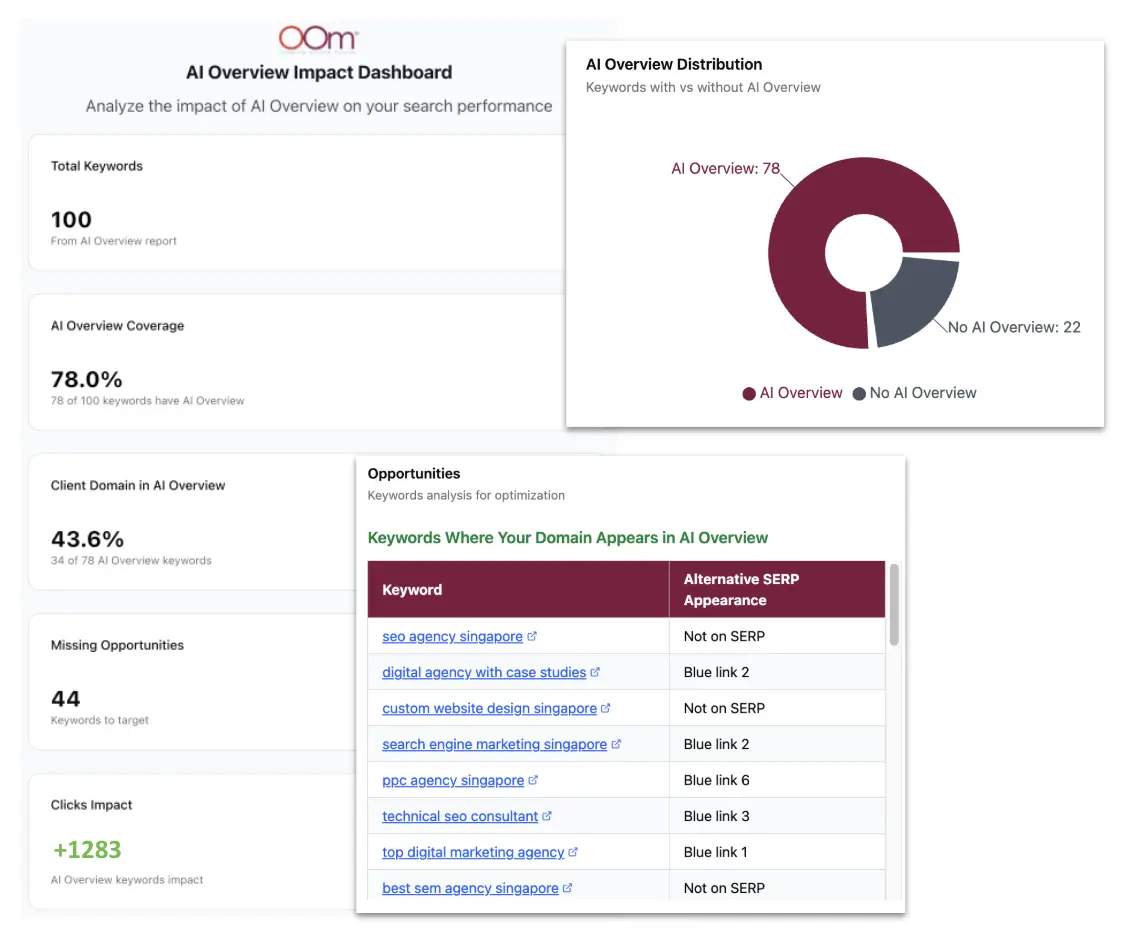
For businesses in Singapore, the challenge is no longer just appearing on Google’s first page. The real question is: how often is your brand being mentioned inside AI Mode results? Traditional analytics cannot answer this, but OOm’s GEO Scout is designed precisely for that purpose.
This proprietary tool reveals how visible your domain is within AI Overview and conversational responses. It shows the percentage of keywords where your brand appears, measures the click impact from those placements, and even benchmarks your performance against competitors. Instead of guessing how generative search is affecting traffic, you can see the numbers, the trends, and the opportunities.
The insights go beyond surface-level metrics. With GEO Scout, companies can identify which content types are more likely to be cited, track gains or declines in generative visibility, and adjust strategies with confidence. In an AI-first search environment, this makes generative AI optimisation not only possible but measurable, giving Singaporean brands a clear local edge.
Practical Tactics to Scale with AI Mode
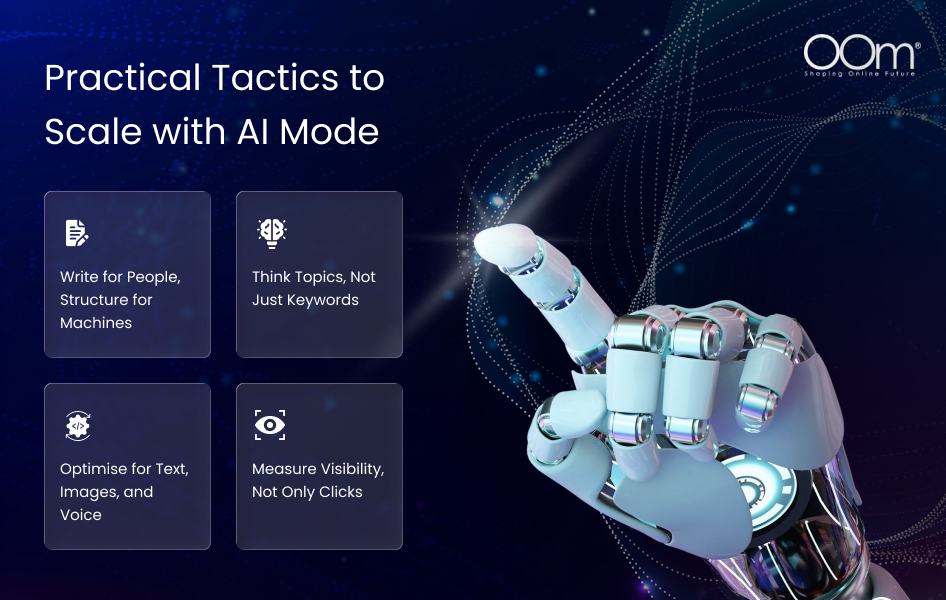
The real opportunity lies not only in understanding AI Mode, but in learning how to optimise for it. Businesses that adapt their strategies early will find themselves more visible in conversational search results. Here are practical steps to help scale effectively.
a) Structured, People-First Content
Content must be written for humans first, but structured in a way that allows machines to interpret it clearly. Use subheadings that clearly highlight the intent, keep paragraphs focused on a single idea, and incorporate FAQ-style sections that anticipate and address user questions. Adding schema markup enhances machine readability and increases the chance of being surfaced in AI summaries.
b) Semantic and Contextual Focus (GEO/AEO)
Instead of chasing single keywords, build topic clusters that demonstrate authority across a theme. Connect articles with internal links to create hubs of expertise, and ensure brand mentions appear across credible platforms. This approach enhances relevance for both Generative Engine Optimisation and Answer Engine Optimisation, signalling to AI systems that your content is worthy of citation.
c) Leverage Visual and Multimodal Assets
AI Mode is multimodal, drawing on text, images, and even voice queries. Optimise visuals with descriptive alt-text, context-aware captions, and supporting metadata. Incorporate video transcripts where possible. By providing AI with more context, brands increase their chances of being featured in responses. Businesses that treat images, video, and text as interconnected assets will be better positioned to appear in rich generative outputs.
d) Track Beyond Clicks and Adapt
Traffic attribution is becoming more complex as AI summaries reduce the need for clicks. Impressions, citations, and mentions will often matter more than traditional analytics. Monitor Search Console updates, measure branded query visibility, and track engagement signals such as time on page or interaction with multimedia. Most importantly, adapt quickly. The businesses that treat AI Mode as an evolving ecosystem, rather than a static tool, will gain long-term advantages.
Conclusion
The rollout of Google’s AI Mode in Singapore marks a defining moment for search and digital marketing. Businesses are no longer competing solely for rankings but for recognition within AI-generated answers that shape user decisions instantly. This evolution demands structured, people-first content, GEO and AEO strategies, and a willingness to see visibility as more than clicks.
With tools like OOm’s GEO Scout and the expertise of a leading GEO agency in Singapore, brands can prepare for this new reality and position themselves where it matters most: inside the answers that AI delivers. The question is no longer if AI-driven search will transform SEO, but how ready your business is to meet that transformation head-on.
Take the lead now. Request your complimentary GEO and AI Overview Impact Analysis Report and speak with our experts today to secure your place in the future of generative search.
About OOm
OOm has been a leading digital marketing agency in Singapore since 2006, with expertise in Search Engine Optimisation (SEO), Search Engine Marketing (SEM), social media marketing, to website design and development. Our clientele comprises small and medium businesses (SMEs) to enterprises.
OOm has won over 30+ marketing awards for the results we have delivered to clients over the years, including ‘Agency of the Year’, ‘Lead Generation Agency of the Year’, ‘Independent Agency of the Year’, ‘E-Commerce Marketing Agency of the Year’, ‘Excellence in Search Marketing, ‘Excellence in Performance Marketing’ to ‘Excellence in Data-driven Marketing’ among others. OOm is also a Google Premier Partner (reserved for the top 3% agency partners in Singapore), as well as an official Meta Business Partner.